
Your little one is now two years old, right? As he gets older, it's important to see the doctor or nurse to check on his health. Today, we'll talk about what usually happens at a well-child visit, what the doctor will look for, and what you need to know. This is like a conversation between you and the doctor.
bmi-calculator
Know your body mass index (BMI) and weight classification
What should you expect when meeting this doctor?
When you take your baby in, you can expect the doctor and/or nurse to do the following:
1. Measuring baby's growth :
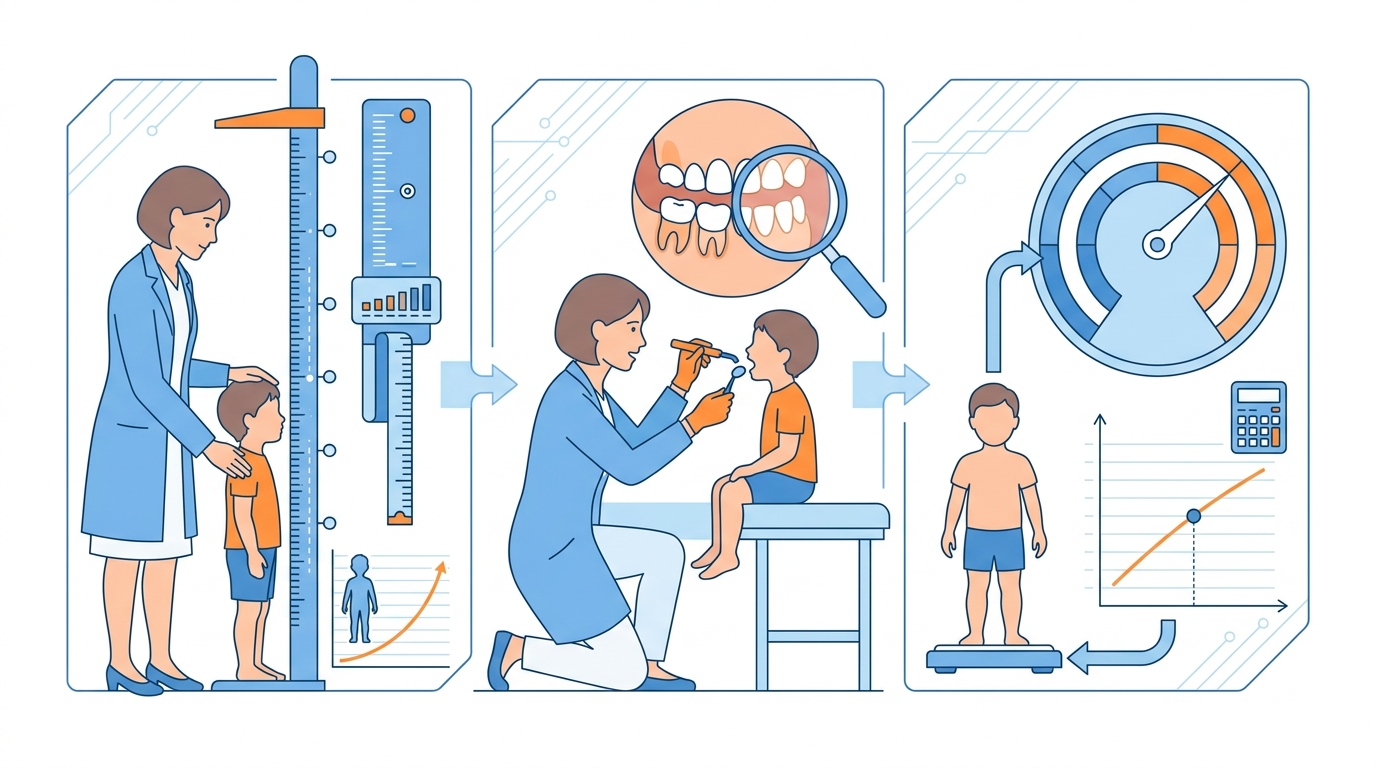
The first thing you do is measure your child's weight, height, and head circumference and record those measurements on a growth chart. This is how you can see if your child is growing properly. Also, your child's body mass index, or BMI (Body Mass Index), is calculated and recorded on the chart. This can help you see if your child is at a healthy weight for their height.
2. Special test (Screening Test):
Sometimes, there are certain conditions that need to be identified early in a child's development. For example, tests that can help identify conditions like Autism '' early on may be done at this age. This means that if there is something like that, we can start helping sooner.
3. Talking about your little one:
The doctor will ask you questions, talk about your concerns, and give you guidance on how your two-year-old child can do these things:
- Food and drink:
Don't be surprised if your little one skips meals sometimes, or if he or she doesn't eat something they love one day and then doesn't eat it the next. This is normal at this age. Plan to feed your child 3 main meals and 2-3 nutritious snacks a day. It's your responsibility to decide what to feed them, but let your child decide how much they eat.
- Peeing and Pooping :
Most children are ready to start potty training by the age of 2-3 . You can tell when your child is ready to start potty training by these signs:
- Showing interest in the toilet (watching what mom, dad, or a sibling does in the bathroom, sitting on a small potty chair).
- You can keep the diaper dry for a long time without it getting wet.
- You can pull your pants down and up with help.
- Understand the connection between the feeling of needing to urinate /defecate and urinating /defecating.
- It is said when the diaper is wet or dirty.
- Sleep:
On average, a two-year-old child needs about 11-14 hours of sleep per day, including naps during the day.
- Child Development (Developing):
By the age of two, most children do these things:
- Two words are combined to form a sentence (e.g. "I want milk").
- Uses new gestures other than waving and pointing (e.g., blowing a kiss).
- When asked to find things in a book, they point to them.
- Pointing at at least two parts of the body.
- I see it when others are hurt or sad.
- Trying to use things like switches, knobs, buttons.
- Plays with toys that are used more than once (e.g., a toy dish is placed on a toy plate).
- Running and kicking the ball.
- Climbs a few steps of stairs with or without help (without jumping up).
If your little one is not meeting one or more of these developmental milestones, or if you notice that they are losing their previous abilities, be sure to talk to your doctor.
4. Complete physical examination :
In front of you, your child will be undressed and given a complete physical examination. This includes checking their eyes, teeth, listening to their heart and lungs, and paying attention to their motor skills, language use, and behavior.
5. Vaccines Update:
Vaccinations are a way to protect children from serious diseases. So it's very important to get your child vaccinated on time. Vaccination schedules can vary slightly from one doctor's office to another. So, talk to your doctor about what to expect.
6. Other tests if necessary:
If your doctor thinks it's necessary, he or she can order tests for things like lead poisoning, anemia, high cholesterol , and tuberculosis.
Let's take a look ahead.
Until your child's next checkup, which is at 30 months, it's a good idea to keep these things in mind:
Let's take care of food and drink.
- It's common for young children at this age to get used to eating the same type of food ('food jags'). Even if your child seems to be stuck on one type of food, continue to offer a variety of foods.
- Let your child decide what to eat and when to stop eating when they are full. Provide nutritious snacks,Avoid giving drinks high in sugar .
- Switch to low-fat or nonfat milk , or offer fortified, unsweetened soy beverages. Offer other low-fat or fat-free dairy products, such as yogurt.
- Do not give more than 4 ounces (120 ml) of 100% fruit juice per day.
- Avoid giving foods that are high in sugar, salt, oil, and low in nutrients.
- Avoid giving foods that can cause choking, such as hot dogs, whole grapes, raw vegetables, nuts, and hard fruits or candies.
Let's help you learn.
- Young children learn best when they work together with their parents, caregivers, and their environment. Limit screen time (i.e., time spent looking at TV, computers, tablets, or other screens) to 1-2 hours a day. This should also be good children's programming, which you and your child can watch together.
- Provide a safe play area , and give your child plenty of time to explore, run around, and play (active play). Play together often.
- Read books to your child every day.
Let's also think about daily care and safety.
- Let your child brush their teeth under your guidance. Twice a day, use a small amount of toothpaste (about the size of a pea) and a soft toothbrush. Brush any areas they miss. If you haven't seen a dentist yet, make sure to do so. To help prevent tooth decay, your doctor or dentist can apply fluoride varnish to your child's teeth 2-4 times a year.
- Watch for signs that your child is ready to start potty training. If he or she is not interested, it's best to wait a while before trying again. Even a child who uses the potty during the day and has no problems may need a diaper at night.
- Set consistent rules that your child can understand. Encourage good behavior, praise, and be positive when changing unwanted behavior.
- It's normal for children to have tantrums at this age. They're especially likely to happen when they're tired or hungry. Try to stop tantrums before they happen - distract your child or remove them from the situation.
- Don't hit your child. Children don't understand the connection between hitting and the misbehavior you're trying to correct. Instead, you can use a short time-out.
- When taking the child in the car,Keep your child in a rear-facing car seat until they reach the maximum weight or height recommended by the car seat manufacturer. The old advice was to turn them forward-facing after age 2. But now, safety experts say that it's best to do so based on the child's size, not age. So, young children can stay in a rear-facing car seat until they're 3 or 4 years old.
- Supervise your child when playing outside or on playground equipment. Make sure your child always wears a helmet when riding a tricycle or riding in the seat of an adult's bicycle.
- Protect your child from gun accidents by not keeping a gun in the house. If you have a gun, keep it locked up, without ammunition. Ammunition should be kept separately. Keep the keys out of reach of children.
- If you have questions about your living situation, talk to your doctor. Do you have the things you need to care for your child? Do you have enough food, a safe place to live, and health insurance? Your doctor can tell you about community resources or refer you to a social worker.
These checkup information sheets are in line with the American Academy of Pediatrics (AAP)/Bright Futures guidelines.
Things to remember to take home
Okay, so we've talked a lot about this two-year doctor's visit, haven't we? Simply put, this is an important meeting between you, your little one, and the doctor.
- It is important to check whether the baby is growing properly. The Growth chart and BMI help with this.
- Don't force food, but offer nutritious foods. See if your little one is ready for potty training.
- Pay attention to your child's abilities, speech, and play. If there is anything that seems to be a problem, tell the doctor .
- Give the vaccine on time. That's very important.
- Safety comes first! Always think about your child's safety at home, outside, and in the car.
- If you have any questions or doubts, don't be afraid to ask your doctor. They are there to help you.
With these things in mind, go to this important doctor's visit with your little one. Then you'll feel at ease, too!
Doctor's Note
At the 2-Year Well-Child Visit (2-Year Well-Child Visit), special attention is paid to physical development as well as behavioral problems and eating habits. Here the body mass index (BMI) is calculated to assess whether the child is overweight or undernourished. The doctor will observe the formation of two-word phrases, play patterns, and teeth development (Teeth checkup). Also, instructions related to toilet training can be obtained.
📖 Sources and scientific sources (References)
- NHS: 2-Year Development Review
- Mayo Clinic: Toddler Growth and BMI
- Cleveland Clinic: 2-Year Well-Child Visit
- AAP: 2-Year Well-Child Visit
Doctor's Clinical Note — Dr. Priya Sammani (MBBS)
The clinical information in this guide is designed for patient education. If you experience persistent or worsening symptoms, please consult a qualified healthcare professional for a personalized evaluation.


💬 Patient Questions & Comments (0)
No comments yet. Be the first to share your question or experience below.