

Your little one is now 30 months old, which means two and a half years old, right? Time flies, doesn't it? It's very important to see the doctor at this time. So, today we'll talk about what happens during this medical examination, what the doctor will look for, and everything else you need to know. These details will be of great help to you too.
What happens during this medical examination, what does the doctor look for?
Okay, so when you take your baby to the clinic, the doctor or nurse there will usually do these things when examining the baby:
1. Measure the baby's weight and height: The first thing to do is to weigh the baby and measure its height. Then, based on those measurements , the body mass index (BMI) is calculated. All these measurements are recorded on a growth chart . This is how the doctor can see if the baby's growth is appropriate for his age and whether he has grown better than in previous months.
2. Screening Test: Next, a special test, called a screening test , is performed to help identify any developmental delays in the baby. This will help you catch any problems early and take the necessary action. Isn't it great to know early?
3. Asks you questions and gives advice: The doctor will ask you about your baby. If you have any questions, fears, or doubts about your baby, this is the best time to ask them. The doctor will answer them and give you valuable advice related to your baby's age. The main topics discussed are:
What does the doctor ask about the child's diet?
At this age, a child's eating habits may change slightly.
- Food can be a problem: Your little one may sometimes skip meals, or may say that something they really enjoy today may not be eaten tomorrow. Don't be surprised or worried about this. This is normal at this age.
- How to plan meals: Plan to have 3 main meals and 2-3 healthy snacks per day.
- Don't force: The most important thing is that while you decide what to feed, you should let your baby decide how much to eat. Never force him to eat.
What do you need to know about how to urinate , poop, and most importantly - potty training?
This age, that is, between 2-3 years old, is when most toddlers are potty trained .Getting ready to start. Not everyone is ready at the same time, so keep that in mind. There are a few signs that your baby is ready to start potty training. Check to see if your baby has any of these:
- Toilet obsession: You may find yourself staring at someone else in your home when they go to the toilet, trying to sit on the potty chair, etc.
- Staying wet for longer: If you can go longer without urinating than before, that's a good sign.
- Trying to pull up or down his pants: Trying to pull up or down his pants with your help.
- Understands the feeling of needing to urinate / defecate : They are able to make a connection between the feeling of needing to urinate /defecate and the action.
- Tells you when his nappy is wet/dirty: If he tells you when his nappy is wet or when he poops, it means he's ready for a big change.
How is the baby sleeping?
At this age, your baby needs about 11-14 hours of sleep a day. This may include an afternoon nap. Some babies don't like to sleep during the day, but it's a good idea to let them sleep for a short time if possible.
How do you monitor your baby's development? What should you expect?
By 30 months, or about two and a half years old, many little ones start doing these things:
- Word usage: Can say about 50 words.
- Making sentences: Saying short sentences by adding two or more words to a verb. (Example: "The baby is running!", "Mom is giving rice.")
- Recognizes things in books: When you show them a picture in a book and ask, "What is this?", they say its name.
- Words like "I," "me," "we": These words are starting to be used.
- Two-step instructions: Follows simple two-step instructions you give. (Example: "Pick up the ball and put it in the box.")
- Playing with other children: Playing near other children, sometimes even trying to join them and play a little.
- Imaginative play: Playing with objects and pretending they are different things. (Example: Using a piece of wood as a phone, turning a plate as a steering wheel.)
- Recognizes colors: Can recognize at least one color when heard.
- Undressing: Trying to take off some of the clothes (perhaps socks, shirts) on their own.
- Jumping with both feet: A small jump with both feet off the ground.
Important: These milestones are:If your baby still can't do one or more things, or if you notice that they've lost some of their previous abilities, definitely talk to your doctor about it. Don't panic, but it's important to be aware.
4. Physical Exam : Next, while you are still there, your baby will be undressed and given a complete physical exam . This includes checking the baby's eyes, listening to the heart and lungs with a stethoscope, and examining the abdomen. The doctor will also pay special attention to the baby's coordination , language, and social skills.
5. Update on Vaccines: Finally, make sure your baby is up to date with the vaccines that are required for this age. These vaccines can protect your baby from serious childhood diseases like measles and mumps. Therefore, it is very important to give your baby the vaccines on time. Each doctor's vaccine schedule may vary slightly, so talk to your doctor to find out exactly what they are.
What should we take care of until the next check-up (3 years)?
Okay, now that we've met the doctor, the baby's next check-up is usually at 3 years old. Until then, let's talk about some important things you need to remember and take care of.
Should we continue to care about food and drink?
- Eat together as a family: Whenever possible, have the whole family sit down to eat together. This not only helps the baby develop good eating habits, but it also strengthens the family bond.
- Milk and dairy products: Offer low -fat or nonfat milk. A fortified soy beverage is also good. You can also offer other low-fat and nonfat dairy products, such as yogurt.
- Limit fruit juice: Don't give more than 4 ounces (120 ml) of 100% fruit juice per day. It's best to give whole fruit.
- Avoid these: Reduce foods and drinks high in sugar, salt, and fat (biscuits, cakes, sweet drinks, toffee, chocolate, and oily foods ) as much as possible.
How can you help your child learn?
- A safe play environment: Allows baby to play freely, explore , make-believe, and run and play actively.Give them plenty of time and a safe place to do this, whether it's indoors or outdoors.
- Read books every day: Spend a little time reading to your baby every day. This will help develop their vocabulary and language skills, and prepare them for preschool . Show pictures and talk.
- Listen to your baby and repeat: When your baby says something, repeat it back to him. For example, "Oh, did he say he wanted the ball?" This will help your baby feel like you understood what he said, and it will also help him learn the words properly.
- To develop social skills : Consider enrolling your baby in a good preschool program to develop their social skills. Or, arrange play dates with other children their age.
- Limit Screen Time: Limit screen time ( TV, computer, tablet, smartphone) to no more than one hour a day. Even that hour should be spent watching high-quality children's programming that is educational and appropriate for children. If possible, watch it with your child, so he or she can learn more from it. Do not keep a TV or any other screen in your child's bedroom.
Daily care and safety: Be sure to remember these things!
- Brushing: Your baby can brush his teeth with a soft toothbrush and a small amount of toothpaste (no bigger than a pea). Let your baby brush his teeth under your supervision. However, you should brush the areas he misses again thoroughly. If you haven't scheduled a visit to the dentist yet, do it now. To help prevent tooth decay , your doctor or dentist can apply a special coating called fluoride varnish to your baby's teeth 2-4 times a year.
- Be positive about potty training: As mentioned earlier, think positively about potty training. Praise your baby when he tries, give him a small treat. Don't force him to use the potty, or punish or scold him for accidents. This is something that needs to be done with patience.
- Rules and Discipline: Set simple rules at home that your child understands and that are enforced consistently. Use praise to encourage good behavior. When you see inappropriate behavior, calmly but firmly say no and redirect it. Give your child a sense of independence by letting them choose between two acceptable options. (Example: "Do you want to wear the red shirt or the blue shirt?") If you give them more than two, they may have difficulty choosing.
- Tantrums: It is normal for toddlers to cry loudly and throw tantrums at this age. These often occur when they are tired or hungry. So try to stop them before they happen - divert your baby's attention or remove them from an uncomfortable position. Never hit them. Babies don't understand the connection between hitting and the behavior you are trying to correct. Instead, you can give them a short time-out.
- Transitioning to bed: Most children are ready to move out of the crib and into a regular bed with safety rails by the age of 2-3. Establish a calm bedtime routine (e.g., washing your baby, reading a book, singing a soothing song) to help your baby sleep better.
- Safety when playing outdoors: Supervise your child when playing outdoors, especially on playground equipment. Make sure your child is wearing a helmet when riding a bike or trike .
- Sun protection: Apply sunscreen with an SPF of 30 or higher at least 15 minutes before your baby goes outside to play. Reapply every two hours, especially if they sweat or play in the water.
- Protection from secondhand smoke: Protect your baby from secondhand smoke . This increases the risk of heart disease and lung disease. Secondhand smoke from e-cigarettes is also harmful.
- Car Seat Safety: Keep your baby in a rear-facing car seat until he or she reaches the maximum weight or height recommended by the car seat manufacturer. If your baby outgrows that weight/height limit, you can move the car seat to a forward-facing position . Always keep your baby in the back seat of your car, and continue to use the car seat harness properly.
- Water Safety: To prevent drowning, never leave your baby alone in a bathtub , swimming pool , or sink, even for a second, no matter how little water there is.
- Gun Safety: If possible, keep guns out of the house and protect your baby from gun hazards. If you have a gun, keep it unloaded, locked up, and out of reach of your baby.Bullets should also be locked up separately. Keep the keys out of reach of children.
So, here are the most important things to remember (Take-Home Message)
So, this doctor's check-up for your two-and-a-half-year-old is a very important stop on his health journey. Talk openly with the doctor about everything from your baby's growth, eating, sleeping, new things he's learning, to potty training. If you have any questions or doubts, don't be afraid or embarrassed to ask. The doctors are there to help you.
Your baby's health and happiness are the most precious things in this world. So, take these things into consideration and take care of him with love and patience. Follow these instructions until your next check-up. Best wishes to you and your baby !
Doctor's Note
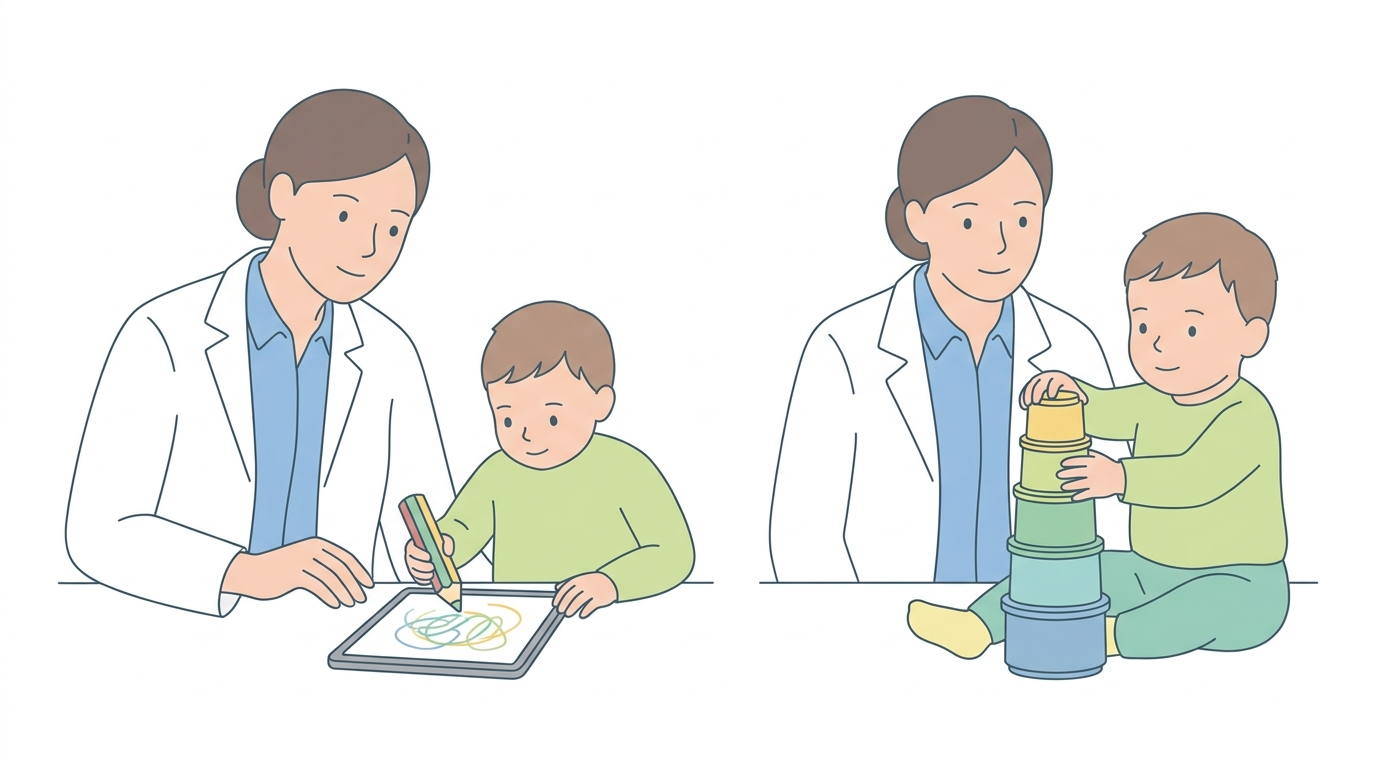
The 30-Month Well-Child Visit (30-Month Well-Child Visit) is an important milestone in the child's fine motor skills and social communication. Stacking up to 6 toys as a temple or tower, drawing simple lines with a pencil, and trying to eat alone are tested here. Parents can discuss the child's behavioral development, fears, and how to deal with other children (social interaction) with the doctor.


💬 Comments (0)
No comments yet. Be the first to share your thoughts here.
Add Your Comment