

So how are you and your 9-month-old baby? Babies grow up so fast during this time, and they learn new things, right? So, the Well-Child Visit we do at 9 months is important to see if your baby is developing properly and is healthy. There's nothing to worry about, this is a normal checkup. Let's see what happens during this, and what you need to know.
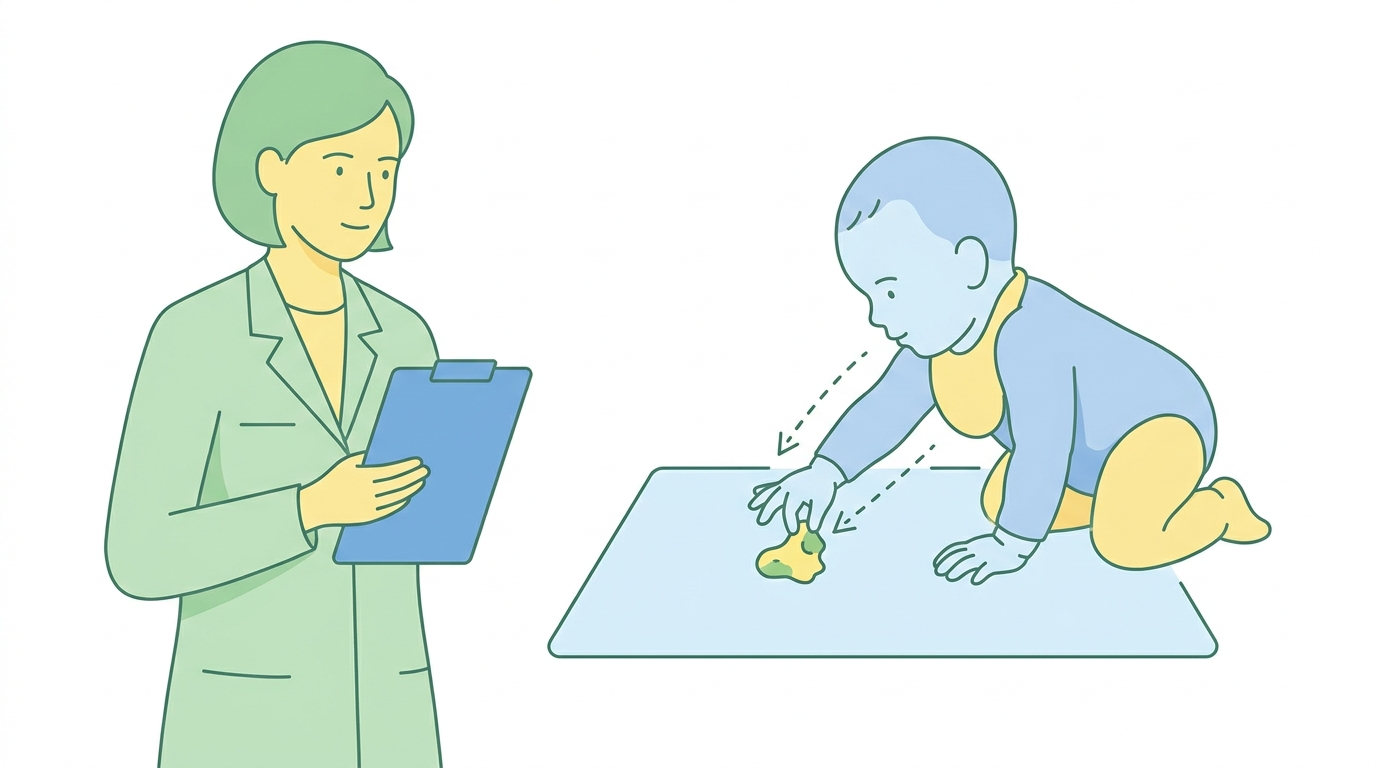
What happens during this medical examination?
When you pick up your baby, you can expect the doctor or nurse to do these things:
1. Measure the baby's weight, height, and head circumference
The first thing to do is to measure the baby's weight, height (length), and head circumference and record them on a growth chart . This allows the doctor to see if the baby is growing appropriately for his age. He also compares the measurements with those from previous months.
2. Developmental Screening
Next, a special test will be done to help identify any developmental delays in your baby. During this, the doctor may ask you questions and observe your baby. Don't worry, this is done so that if there is a problem, it can be identified and helped quickly.
3. Asking you questions, discussing your problems, and giving advice
The doctor will talk to you about your baby in detail. This is a good time to ask any questions you have or anything that is on your mind. The doctor will ask how your baby is doing these days, especially about these things:
Eating
By now, your baby has started eating different types of baby food , along with breast milk or formula . He may be trying to drink a little water from a cup and pick up small pieces of food with his hands. The doctor will ask about this. He will also talk about what new foods to give him and how to give them.
Peeing and Pooping
When you introduce new foods to your baby, you may notice that the color, texture, and number of times your baby poops per day change. This is normal. However, if your baby has diarrhea, or if their poop is very hard, dry, or difficult to pass, you should tell your doctor.
Sleeping
On average, a baby this age sleeps about 12-16 hours a day. They may take a nap once in the morning, another after lunch, or two times a day. However, not all babies are the same. It is also normal for some babies to wake up at night at this age.
Developing - Milestones
This is a very important part. By 9 months, most babies will be doing these things:
- Makes various sounds like "ma-ma-ma", "ba-ba-ba".
- They turn their heads when their name is called.
- Like happy, sad, angry, surprisedThe face shows different emotions.
- When you see people you don't know , you feel shy, embarrassed, or scared .
- Laughs while playing "peek-a-boo".
- They pull objects like pieces of food towards themselves with their fingers .
- Things are transferred from one hand to the other .
- When something like a toy falls from your hand, you look for it on the ground .
- Becomes able to sit up on his own (for example, sits up from a reclining position on his own).
- Sitting alone without any support .
Imagine, your little girl or boy is playing in the living room. When you call out from the kitchen, " Little girl," he or she looks in the direction of the sound. That's also a development that is appropriate for this age.
If your baby isn't doing one or more of these things, or if you feel like they're not doing something they used to , be sure to talk to your doctor about it. Don't worry, not all babies develop at the same rate. But if you tell your doctor, he or she can look into it.
4. Complete examination of the baby
In front of you, the doctor will remove all of your baby's clothes and examine him thoroughly. This will include an eye exam , listening to your baby's heart, checking his pulse, and checking his hip bones . The doctor will also pay attention to your baby's movements .
5. Vaccines Update
Vaccines are very important to protect your baby from serious diseases. So, it is important for your baby to receive the vaccines on time. The vaccination schedule may vary slightly from doctor to doctor. So talk to your doctor to know what to expect.
6. Ordering a blood test
If necessary, the doctor may take some of the baby's blood and have it tested to see if there is lead exposure or if there is anemia ( a lack of blood ).
Things to remember until your next 12-month checkup
Okay, now let's see what you should specifically keep in mind until your baby's next big checkup, which is at 12 months.
About food and drink
- If you are breastfeeding , continue breastfeeding until 12 months, or for as long as you and your baby need it. If you stop breastfeeding before 12 months, you should give your baby a special type of milk powder that contains iron (iron-fortified formula) .
- If you are giving your baby formula, wait until they are 12 months old before switching to cow's milk .
- Until 12 months oldDon't give fruit juice . Sugary drinks and sodas are not good at all.
- Keep introducing new foods to your baby. Your baby may not accept some foods right away. It may take up to ten tries. Be patient.
- Pay close attention to your baby's signs of hunger and fullness . Don't force feed him.
- When feeding , place your baby's highchair close to the dining table . This will help him become interested in table foods.
- Give your baby foods with different flavors and textures . Give them foods that are well-pureed, mashed, and have soft lumps.
- Give your baby soft finger foods that he can eat with his hands.
- Avoid giving foods that can choke . For example: whole grapes, raisins, popcorn, pretzels, nuts like cashews, hot dogs, sausages , large pieces of meat, hard cheese, raw vegetables, hard fruits. If you give these, cut them into very small pieces, boil them well, and give them in a way that won't choke.
General care and safety
Babies are very active at this time and love to explore new things. So we need to be very careful about their safety.
- If your baby wakes up at night , try letting him go back to sleep for a few minutes instead of picking him up right away. If he continues to cry, let him know you're there. But don't pick him up, play with him, or feed him.
- Separation anxiety can start around 9 months. This means that your baby will cry when you leave him. When you leave, say goodbye affectionately, but do it quickly. He will calm down after you leave.
- When traveling with your baby in the car, keep the car seat rear-facing until it reaches the maximum weight or height specified by the car seat manufacturer.
- Protect your baby from sun exposure as much as possible. Cover them with clothing and keep them in the shade. If shade and clothing are not enough protection, you can use sunscreen (SPF 30) .
- Brush your baby's teeth twice a day with a soft toothbrush and a very small amount of toothpaste (about the size of a grain of rice). Make an appointment to see a dentist after the first tooth comes in or around the age of one . To prevent tooth decay, your doctor or dentist can apply a fluoride varnish to your baby's teeth two to four times a year.
- Always be mindful of childproofing your home :
- Install safety gates. Tie up items like window curtains, drapes, and cords and keep them out of reach of the baby.
- These things should always be locked up and kept out of reach of the baby : small items that could choke; medications; poisonous substances; hot, sharp, or breakable items.
- Keep emergency numbers handy. Also write down the Poison Control number (e.g. 1-800-222-1222, National Poison Information Center 0112686143 in Sri Lanka) .
- Prevent water-related accidents : Keep the bathroom door closed, keep the toilet seat lid closed, and never leave your baby alone anywhere near water (even when bathing), and supervise them carefully.
- Sing songs, talk, play, read books with your baby. This is how babies learn best.
- Watching TV (or looking at screens like phones and computers - screen time) is not appropriate for babies of this age. However, it is okay to talk to someone far away via video chat.
- Protect your baby from secondhand smoke . It increases the risk of heart disease and lung disease. The smoke from e-cigarettes is also harmful.
- Do not keep firearms in the home . If you do, keep them empty, locked, and out of reach of your baby. Keep the ammunition locked away separately. Do not let your baby get hold of the keys.
- If you have questions about your living situation, talk to your doctor. Do you have what you need to care for your baby? Do you have enough food, a safe place to stay, and health insurance? Your doctor can tell you about community resources or refer you to a social worker .
Remember, you are not alone. Don't be afraid to ask for help. The doctor is there to help you and your baby.
Finally, remember this (Take-Home Message)
So, this 9-month medical checkup is a good opportunity to confirm the baby's health and development, resolve any concerns you may have, and get advice on how to care for the baby going forward.
The most important thing is, if you have any doubts or questions, talk to your doctor. It could be about your baby's development, behavior, eating, sleeping, or anything else. Don't be afraid to ask. Every baby is different, so don't compare yourself to other babies and worry. Your doctor is the best person to advise you.
Wishing your baby a healthy, happy future!
Doctor's Note
The 9-Month Well-Child Visit (9-Month Well-Child Visit) is another crucial milestone in baby's development. The doctor tests the baby's fine motor skills, such as standing with support, sitting on his own, and grasping small objects using the index finger and thumb (pincer grasp). This clinical session is a great opportunity for parents to get advice on solid feeding issues and sleep habits.


💬 Comments (0)
No comments yet. Be the first to share your thoughts here.
Add Your Comment