
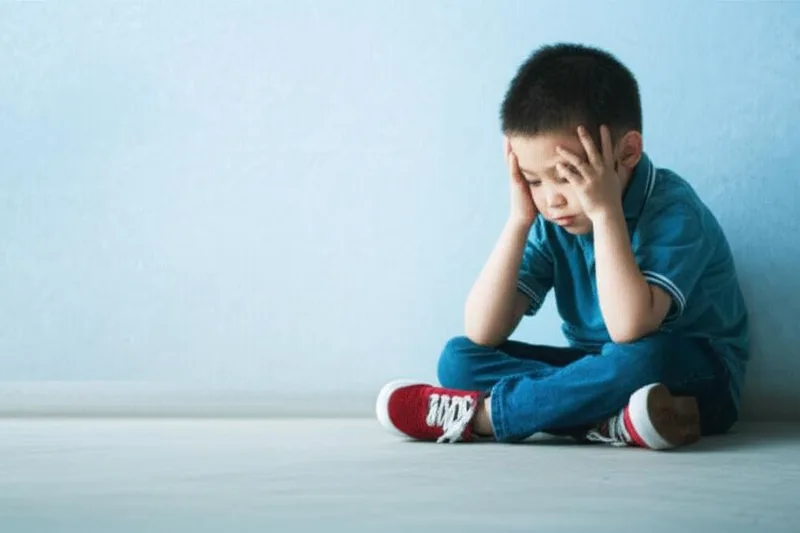
Is your child always sad? Let's talk about depression and anxiety in children

Is your child always sad? Let's talk about depression and anxiety in children

You may notice that your child is sad and depressed on some days. It's normal to be sad for a day or two because of something like this, like being angry with a friend, having an exam coming up... Almost every child goes through these experiences. But if this sadness and anxiety hasn't subsided for weeks, if it's affecting the child's daily activities and school life, it may be something we need to be a little concerned about. As a parent, you understand that difference very well. If you feel in your heart that "something has changed with my child, and it won't go away," we need to talk about it.

Do young children get depression too?

Yes, absolutely. We used to think that depression was something that only affected adults. But now doctors and experts are accepting that preschoolers and even school-aged children can develop a condition called clinical depression .

Simply put, depression is not a weakness or a figment of the imagination. It is a condition that occurs in adults and children due to chemical changes in the brain. Sometimes it can have a genetic predisposition. That is, it is not caused by anyone's fault. Think about it, some children have an amazing innate ability for music and art at a young age, right? Similarly, some children may have a slight genetic predisposition to deal with conditions like depression.

What is the relationship between depression and anxiety?

This is a very important point. Especially in children, there is a strong connection between depression and anxiety . Often, anxiety disorders start first. Later, as the child reaches adolescence, this anxiety can develop into depression.

Therefore, if a child is constantly afraid and anxious, it is a big mistake to ignore it, saying, "That's how it was when they were little, it will be okay when they grow up." This constant anxiety can have a negative impact on the child's brain.

There are several types of anxiety disorders that are common among children:

  • Separation Anxiety: This is the most common anxiety disorder among children. These children have a great fear of being separated from their family, especially their mother and father. They have fears like, "Will mom get in trouble without me?", "Will something happen to me at school?". Because of this, they can actually get stomach aches and headaches on school days.
  • Social Phobia : These children feel very uncomfortable in social situations, especially at school. Even though they talk well with their parents at home, they are afraid to talk to strangers, teachers, or other children. Sometimes they remain completely silent.
  • Generalized Anxiety Disorder: These children worry excessively and unnecessarily about the future. Think of it like a third-grader worrying about their college career. Instead of being happy and saying, "I scored two goals in the soccer game today," they might say, "But I'm worried about the spelling test tomorrow."

Does my child have depression? - Watch out for these signs

As a parent, you know your child best. Watch for changes in your child's behavior and habits. If your child has one or more of the following symptoms for a long time (more than two weeks), it is important to seek medical advice .

Symptom A simple explanation
Always feeling sad, crying They get upset over even the smallest things, they cry all the time, and they keep their faces down.
Disappointed nature They say things like, "Nothing is going right," "I can't do this."
Disliking something you used to like A child who used to enjoy playing, drawing, and watching TV now shows no interest in any of those things. An inability to find joy.
Constant tiredness, lack of energy I feel like I have no energy to do anything, I'm always lazy, and I try to stay in bed.
Social isolation, loneliness Preferring to stay in your room alone even though you have the opportunity to play with friends.
Low self-esteem, feelings of guilt They think and say things like, "I'm useless," "Nobody loves me," and "Everything is my fault."
Getting angry, irritability They get angry quickly over small things, start fights, and behave in an unreasonable manner.
Physical symptoms They often say things like "I have a stomach ache" and "I have a headache" without any medical reason.
School problems Reluctance to go to school, absenteeism, missing schoolwork, and poor grades.
Changes in eating and sleeping Sudden loss or increase of food intake, insomnia or excessive sleeping.
Thinking about harming yourself If you are talking about or hinting at taking your own life, consider this an emergency and seek medical advice immediately.

If you have any doubts, talk to a doctor about it. Good parents notice changes in their children, but they don't always know exactly what they mean. That's what doctors are for.

The most important thing to do first: Correct Diagnosis

Before starting treatment for your child, the most important thing to do is get an accurate diagnosis . Sometimes the symptoms we see may not be depression itself. So, ask your doctor or psychiatrist clearly, "What is my child's condition? Explain it in a way that I can understand. What are the treatment options?"

Many parents first go to a pediatrician . That's right. He or she can do an initial examination and, if necessary, refer you to a specialist, such as a child psychiatrist .

How is it treated?

Treatment is a collaborative effort between the parents, the child, and the doctor. It is difficult to navigate this journey without the support of the parents. Treatment methods can be divided into two main categories:

1. Psychotherapy : This is simply called counseling. Here, the child is taught coping skills to understand their emotions, manage them, and deal with problems. Parents also need to participate in this.

2. Medication: In some cases, especially if the depression is severe, the doctor may prescribe antidepressants.

Remember, medication is not a magic bullet. It is wrong to think that "a bottle of medicine can cure everything." The most successful results are achieved when psychotherapy and, if necessary, medication are combined.

Don't worry about the side effects of medications. It is safe to give your child medication under the supervision of a qualified doctor who has properly diagnosed the condition and prescribed it. Not taking medication also has a side effect - that is, the child will continue to be sick.

Is all sadness depression? - Frustration caused by life's problems

This is also something important for us to understand. Not all sadness, all anxiety is depression. Some children are sad because of real problems in their lives.

Imagine, a child can be sad and frustrated due to things like parental fights, family financial problems, bullying at school, and lack of rest due to excessive classes. We call this situation demoralization . This is a normal response to the difficulties in life. At times like these, it is more important than giving the child medication to change the problematic environment and support the child.

Take-Home Message

  • If a child's sadness or anxiety doesn't go away in a few days or a week or two, be concerned.
  • Depression and anxiety can also affect young children. It is a condition caused by chemical changes in the brain, and is not the fault of the child or the parents.
  • Constant fear and anxiety may be a sign of a risk of developing depression in the future.
  • If you notice a clear change in your child's behavior and habits (eating, sleeping, schoolwork, social relationships), don't ignore it.
  • Before any treatment, it is essential to obtain an accurate diagnosis from a qualified physician.
  • Treatment is a team effort between the parents, the child, and the doctor. Be open about everything with your doctor and follow his or her instructions.

⚠️ Important: The medical articles and information on Nirogi Lanka are for general awareness only, and are by no means a substitute for professional medical advice, diagnosis, or treatment. For any medical problem you have, consult a qualified physician immediately.

💬 Comments (0)

No comments yet. Be the first to share your thoughts here.

Add Your Comment

Please calculate: 4 + 7 =
Is your child always sad? Let's talk about depression and anxiety in children
For ParentsAugust 19, 2025

Is your child always sad? Let's talk about depression and anxiety in children

You may notice that your child is sad and depressed on some days. It's normal to be sad for a day or two because of something like this, like being angry with a friend, having an exam coming up... Almost every child goes through these experiences. But if this sadness and anxiety hasn't subsided for weeks, if it's affecting the child's daily activities and school life, it may be something we need to be a little concerned about. As a parent, you understand that difference very well. If you feel in your heart that "something has changed with my child, and it won't go away," we need to talk about it.

Do young children get depression too?

Yes, absolutely. We used to think that depression was something that only affected adults. But now doctors and experts are accepting that preschoolers and even school-aged children can develop a condition called clinical depression .

Simply put, depression is not a weakness or a figment of the imagination. It is a condition that occurs in adults and children due to chemical changes in the brain. Sometimes it can have a genetic predisposition. That is, it is not caused by anyone's fault. Think about it, some children have an amazing innate ability for music and art at a young age, right? Similarly, some children may have a slight genetic predisposition to deal with conditions like depression.

What is the relationship between depression and anxiety?

This is a very important point. Especially in children, there is a strong connection between depression and anxiety . Often, anxiety disorders start first. Later, as the child reaches adolescence, this anxiety can develop into depression.

Therefore, if a child is constantly afraid and anxious, it is a big mistake to ignore it, saying, "That's how it was when they were little, it will be okay when they grow up." This constant anxiety can have a negative impact on the child's brain.

There are several types of anxiety disorders that are common among children:

  • Separation Anxiety: This is the most common anxiety disorder among children. These children have a great fear of being separated from their family, especially their mother and father. They have fears like, "Will mom get in trouble without me?", "Will something happen to me at school?". Because of this, they can actually get stomach aches and headaches on school days.
  • Social Phobia : These children feel very uncomfortable in social situations, especially at school. Even though they talk well with their parents at home, they are afraid to talk to strangers, teachers, or other children. Sometimes they remain completely silent.
  • Generalized Anxiety Disorder: These children worry excessively and unnecessarily about the future. Think of it like a third-grader worrying about their college career. Instead of being happy and saying, "I scored two goals in the soccer game today," they might say, "But I'm worried about the spelling test tomorrow."

Does my child have depression? - Watch out for these signs

As a parent, you know your child best. Watch for changes in your child's behavior and habits. If your child has one or more of the following symptoms for a long time (more than two weeks), it is important to seek medical advice .

Symptom A simple explanation
Always feeling sad, crying They get upset over even the smallest things, they cry all the time, and they keep their faces down.
Disappointed nature They say things like, "Nothing is going right," "I can't do this."
Disliking something you used to like A child who used to enjoy playing, drawing, and watching TV now shows no interest in any of those things. An inability to find joy.
Constant tiredness, lack of energy I feel like I have no energy to do anything, I'm always lazy, and I try to stay in bed.
Social isolation, loneliness Preferring to stay in your room alone even though you have the opportunity to play with friends.
Low self-esteem, feelings of guilt They think and say things like, "I'm useless," "Nobody loves me," and "Everything is my fault."
Getting angry, irritability They get angry quickly over small things, start fights, and behave in an unreasonable manner.
Physical symptoms They often say things like "I have a stomach ache" and "I have a headache" without any medical reason.
School problems Reluctance to go to school, absenteeism, missing schoolwork, and poor grades.
Changes in eating and sleeping Sudden loss or increase of food intake, insomnia or excessive sleeping.
Thinking about harming yourself If you are talking about or hinting at taking your own life, consider this an emergency and seek medical advice immediately.

If you have any doubts, talk to a doctor about it. Good parents notice changes in their children, but they don't always know exactly what they mean. That's what doctors are for.

The most important thing to do first: Correct Diagnosis

Before starting treatment for your child, the most important thing to do is get an accurate diagnosis . Sometimes the symptoms we see may not be depression itself. So, ask your doctor or psychiatrist clearly, "What is my child's condition? Explain it in a way that I can understand. What are the treatment options?"

Many parents first go to a pediatrician . That's right. He or she can do an initial examination and, if necessary, refer you to a specialist, such as a child psychiatrist .

How is it treated?

Treatment is a collaborative effort between the parents, the child, and the doctor. It is difficult to navigate this journey without the support of the parents. Treatment methods can be divided into two main categories:

1. Psychotherapy : This is simply called counseling. Here, the child is taught coping skills to understand their emotions, manage them, and deal with problems. Parents also need to participate in this.

2. Medication: In some cases, especially if the depression is severe, the doctor may prescribe antidepressants.

Remember, medication is not a magic bullet. It is wrong to think that "a bottle of medicine can cure everything." The most successful results are achieved when psychotherapy and, if necessary, medication are combined.

Don't worry about the side effects of medications. It is safe to give your child medication under the supervision of a qualified doctor who has properly diagnosed the condition and prescribed it. Not taking medication also has a side effect - that is, the child will continue to be sick.

Is all sadness depression? - Frustration caused by life's problems

This is also something important for us to understand. Not all sadness, all anxiety is depression. Some children are sad because of real problems in their lives.

Imagine, a child can be sad and frustrated due to things like parental fights, family financial problems, bullying at school, and lack of rest due to excessive classes. We call this situation demoralization . This is a normal response to the difficulties in life. At times like these, it is more important than giving the child medication to change the problematic environment and support the child.

Take-Home Message

  • If a child's sadness or anxiety doesn't go away in a few days or a week or two, be concerned.
  • Depression and anxiety can also affect young children. It is a condition caused by chemical changes in the brain, and is not the fault of the child or the parents.
  • Constant fear and anxiety may be a sign of a risk of developing depression in the future.
  • If you notice a clear change in your child's behavior and habits (eating, sleeping, schoolwork, social relationships), don't ignore it.
  • Before any treatment, it is essential to obtain an accurate diagnosis from a qualified physician.
  • Treatment is a team effort between the parents, the child, and the doctor. Be open about everything with your doctor and follow his or her instructions.

⚠️ Important: The medical articles and information on Nirogi Lanka are for general awareness only, and are by no means a substitute for professional medical advice, diagnosis, or treatment. For any medical problem you have, consult a qualified physician immediately.

💬 Comments (0)

No comments yet. Be the first to share your thoughts here.

Add Your Comment

Please calculate: 4 + 7 =