
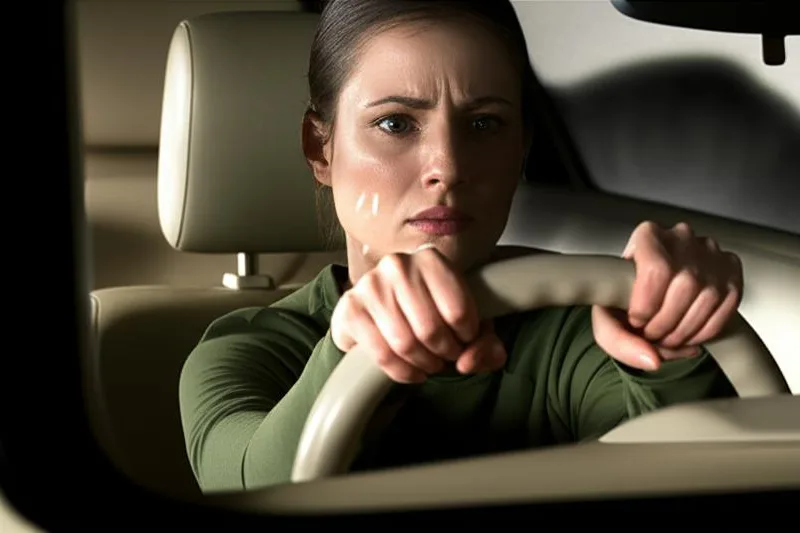
What happens if a puppy suddenly jumps out onto the road while you're driving? Without even thinking, you slam on the brakes. At the same time, your heart starts beating faster, your palms sweat, and your whole body starts shaking, right? Or, the feeling you get when you feel like someone is following you when you're walking alone on the road at night... All of this is due to an amazing "Alarm System" in our body. Today we're talking about the Sympathetic Nervous System , the system that prepares you to save yourself from any emergency.
Let's first see, what is this nervous system?
Simply put, the nervous system is the "communication network" in our body. It's like the wiring system in a house. It's through this nervous system that messages are exchanged between the brain and the rest of the body.
This nervous system is divided into two main parts:
1. Central nervous system: This includes our brain and spinal cord. This is the main control center of our body. It's like the CPU in a computer.
2. Peripheral Nervous System: This refers to all the other nerves that are spread out like a network throughout the body beyond the central nervous system. These are the ones that bring information from all over the body to the brain, and carry the commands from the brain back to the body.
Now this peripheral nervous system is again divided into two parts.
- Somatic Nervous System: This controls the things we do intentionally , such as walking, raising our arms, and talking.
- Autonomic Nervous System: This controls things that happen automatically without us thinking about them . Things like breathing, heart rate, and digestion happen automatically without our command. These things are controlled by this system.
The Sympathetic Nervous System we are talking about today is a part of the Autonomic Nervous System .
How does 'Fight or Flight' prepare us?
There's another part of the Autonomic Nervous System that I mentioned earlier, called the Parasympathetic Nervous System . It's what keeps our bodies functioning properly during normal, calm times. Like keeping our heart rate normal, digesting food, etc. Let's call it the "calm system."
However, when something urgent, dangerous, or stressful occurs , the Sympathetic Nervous System , which we are talking about today, takes over. This is what turns on our body's 'Alarm'. We call this response the 'Fight or Flight' response . That is, it prepares the body to either "fight" or "run away."
Imagine that you are walking down the street and suddenly see a large snake. At that moment, you feel like either picking up a rock and hitting it (Fight), or running away as fast as you can (Flight). The Sympathetic Nervous System prepares your body for both of these in a matter of seconds.
Let's look at some of the changes that occur in the body during this time.
| The change in the body | Why is that happening? (Purpose) |
|---|---|
| The pupil of the eye becomes larger. | To see your surroundings better, let in more light. |
| The heartbeat is accelerating. | Quickly provide the muscles with the oxygen and energy they need. |
| The airway widens. | Get more air (oxygen) into your lungs. |
| Sweating increases. | Keep your body cool. |
| Digestion temporarily slows down. | Direct the energy that goes into digestion to the muscles. |
| Glucose (sugar) is released from the liver. | Give instant energy. |
The ultimate goal of all of this is to maximize your vision, strength, and speed in times of danger and protect you.
What happens if this system malfunctions?
This 'fight or flight' response is essential for us to escape danger. But the problem is that this system is overactive in the modern world.
In the past, people needed this for real life threats, like escaping from an animal. But today, the problems we face are different. Our bodies respond to things like work problems, the stress of being stuck in traffic, and family problems in the same ' fight or flight ' mode.
Overactive System
If our Sympathetic Nervous System is constantly active , it will cause us to be in a state of chronic stress . This is very harmful to our health.
- Blood pressure may increase (High Blood Pressure).
- The risk of heart attacks and strokes may increase.
Underactive System
On the other hand, if this system doesn't work properly when needed, it's a problem. If that happens, the body won't be able to respond properly in the event of a real emergency.
We call this dysfunction of the autonomic nervous system (Autonomic Nervous System) (Autonomic Dysfunction) or (Dysautonomia) . This condition can cause damage to the nerves. It is called Autonomic Neuropathy.
What are the symptoms and causes of Autonomic Dysfunction?
When the functioning of this system is disrupted, various symptoms can occur.
- Digestive problems (bloating, constipation)
- Dizziness or fainting, especially when standing up
- Heart rate not increasing as much as needed during exercise
- Rapid heartbeat for no reason
- Excessive sweating or lack of sweating
- Blurred vision
There are several things that can cause this situation:
- Diabetes Mellitus: This is the most common cause.
- Some autoimmune diseases (e.g. Guillain-Barre syndrome)
- Physical Trauma
- Parkinson's disease
- Some medications (especially chemotherapy for cancer)
- Drug or alcohol abuse
- Some bacterial and viral infections
The most important thing is that if you think you have these symptoms, don't panic unnecessarily, and see your doctor as soon as possible. He or she will perform the necessary tests and explain to you what the cause is and what to do.
Take-Home Message
- The Sympathetic Nervous System is our body's 'Alarm'. It prepares us for the emergency 'Fight or Flight' response.
- While this system is essential to protect us from real dangers, keeping it constantly active due to the stress of modern life can be detrimental to our health.
- Constant stress can lead to conditions such as increased blood pressure and the risk of heart disease.
- If you experience symptoms such as unexplained dizziness, heart rate abnormalities, or changes in sweating, it is very important to talk to a doctor about it.


💬 Comments (0)
No comments yet. Be the first to share your thoughts here.
Add Your Comment