
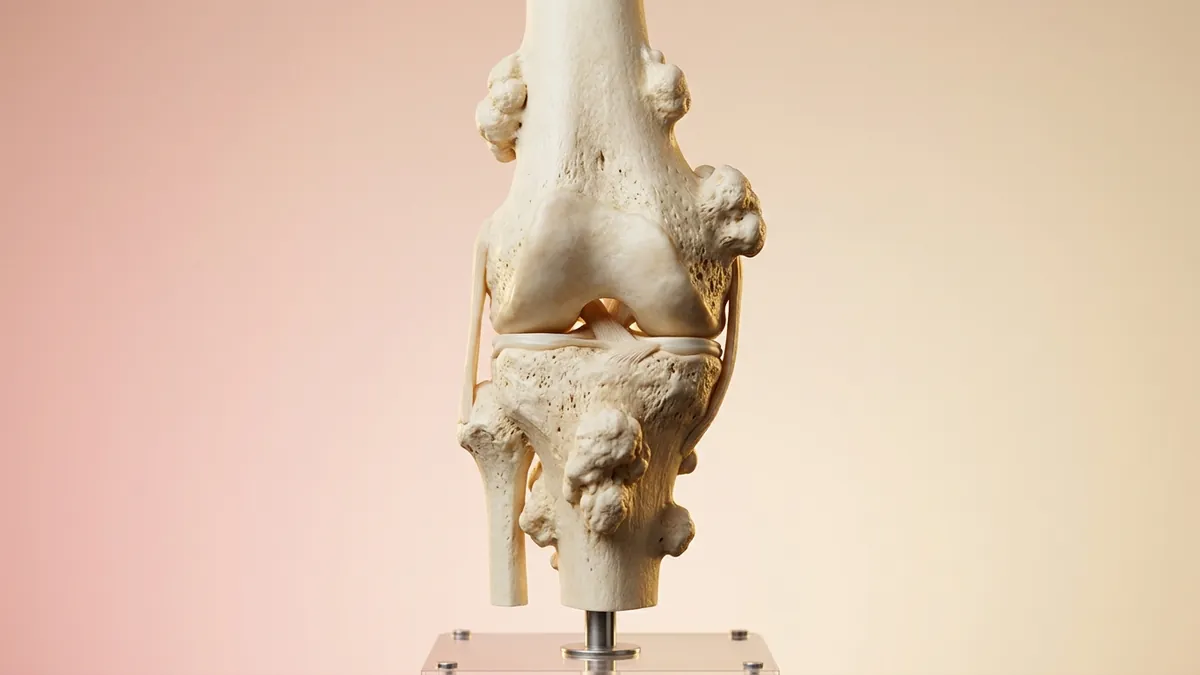
Have you ever noticed a rock-hard lump near your knee, heel, big toe, or shoulder and immediately panicked that it might be bone cancer? That is one of the biggest myths we doctors hear in clinic every week. Another common mistake? Trying to aggressively massage, rub, or file down a hard bony bump at home as if it were a tight muscle knot or a stubborn foot callus. Be honest, you have probably wondered whether pressing on a firm bump might help it shrink, haven't you? In reality, rubbing a bone growth only irritates the overlying skin and tendons. Whether you are dealing with multiple hereditary exostosis or a single everyday bone spur, these growths are overwhelmingly benign—meaning they are non-cancerous and will not spread through your body.
📌 Key Takeaways at a Glance
- Non-cancerous bone growths: Multiple hereditary exostosis (MHE) and common exostoses (bone spurs) are benign outgrowths of normal bone, not bone cancer.
- Growth stops after puberty in MHE: Inherited osteochondromas appear in childhood near growth plates and typically stop enlarging once your skeleton finishes growing.
- Symptoms come from pressure, not the bone itself: Most lumps are painless unless they rub against tendons, press on nerves, or block joint movement.
- Simple care works for most flares: Rest, ice, supportive footwear, and physical therapy relieve most everyday discomfort without surgery.
- Watch for post-puberty growth: Any lump that suddenly enlarges or aches deeply in adulthood needs prompt evaluation by your doctor.
What Is Multiple Hereditary Exostosis (MHE)?
Multiple hereditary exostosis (MHE) is a rare, inherited genetic bone condition where multiple benign (non-cancerous), cartilage-capped bony growths called osteochondromas form near the growth plates of your long bones, ribs, pelvis, or shoulder blades during childhood and stop growing once your skeleton matures after puberty.
Also known medically as hereditary multiple osteochondromas (HMO), this condition is passed down in families through changes in either the EXT1 or EXT2 gene, though roughly 10% of children develop it from a brand-new spontaneous gene change with no family history. Think about it for a second: during childhood, your bones lengthen from soft cartilage zones called growth plates. In MHE, small patches of that cartilage grow outward instead of lengthwise, hardening into smooth, cartilage-capped bumps. Pretty surprising, right? Because these bumps are tied directly to childhood bone growth, they naturally stop expanding once your growth plates fuse in your late teens.
Simply Put, What Is Exostosis and How Does It Differ From Enostosis?
In everyday medical terms, a single exostosis—often called a bone spur (osteophyte)—is simply an extra projection of new bone growing outward on top of an existing healthy bone. Picture a small branch sprouting from the trunk of a sturdy tree; it is made of the same solid wood, just extending outward. While MHE causes multiple growths in children, an isolated exostosis can happen to anyone—especially active young people during growth spurts or older adults experiencing normal joint wear and tear.
Patients also ask us doctors about a similar-sounding term they spot on knee X-ray or MRI reports: enostosis (commonly called a bone island). Here is the easy way to tell them apart: an exostosis grows outward from the bone surface where you can sometimes feel it, whereas an enostosis is a tiny, harmless speck of extra-dense bone tucked completely inside the marrow cavity. Makes sense, right?
What Are the Main Types of Exostosis on the Foot, Toe, Knee, and Hip?
Doctors group exostoses by how they attach to the bone—either broad and flat (sessile) or narrow-stemmed like a mushroom (pedunculated)—and by where they show up on your body. Look at what happens in the most common everyday spots:
- Heel Spur (Calcaneal Exostosis): A pointed bony ridge forms underneath your heel bone where the plantar fascia ligament pulls tightly. If your very first steps out of bed in the morning feel like stepping on a sharp pebble, a heel spur alongside plantar fasciitis is a classic culprit.
- Big Toe Bone Spur (Hallux Rigidus): Wear-and-tear arthritis at the base of your big toe frequently triggers a bony ridge on top of the joint, blocking your toe from bending upward when you push off to walk or run.
- Pump Bump (Haglund's Deformity): Repeated friction from stiff-backed dress shoes, boots, or high heels irritates the back of your heel, prompting a noticeable bony bump right where your Achilles tendon attaches.
- Knee and Hip Bone Spurs (Osteophytes): When smooth joint cartilage thins over time in the knee or hip, extra bone grows along the joint edges, causing stiffness, catching, or aching after activity.
Which Types of Exostosis Require Special Medical Attention?
While most isolated foot or joint spurs are straightforward mechanical issues, two distinct forms of exostosis deserve closer monitoring by your healthcare team.
Hereditary Multiple Osteochondromas (HMO / MHE)
Remember how we talked about MHE earlier? Because dozens of osteochondromas can develop simultaneously around the knees, ankles, wrists, forearms, and shoulders, growing children need periodic orthopedic checkups. If a bump grows unevenly near a growth plate, it can gently tilt a wrist or knee joint or make one arm or leg slightly shorter than the other. In roughly 1% to 5% of adults with MHE, a cartilage cap can slowly transform into a low-grade cartilage tumor (chondrosarcoma), which is why ongoing adult awareness matters.
Surfer's Ear (External Auditory Canal Exostosis)
You do not have to ride waves in California or Australia to get surfer's ear—cold-water swimmers, kayakers, and divers across the UK, Canada, and northern US states develop it too. Repeated exposure to cold water and wind stimulates protective bone rings inside your outer ear canal. Over years, these smooth bony lumps narrow the canal, trapping water and earwax and triggering recurring ear infections or muffled hearing.
Why Does Exostosis Occur? What Are the Main Causes?
Have you ever wondered why your body would build extra bone where you do not want it? There is no single trigger, because exostosis is usually your skeleton's way of responding to either genetic instructions or physical stress:
- Genetic changes and heredity: Inherited or spontaneous variants in the EXT1 and EXT2 genes disrupt normal cartilage signaling in MHE.
- Osteoarthritis and aging: Think of your joints like the wheel bearings on a car. When those bearings wear down, the wheel wobbles. Your body builds extra bone along worn joint edges in a well-meaning attempt to stabilize a loose, irritated joint.
- Repetitive friction or past injuries: Sports strains, tight footwear, ankle sprains, or fractures stimulate localized bone repair that overshoots into a bump.
- Poor posture and spinal wear: Long-term slouching or age-related disc thinning can trigger spinal bone spurs that narrow the nerve canal (spinal stenosis).
What Are the Symptoms of Multiple Hereditary Exostosis and Bone Spurs?
Here is something we rarely stop to think about, isn't it? Pure bone tissue itself has very few pain fibers. Most exostoses stay completely silent for years until a bump physically crowds a neighboring tendon, nerve, blood vessel, or joint surface. When symptoms do appear, they typically include:
- Visible or palpable hard lumps: Firm, non-movable bumps on your hands, feet, shins, knees, forearms, or ribs that feel solid like bone.
- Aching joint pain and stiffness: Deep soreness or tightness in the knee, hip, ankle, elbow, or big toe that worsens with walking or exercise.
- Snapping tendons: A painless or tender "clunk" when a tendon slides back and forth over a bony prominence.
- Nerve tingling or numbness: Pins-and-needles, burning pain, muscle twitching, or weakness down an arm or leg if a spur presses on a nearby nerve.
- Growth differences in MHE: Slightly shorter adult stature, bowing of the forearm or lower leg, or subtle differences in arm or leg length during childhood.
How Do Doctors Diagnose Exostosis and Multiple Hereditary Exostosis?
If you discover a new bony lump, your best first step is booking a routine visit with your Primary Care Physician (PCP) or family GP. We doctors start by asking when you first noticed the bump, whether anyone in your family has similar growths, and whether you have numbness or joint locking. Next, we gently examine the lump's size, firmness, and joint range of motion.
To confirm what is happening beneath the skin, your family doctor will usually order plain X-rays first. On an X-ray, an exostosis has a unmistakable signature: its outer shell and inner bone marrow flow continuously out of the main bone. If you have MHE, a lump near a nerve or blood vessel, or an adult lump that has started aching, your doctor will refer you to a radiologist and orthopedic specialist for an MRI or CT scan to measure the thickness of the cartilage cap, and occasionally to a geneticist for EXT1/EXT2 confirmation.
What Are the Treatments for Exostosis and MHE?
Because benign bone growths do not harm you unless they cause mechanical trouble, asymptomatic lumps need nothing more than watchful waiting. When a spur does cause soreness or stiffness, treatment follows a sensible step-by-step ladder.
Things You Can Do at Home
- Ice and activity rest: Apply a cloth-wrapped ice pack for 15 minutes after walks or workouts and temporarily dial back high-impact running or jumping.
- Smart footwear and insoles: Swap narrow, stiff shoes for wide-toe-box sneakers and add cushioned heel cups or orthotic insoles to offload foot and big-toe spurs.
- Over-the-counter pain relief: Short courses of nonsteroidal anti-inflammatory drugs (NSAIDs) like ibuprofen or naproxen can calm inflamed soft tissues—just check with your doctor or pharmacist first to ensure they are safe for your stomach, kidneys, and blood pressure.
- Healthy weight support: Shedding even a few excess pounds markedly reduces mechanical pressure across hip, knee, and heel spurs.
Medical and Surgical Treatments
If home steps do not settle your symptoms within a few weeks, your family doctor can coordinate targeted clinical care. Physical therapy (physiotherapy) strengthens surrounding muscles and restores joint flexibility so tendons glide smoothly. For severe localized inflammation around a heel, hip, or big-toe spur, a specialist may offer a targeted cortisone (corticosteroid) injection. Finally, orthopedic surgery is reserved for lumps that persistently pinch nerves, restrict joint motion, cause limb-length differences in growing children with MHE, or show suspicious cartilage thickening in adulthood.
Can Exostosis or Multiple Hereditary Exostosis Be Prevented?
Let's be completely honest with each other: you cannot prevent inherited genetic conditions like multiple hereditary exostosis, nor can you stop every age-related joint change. What do you think you can control, though? You can dramatically lower your risk of developing painful acquired bone spurs—and keep existing ones quiet—with a few everyday habits:
- Wear supportive, well-fitted shoes: Give your toes room to spread and avoid rigid heel counters that rub your Achilles tendon.
- Warm up before exercise: Gentle calf, hamstring, and hip stretches reduce sudden tendon pull on bone attachments.
- Protect your posture and weight: Keep your workstation ergonomic and maintain a balanced diet rich in calcium, vitamin D, and lean protein.
- Use cold-water earplugs: If you surf, swim, or kayak in chilly water, vented thermal earplugs block cold water from triggering surfer's ear.
Quick Comparison: Common Bone Lumps and Exostosis Types
Because different bony growths look and behave quite differently, this side-by-side guide helps you match common locations with what is happening underneath and your smartest next move:
| Condition or Location | What Is Happening & Your Next Step |
|---|---|
| Multiple Hereditary Exostosis (MHE / HMO) | Inherited genetic condition causing multiple cartilage-capped bone bumps near growth plates in children; growth stops after puberty. What you should do: Arrange periodic orthopedic monitoring during childhood growth and report any lump that grows or aches in adulthood. |
| Heel Spur & Pump Bump (Foot Exostosis) | Localized bone ridge under the heel or at the back of the heel triggered by tight plantar fascia ligaments or stiff footwear friction. What you should do: Switch to cushioned, wide-heel shoes, stretch your calves daily, and ask your PCP or GP about custom orthotic insoles. |
| Big Toe Bone Spur (Hallux Rigidus) | Osteoarthritis spur on top of the big toe base joint that restricts upward toe bend and causes pain when pushing off. What you should do: Wear stiff-soled rocker shoes or carbon-fiber inserts to limit painful joint bending and see your doctor if stiffness progresses. |
| Knee or Hip Bone Spur (Osteophyte) | Extra bone forming along joint edges as cartilage thins with age or past sports injury, causing stiffness or catching. What you should do: Focus on low-impact strengthening like cycling or swimming, manage weight, and consult your doctor for physical therapy. |
| Surfer's Ear Canal Exostosis) | Smooth bony narrowing inside the outer ear canal caused by years of cold-water and wind exposure. What you should do: Wear vented cold-water earplugs during water sports and see your PCP, GP, or ENT specialist if water traps easily or hearing drops. |
✔️ What You Should Do & ❌ What to Avoid
- ✔️ Do keep a simple symptom log: Note when you first felt a lump, whether its size changes, and which activities trigger soreness before your doctor's appointment.
- ✔️ Do choose cushioned, supportive footwear: A roomy toe box and shock-absorbing sole protect foot, heel, and knee spurs every time you walk.
- ✔️ Do attend routine MHE follow-ups: Regular orthopedic checks during childhood catch limb alignment shifts early when simple treatments work best.
- ❌ Don't rub, hammer, or file down a bony lump: Aggressive massage or pumice stones will never shrink bone and can bruise nerves or cause skin infections.
- ❌ Don't push through sharp nerve pain: Tingling, shooting pain, or weakness means a bump is irritating a nerve and needs proper medical assessment.
- ❌ Don't ignore a growing lump after age 20: New enlargement of an old osteochondroma after puberty always warrants specialist imaging.
🚨 When to Seek Immediate Emergency Care (Red-Flag Symptoms)
If you or someone near you develops any of these red-flag symptoms, do not wait — call 911 (or 999 in the UK / 000 in Australia) immediately or go straight to the nearest hospital Emergency Room (ER / A&E):
- Sudden limb weakness or paralysis: Inability to lift your foot drop), grip objects, or move a limb normally, which can signal acute nerve compression.
- Cold, pale, blue, or pulseless hand or foot: Rapid numbness paired with a cool, discolored limb below a bony lump, suggesting blood vessel compression.
- Rapid lump enlargement with severe deep pain: A known osteochondroma or bone bump that suddenly swells quickly, throbs relentlessly at night, or fractures after minor trauma.
- Signs of serious infection: Spreading redness, intense heat, pus drainage, or high fever over a foot spur or inside an ear canal blocked by surfer's ear.
💡 Key Take-Home Message
- Benign, not cancer: Multiple hereditary exostosis and common bone spurs are non-cancerous outgrowths of normal bone.
- Biology explains the timing: MHE bumps grow alongside childhood growth plates and settle after puberty, while single bone spurs typically reflect joint wear or friction.
- Conservative care comes first: Most painful spurs respond well to rest, ice, supportive shoes, weight management, and physical therapy.
- Partner with your doctor: Always let your family doctor or GP evaluate a new hard lump rather than self-diagnosing or rubbing it at home.


No comments yet. Be the first to share your question or experience below.