
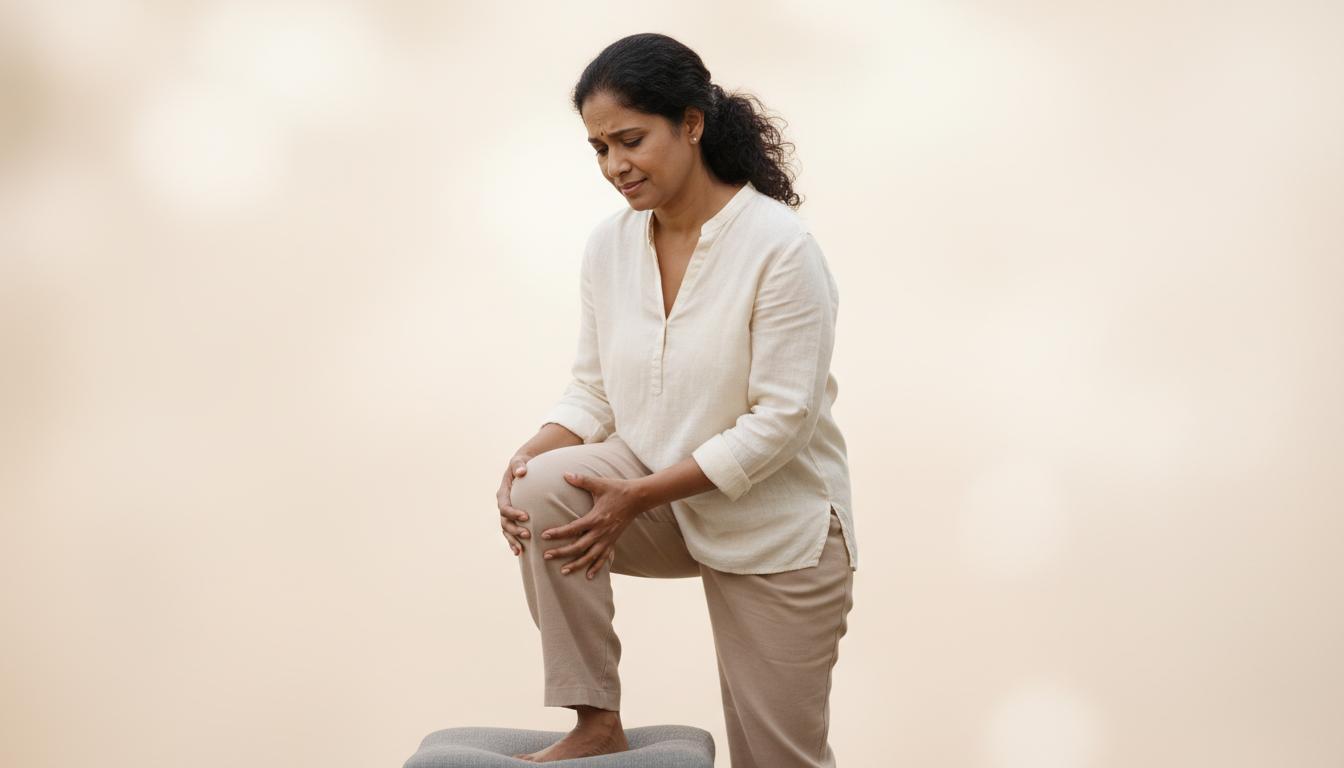
Do you find yourself thinking that aching knees are just an inevitable part of getting older? Or perhaps you hear a 'clicking' or grinding sound when climbing stairs or standing up after sitting for a while? This pain and stiffness could be signs of Knee Osteoarthritis (OA), a common condition affecting many people. Let's talk simply about what knee OA is, its causes, symptoms, and how you can manage it effectively.
What Exactly is Knee Osteoarthritis?
In simple terms, Knee Osteoarthritis is the gradual wearing down of the protective cartilage within your knee joint. Think of your knee joint like a sophisticated shock absorber in a car. When you run, jump, walk, or even stand, this cartilage acts as a cushion between the bones, absorbing pressure and allowing smooth movement without bone-on-bone friction.
The problem begins when this 'shock absorber' – the cartilage – starts to wear thin over time. As the cartilage deteriorates, the bones may start rubbing against each other directly. This leads to the characteristic symptoms of OA, such as pain, swelling, and stiffness. It's typically not something that happens overnight but rather a condition that develops gradually over years.
It’s important to understand that while knee OA cannot be completely cured, there are many effective ways to manage its symptoms, slow down its progression, and maintain a good quality of life. Don't despair; proactive management is possible!
Are There Different Stages of Knee OA?
Yes, because knee OA develops progressively, healthcare professionals often classify it into stages to better understand the severity and guide treatment. Knowing the stage can help you and your doctor tailor a management plan.
| Stage | Condition and Symptoms |
|---|---|
| Stage 1 (Minor) | This is the earliest stage. There might be some minor cartilage wear, but often no pain or symptoms are noticeable. |
| Stage 2 (Mild) | You may start experiencing mild pain and stiffness in the knee. The cartilage has thinned further, but bones haven't significantly touched yet. |
| Stage 3 (Moderate) | Cartilage wear is more significant. Pain becomes more noticeable during activities like running, walking, or kneeling. Stiffness, especially after periods of inactivity, increases. |
| Stage 4 (Severe) | This is the most advanced stage. Cartilage is severely worn down, often leaving little space between bones. Intense pain, significant stiffness, and difficulty moving are common. Bone spurs may be present. Knee replacement surgery might be considered at this stage. |
Common Symptoms of Knee Osteoarthritis
While pain is the hallmark symptom, knee OA can manifest in several ways. See if any of these sound familiar:
- Knee Pain: This can occur with activity (like walking or climbing stairs) or even at rest, especially as the condition progresses.
- Stiffness: Particularly noticeable in the morning or after sitting for extended periods, making it difficult to bend or straighten the knee initially.
- Swelling: The knee joint may appear swollen or feel puffy.
- Clicking or Grinding Sounds (Crepitus): You might hear or feel a grating sensation when moving the knee.
- Instability: A feeling that the knee might 'give way' or buckle unexpectedly.
- Locking: The knee suddenly gets stuck in one position, preventing movement.
Potential Complications if Left Untreated
Ignoring persistent knee pain can lead to further complications:
- Joint Instability: Pain may cause you to avoid using the affected knee, leading to muscle weakness around the joint. This can worsen instability and increase the risk of falls.
- Bone Spurs (Osteophytes): As bones rub together, bony growths can develop around the joint, potentially causing more pain and restricting movement.
- Baker’s Cyst: Excess fluid in the knee joint can collect behind the knee, forming a cyst that causes tightness and discomfort.
- Mood Disorders: Chronic pain and limitations on activity can contribute to anxiety and depression.
What Causes Knee Osteoarthritis? Risk Factors
The primary cause is the natural wear and tear of cartilage over time. However, several factors can accelerate this process:
- Excess Weight: Carrying extra weight puts significant stress on knee joints, increasing the rate of cartilage breakdown (BMI > 30).
- Previous Injury: A past knee injury, like a ligament tear or fracture, can damage cartilage and increase future OA risk.
- Repetitive Stress: Certain occupations involving heavy lifting or kneeling, or high-impact sports, can put excessive strain on the knees.
- Genetics: A family history of osteoarthritis may increase your predisposition to developing it.
- Age: The risk increases significantly with age.
How is Knee Osteoarthritis Diagnosed?
If you experience knee pain, your doctor will start by taking a detailed medical history and asking about your symptoms. They will then perform a physical examination of your knee, assessing:
- Presence of swelling, redness, or tenderness.
- Range of motion (how far you can bend and straighten the knee).
- Joint stability and alignment.
- Your gait (walking pattern).
Based on the physical exam, your doctor may order imaging tests:
- X-rays: These are commonly used to visualize the joint space, cartilage loss, and bone spurs.
- MRI or CT Scan: These may be ordered for a more detailed view of the soft tissues (cartilage, ligaments) if needed.
Treatment Options for Knee Osteoarthritis
Surgery is usually considered a last resort. Many non-surgical treatments can effectively manage symptoms:
- Medications: Over-the-counter or prescription pain relievers (like NSAIDs) and topical creams can help reduce pain and inflammation.
- Physical Therapy: A physical therapist can design exercises to strengthen the muscles around the knee, improve flexibility, and enhance joint function. This is a cornerstone of OA management.
- Weight Management: Losing even a small amount of weight can significantly reduce stress on the knees.
- Knee Braces: These can provide support and stability to the joint.
- Injections:
- Corticosteroid injections: Can provide temporary relief from pain and inflammation.
- Viscosupplementation (Hyaluronic acid): Involves injecting a gel-like substance into the joint to improve lubrication.
- Platelet-Rich Plasma (PRP): Uses concentrated platelets from your own blood to potentially promote healing.
- Surgical Options (if non-surgical treatments fail):
- Osteotomy: Reshaping the bone to shift weight off the damaged part of the joint.
- Knee Replacement (Arthroplasty): Replacing the damaged joint surfaces with artificial components. This can be a total or partial replacement.
Can Knee Osteoarthritis Be Prevented?
While you can't completely prevent age-related wear and tear, you can take steps to reduce your risk and slow progression:
- Maintain a Healthy Weight: This is crucial for reducing stress on knee joints.
- Stay Active: Engage in low-impact exercises like swimming, cycling, or walking to strengthen supporting muscles without overloading the joint.
- Protect Your Knees: Use proper technique when lifting heavy objects and consider supportive footwear.
- Seek Prompt Treatment: Don't ignore knee pain. Early diagnosis and management can make a significant difference.
Key Takeaways
- Knee Osteoarthritis involves the breakdown of protective cartilage in the knee joint.
- Symptoms include pain, stiffness, swelling, and sometimes clicking or locking sensations.
- Risk factors include age, excess weight, previous injuries, and genetics.
- Lifestyle modifications like weight management and appropriate exercise are vital for managing OA.
- If you experience persistent knee pain, consult your doctor promptly for diagnosis and a personalized treatment plan.
Disclaimer: This article provides general information about this condition and should not replace the advice from your doctor. Always consult a healthcare professional.
💬 අදහස් (0)
තවමත් කිසිදු අදහසක් පළ කර නොමැත. ඔබේ අදහස පළමු වරට මෙහි එක් කරන්න.
ඔබේ අදහස එක් කරන්න