
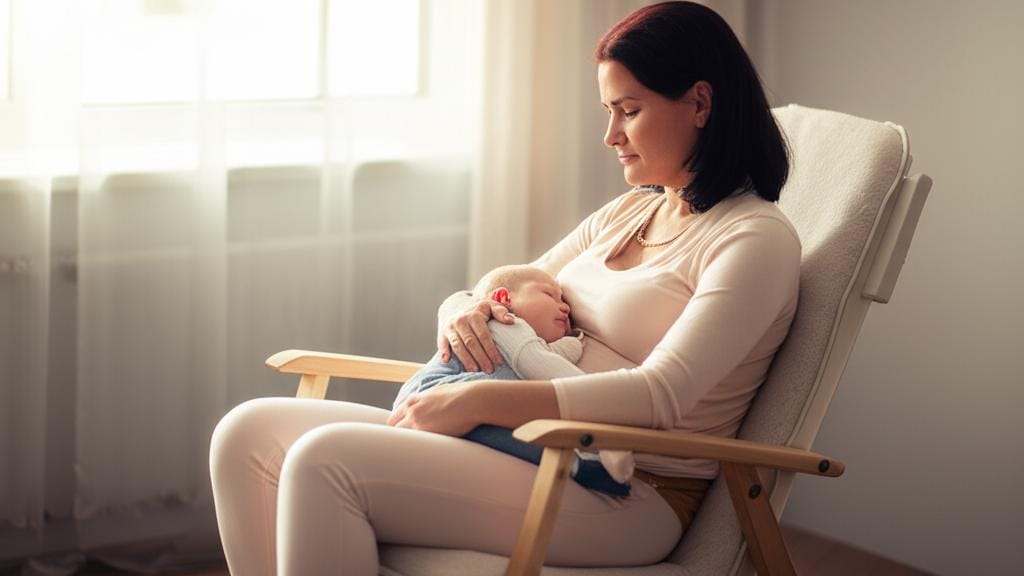
When you become a new mother or father, one of the biggest questions that comes to mind is baby sleep. You might wonder, 'Is my baby sleeping enough?', 'Why is he/she sleeping so much?' or 'Why isn't he/she sleeping properly at night?'. So today, let's talk about how sleep works in your baby's first year and what we need to be mindful of.
Why Do Little Babies Sleep So Much?
Simply put, babies grow very quickly. So many things happen inside their tiny bodies and brains! For all these things, which means for their healthy physical and mental development, good sleep is absolutely essential for babies. It's like watering and fertilizing a tree we've planted; sleep is crucial for a baby's growth.
However, you might sometimes think, 'I wonder if my baby is sleeping too much.' If you have such a fear or doubt, the best thing to do is to talk to your pediatrician. Then the doctor will tell you what is normal for your baby and if there's any condition that requires attention. For example, if the baby is very drowsy, it might be something like a cold or fever. Very rarely, excessive sleepiness can also be a symptom of a medical condition that requires treatment (e.g., Congenital heart disease). So, the doctor will examine everything and take necessary action.
Baby sleep patterns are not something that is precisely written down as 'this is how it should be'. What works for one baby might not work for another. But generally speaking, because babies need to feed frequently (yes, most of the time!), they do have a certain sleep pattern.
Another thing is that newborns don't understand the difference between day and night. Their internal 24-hour clock, which adults call the 'Circadian rhythm', takes some time to develop. This is what tells them when to be awake and when to sleep. So, during this time, you and your baby need to be very patient, okay?
So, How Long Should Babies Sleep?
From 4 to 12 months, babies should sleep between 12 and 16 hours a day. This includes daytime naps. Sleeping this much ensures the baby's good health and development.
However, for babies under 4 months, there are no specific recommendations for how long they should sleep. The reason is that research has not yet found a definitive link between a certain amount of sleep and specific health benefits. Experts say that 'normal' sleep varies from baby to baby from birth until about 4 months. What works for your baby might not work for your friend's baby. That's why it's important to talk to your doctor during these first few months (and even after).
What is a Newborn's Sleep Schedule Like?
During your baby's first two months of life, sleep comes in short bursts between feedings. The baby might sleep continuously for 30 minutes to about three hours. After that, they will be awake for about two hours before falling asleep again. Newborns wake up frequently like this because their tiny stomachs fill up quickly and they get hungry again shortly after feeding. This pattern of sleeping for short periods and waking up is normal and very important for the baby's development.
How Often Should a Newborn Be Fed?
If you are breastfeeding, you should feed your baby every two to three hours. If you are formula-feeding, the baby can go a bit longer between feedings, usually about three to four hours.
Should I Wake My Baby to Feed?
Some experts say that if a baby needs to gain some weight within the first two weeks after birth, you should wake them to feed. In that case, you would need to wake your baby to feed every three to four hours. Others say that if a baby sleeps for more than five hours continuously within the first five to six weeks, you should wake them to feed.
Generally, babies under 6 months wake up every three to four hours due to hunger. So, the question of whether to wake them (and thereby lose your valuable sleep) might not be that big of a deal. Talk to your doctor about what is best for your baby and whether you should wake them to feed. The doctor will consider your baby's weight, growth, frequency of feeding, whether they are urinating, and pooping, and then advise you.
When Do Babies Start Sleeping Through the Night?
Most babies start sleeping through the night around 6 months of age. This means they can sleep for five or six hours continuously without a feed. Some babies even start sleeping for longer stretches earlier, around 4 months.
However, it's very normal for babies to wake up intermittently at night. Your baby might wake up once, twice, or even six times. These patterns can change throughout the baby's first year. Experts call this 'sleep regression'. You'll understand this perfectly when your baby, who slept well last week, cries every hour this week. That's what it is.
When your baby wakes up at night, you'll have to soothe or hold them to get them back to sleep. Babies under 3 months primarily rely on you for this because they are not yet able to regulate their emotions.
However, after your baby is about 3 months old, you can start teaching them to self-soothe. Babies who can self-soothe can go back to sleep with little to no help from you. This takes some time, but in the long run, it's very beneficial for both you and your baby. However, if your baby wakes up crying, you must always check if their basic needs (like hunger, illness, or a wet diaper) are met. Self-soothing methods won't work for babies who are hungry, sick, or have a dirty diaper.
What Can I Do to Help My Baby Sleep Well?
Your baby needs good, quality sleep for their own well-being and for yours too. If the baby doesn't sleep, you won't sleep either (no need to remind you of that!). So, here are some small tips to help your baby sleep like, as the saying goes, 'sleeping like a baby':
- Establish a 20-30 minute bedtime routine. This helps the baby calm down and understand that it's time to sleep. You can do things like bathing the baby, singing a lullaby, or reading a book. It's a good idea to feed the baby at the beginning of this routine, so they don't associate feeding with falling asleep.
- Make daytime naps part of the baby's daily routine. Don't keep your baby awake for too long, thinking they'll sleep better at night. You might think that if the baby is very tired, they'll fall asleep quickly and sleep through the night. The opposite is actually true. When a baby is overtired, it becomes difficult for them to fall asleep and stay asleep.
- Help regulate the baby's internal clock ('Circadian rhythm'). You can do this by exposing them to bright, sunny areas during the day and removing bright lights at night. When the baby wakes up for a night feed, minimize talking and playing as much as possible. Keep the environment calm and quiet to help the baby understand that night is for sleeping, not for activity.
- Be mindful of the room's temperature. Keep the baby's sleeping area at a comfortable temperature, usually between 20-22 degrees Celsius (68-72 degrees Fahrenheit).
- Experiment with different sleep training methods. This refers to teaching the baby to fall asleep independently. What works for one baby might not work for another. Also, a method that worked for your baby a few months ago might not work now. It's okay to experiment, modify methods, or combine several to help your baby as needed.
- Give your baby plenty of attention when they are awake. Especially in the first few months, holding your baby frequently provides them with a sense of calm and security (which can also help with good sleep). This is also a good opportunity for family and friends to offer some help.
Babies with certain medical conditions might need different kinds of help to get enough rest. In such special cases, it's very important to talk to your doctor about what your baby needs.
Where Should My Baby Sleep?
Your baby should sleep in a bassinet or crib, either in your room or in a separate room. No matter how much you love cuddling your baby, letting them sleep in your bed is never safe. Bed-sharing increases the risk of suffocation, strangulation, and Sudden Infant Death Syndrome (SIDS) for the baby.
SIDS refers to the sudden and unexplained death of a healthy baby. Always placing the baby on their back to sleep and taking other safety measures can help the baby sleep safely. If you have any questions about safe sleep during different stages of your baby's development, don't hesitate to ask your doctor.
When Should I Seek Medical Advice?
Talk to your doctor if your baby shows these symptoms:
- If they are frequently very fussy and difficult to soothe even with attempts. They might have a condition like Reflux or another issue causing continuous crying (e.g., Colic).
- If they are very difficult to wake up.
- If they seem to have no interest in feeding.
Especially if you are a first-time mother, you might wonder what is normal and what needs attention. If in doubt, the best thing to do is call your doctor and discuss what's happening. There's no such thing as a small or 'silly' question when it comes to your baby's care and well-being.
So, What Should We Remember from All This?
When days and nights start to blend, it can be hard to remember exactly how many hours your baby sleeps or when they sleep. That's okay. Sleep in your baby's first year is not about strictly following rigid rules and formulas. Every baby is different. But generally, they spend at least half of every day sleeping in their first year. Stay in regular contact with your doctor. They will tell you what is normal for your baby and how they are developing.
Throughout this entire time, don't forget to take care of yourself too. This can happen in various ways. Accept help from others. Postpone housework (and don't apologize for it!). If you really need a little nap, skip going out with friends. This first year is a very important time for you and your family to establish a routine and get into a rhythm. Enjoy the small moments with your baby, and do everything you can to meet their needs. Trust that all the other little things will fall into place.
👩🏽⚕️ Additional Questions (FAQs)
💬 What should a baby's sleep be like during the first year?
Our babies sleep for 14-17 hours within the first 3 months, without distinguishing between day and night. However, after 6 months and approaching one year, the baby naturally gets used to sleeping continuously for about 10 hours at night and taking two short naps of about 2 hours during the day.
💬 Why is it dangerous to let a baby sleep with pillows and blankets for the first few months after birth?
If there are large pillows, toys, or loose blankets in the baby's bed during the first year, there is a high risk of them falling onto the baby's face, causing suffocation and infant deaths (SIDS). Always place the baby on their back to sleep, alone and without pillows.
💬 How to break the habit of a baby waking up for night feeds?
After 6 months, babies don't need milk at night due to hunger; they ask for milk because they seek their mother's warmth to fall back asleep after waking up (Sleep association). Therefore, feed them sufficiently at night, and when they wake up, don't give milk, but gently pat them to allow the baby to get used to falling asleep on their own.
`
💬 අදහස් (0)
තවමත් කිසිදු අදහසක් පළ කර නොමැත. ඔබේ අදහස පළමු වරට මෙහි එක් කරන්න.
ඔබේ අදහස එක් කරන්න