Do you sometimes feel like your lower legs are just heavy and swollen? Maybe the skin color has changed, itchy, etc. These things are common for some people as they age. Today, let's talk about this condition, that is, this skin disease called
(Venous Stasis Dermatitis ) in medical terms. Since this is a bit of a long name, some people also call it simply
(Stasis Dermatitis) .
What exactly is this (Venous Stasis Dermatitis)?
Simply put, Venous Stasis Dermatitis is a condition where the skin on your legs, especially the lower legs, becomes swollen or inflamed. This type of leg swelling can happen as you age. Normally, our veins work to carry blood from our legs back to our heart, where it can get fresh oxygen. But if you have Venous Stasis, your veins can't carry blood from our legs to our heart properly. What happens then? Blood pools in the lower legs, like water pooling. This causes swelling, pressure, and skin problems. It's also called:
Who is more likely to develop Venous Stasis Dermatitis?
In fact, anyone can develop this condition as they age. However, some people are at a higher risk of developing it. They are:
- People with Chronic Venous Insufficiency (CVI) . This is when the veins in the legs don't work properly. We'll talk about this a little later.
- People with heart failure . When the heart becomes weak, it affects blood circulation throughout the body.
- Lymphedema , which is swelling caused by the body's lymphatic fluid not moving properly and accumulating in one place.
Also, if you have had
radiation therapy , sometimes the areas affected by radiation can swell, that is, develop
edema , which can put pressure on the skin.
How common is this condition?
Venous Stasis Dermatitis is a condition that is very common among people over the age of 50. Even in a country like America, it is said that about 15-20 million people in this age group suffer from this condition. There are many people with similar conditions in our country as well.
How does Venous Stasis Dermatitis affect you?
We say that your legs swell because of this condition. This swelling puts pressure on the skin. That's when the skin starts to turn red, itchy, feel heavy in the legs, and sometimes even hurt. If not treated properly, this can get worse and cause
skin wounds (Sores/Ulcers) . These wounds can become infected. Also, this condition can even cause permanent changes to your skin. So it's very important to take care of this.
What are the causes of Venous Stasis Dermatitis?
Venous Stasis Dermatitis is caused by blood pooling in the lower legs (sometimes in the arms, but most often in the legs). This pooling of blood is called
stasis . The main cause of this is
the chronic venous insufficiency (CVI) that we mentioned earlier. Think about it, our veins are just like pipes. They have small valves inside them, like doors. These valves only allow blood to flow in one direction, that is, towards the heart. But as we age, these valves can stop working properly, or the vein walls can become stretched and weak. Then, instead of sending blood back to the heart, blood pools in the legs. In addition, if you have
blood clots , if you have had an injury, or if you have had surgery, blood can pool in the legs for reasons like these.
This accumulation of blood and fluid gradually leaks out of the veins, creating pressure on the skin from within. It is this pressure that causes the symptoms of stasis dermatitis.
What are the risk factors for this condition?
We mentioned that aging is a major risk factor. Apart from that, there are several other factors that can contribute to the development of Stasis Dermatitis. Consider these things:
- Not exercising properly. When the body doesn't exercise, blood circulation also decreases, right?
- Sitting for long periods of time in the same position. Think of people who work in an office, or those who travel long distances on buses or trains. When you have your legs crossed for a long time, there is a greater chance that blood will pool in the lower extremities.
- Standing for long periods of time. There are some jobs that require standing all day. For example, teachers, shop workers, and factory workers.
In addition, the risk is even higher if you have any of the following health problems:
- High blood pressure (Hypertension).
- Kidney failure.
- Many Pregnancies. During pregnancy, changes in the body can put pressure on the veins.
- Obesity and Heart Disease.
- Varicose Veins: Some people have blue or purple veins on their legs that appear twisted and swollen.
What are the symptoms of Stasis Dermatitis?
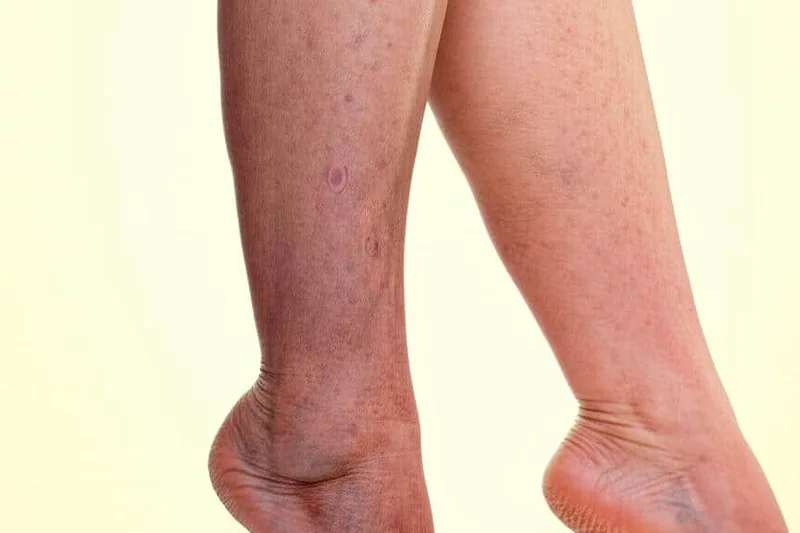
In the early stages of this condition, you may notice swelling in your legs or ankles. You may also notice changes in skin color. You may also notice:
- Itchy skin (Pruritus). This is the first thing most people notice.
- Skin discoloration. It may look like a yellow-brown color.
- Red, scaly, or thickened spots.
- Places that hurt or are painful when touched.
If you don't treat it properly, Venous Stasis Dermatitis can lead to
leg and foot ulcers . These ulcers are difficult to heal. Sometimes, a skin infection called
cellulitis can develop. This causes the skin to become red, swollen, and feverish.
Is Venous Stasis Dermatitis contagious?
No.
Venous Stasis Dermatitis is not a contagious disease. You cannot spread it to someone else.
How to diagnose (Venous Stasis Dermatitis)?
Your doctor will diagnose this condition by examining your legs and skin. They will look closely at the symptoms you are describing, the way your legs are swollen, and any changes in skin color.
What kind of tests are done to confirm this?
Doctors want to know why your legs are bleeding. So, your doctor may
order an ultrasound . This will check for blood clots in your legs or damage to your veins. This is a simple, painless test. Sometimes, your doctor may also order
allergy testing . This is because they want to make sure that these skin problems are not caused by any other allergies.
How to treat Venous Stasis Dermatitis?
There are several ways to treat Venous Stasis Dermatitis. The main goals are to reduce swelling, heal the skin, and improve blood circulation. To treat the skin, your doctor may recommend the following:
- Apply special dressings to the affected areas. These help the wounds heal.
- Medicated creams can be applied to the skin. These help reduce itching and redness. Sometimes, steroid creams can also be given.
- If you have an infection (e.g. cellulitis), you will be given antibiotics .
Very important: You should do these things exactly as your doctor tells you. Use only the medications and ointments he or she recommends. In addition, your doctor may also give you these instructions:
- Keep your legs elevated throughout the day and at night when you sleep. This will help reduce blood pooling in your legs. When sitting, keep your legs elevated on a chair. When sleeping, keep a pillow under your legs.
- Wear compression stockings or socks. These help to compress the veins in your legs and help blood flow upward. It is important to wear the right size socks as prescribed by your doctor.
Will this require surgery?
Most of the time, other treatments can help control the condition. However, if your symptoms don't improve or get worse, your doctor will talk to you about what to do next. You may need to have other
venous disease treatments , or even surgery, to improve blood flow in your veins. But that's up to your doctor to decide.
How can I reduce the risk of developing Venous Stasis Dermatitis?
If you have health conditions that put you at higher risk for developing Venous Stasis Dermatitis (e.g., Varicose Veins, high blood pressure), be sure to talk to your doctor. He or she can advise you on what you can do to reduce your risk. You can also:
- If your doctor recommends it, definitely exercise. Walking for at least 30 minutes a day is great.
- When you sit, keep your legs above your heart. Make this a habit.
- Use a good moisturizer to keep your skin from drying out. Dry skin can make itchiness worse.
- If you've been standing or sitting for an hour, take a brisk walk for a few minutes afterward. This will improve blood circulation in your legs.
If you have chronic venous insufficiency , check your skin regularly. If you notice any changes in skin color, redness, or swelling, call your doctor right away. If you develop any skin lesions, report them immediately.
How long does Venous Stasis Dermatitis last?
Venous Insufficiency and Venous Stasis Dermatitis are
long-term conditions. This means that if you have them, they will be with you forever. But don't worry. You can work with your doctor to manage your symptoms and stay as comfortable as possible.
Can doctors completely cure Venous Stasis Dermatitis?
No, doctors cannot completely cure Venous Stasis Dermatitis. However, you can manage the condition by regularly checking your skin and getting the necessary treatment.
A dermatologist or your family doctor can help you manage Venous Stasis Dermatitis.
Are there any long-term effects of Venous Stasis Dermatitis?
If left untreated, chronic Venous Stasis Dermatitis can lead
to infections.can occur. Therefore, by continuously managing this condition, you can prevent infections and other complications. (Venous Stasis Dermatitis) can also cause serious complications like
blood clots . That is why it is important to be careful about this.
When should I see a doctor?
If you notice any changes in your skin – redness, pain, itching, swelling – be sure to talk to your doctor. Don’t ignore it, especially if you notice any of these on your legs. Venous Stasis Dermatitis is caused by blood pooling in the legs and feet because the veins don’t work properly. Although it’s a lifelong condition, you can take steps to improve blood flow to your legs and control it. Check your skin regularly, and see your doctor if you notice any changes. If you have Venous Stasis, talk to your doctor about the best way to manage your symptoms.
So, what are the take-home messages from this talk?
Okay, we've talked a lot about this (Venous Stasis Dermatitis). The most important thing is that it's a condition that comes with age, where blood in the veins doesn't move properly and instead stagnates on the skin of the legs.
Remember, this is not a contagious disease. And, while it cannot be completely cured, if managed properly, you can live a normal life.
- If you notice any swelling, discoloration, itching, or sores on your legs , be sure to see a doctor. Early detection is easier to treat.
- Follow your doctor's instructions exactly. Use the prescribed medications and ointments exactly as directed, for the duration of the treatment.
- Make it a habit to keep your legs elevated as much as possible. Keep a pillow under your legs when sitting and sleeping.
- Exercise is very important. Take a short walk every day. When the muscles in your legs are working, it helps to pump blood up.
- If your skin is dry, cleanse with a soap-free mild cleanser and apply a good moisturizer at least twice a day.
- If your doctor tells you to, use compression stockings properly. Put them on when you wake up in the morning and take them off before going to bed at night.
Living with this condition can be challenging at times, but you are not alone. Doctors and nurses are there to help you. So stay strong, follow these tips, and take care of your health.



💬 Comments (0)
No comments have been posted yet. Add your comment here for the first time.
Add your comment