
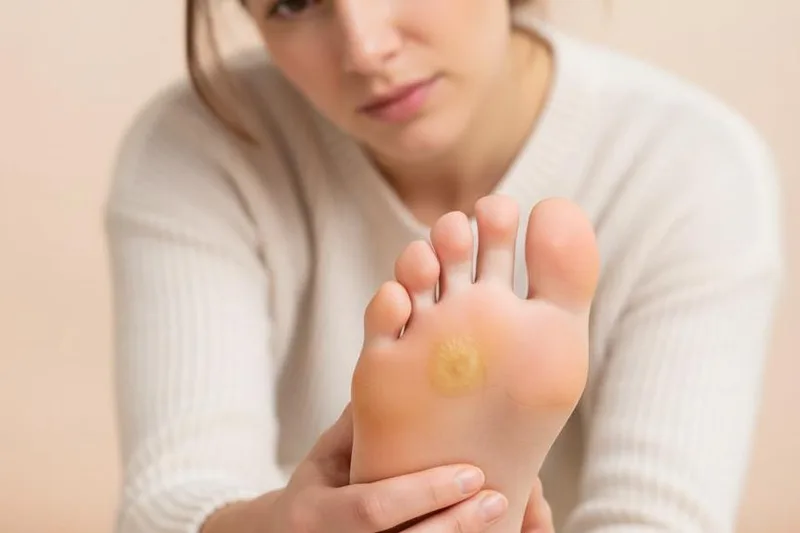
Ever finished a walk in new shoes only to find a tender spot forming on your toe? Or perhaps after hours of gardening, the areas where you gripped tools feel rough and slightly sore, even without sharp pain? These common sensations often point to corns and calluses – medically known as Corns and Calluses. While frequently experienced, understanding these conditions allows for effective management and prevention.
What Exactly Are Corns and Calluses?
In simple terms, corns and calluses are areas of thickened skin that develop in response to repeated pressure or friction on a specific part of the body. Think of it as your body's natural defense mechanism – building up a protective layer of skin where it's being constantly irritated. While both involve thickened skin, they differ slightly in appearance and location.
| Feature | Corns (කෝන්ස්) | Calluses (කැලසස් / කඩදැති) |
|---|---|---|
| Size and Shape | Typically small, round, and may have a hard central core. | Relatively larger, flatter, and lack a distinct shape. |
| Common Locations | On top of toes, between toes, or on the sides of toes. | Soles of the feet (heel, ball of foot), palms of hands, fingertips. |
| Pain | Often painful when pressure is applied. | Usually painless; less sensitive than surrounding skin. |
Are There Different Types of Corns?
Yes, corns are generally classified into three main types:
Hard Corns (තද කෝන්ස්)
These are the most common type. They typically appear as small, dense patches of thickened skin on the tops or sides of toes, often developing due to pressure from ill-fitting shoes rubbing against the bone.
Soft Corns (මෘදු කෝන්ස්)
These corns are softer in texture, often appearing whitish or grayish. They typically develop in areas that stay moist, such as between the toes where sweat can accumulate. They feel rubbery to the touch.
Seed Corns (ඇට වැනි කෝන්ස්)
These resemble tiny seeds and usually form on the soles of the feet, particularly under the ball of the foot or heel. They are clusters of small, hard corns.
Why Do We Get Corns and Calluses? Common Causes
The primary cause is prolonged pressure or friction on one specific area of skin. Consider these common triggers:
- Ill-fitting Footwear: This is a major culprit! Shoes that are too tight, too loose, or have high heels can create points of pressure and friction, leading to corns and calluses. High heels, in particular, shift weight forward onto the ball of the foot, increasing the risk of calluses there.
- Activities and Hobbies: Repetitive motions or gripping actions can cause calluses. Think about a guitarist's fingertips, a gardener's palms, or someone who frequently lifts heavy weights – these activities involve repeated friction.
- Not Wearing Socks: Going barefoot or wearing shoes without socks allows your feet to rub directly against the shoe material, increasing friction and the likelihood of developing calluses.
- Abnormal Gait (Walking Pattern): Some people walk in a way that puts excessive pressure on certain parts of their feet (e.g., rolling inward or outward), predisposing them to callus formation.
- Foot Deformities: Conditions like bunions or hammertoes can alter the shape of the foot, causing abnormal pressure points within shoes and leading to corns or calluses in those areas.
Home Care Strategies for Corns and Calluses
Often, these conditions aren't serious and can be managed at home. However, it’s crucial to ensure you don't have underlying conditions like diabetes or poor circulation before attempting self-treatment (more on this later).
- Soak Your Feet: Fill a basin with warm water and add Epsom salts or a bit of soap. Soak your feet for 10-15 minutes to soften the thickened skin.
- Gently File the Skin: After soaking, use a pumice stone or foot file to gently rub the affected area. Move in one direction to avoid damaging healthy skin. This helps remove dead skin cells gradually.
- Moisturize Regularly: Apply a thick moisturizing cream or lotion containing urea or ammonium lactate to the affected areas daily. This helps keep the skin soft and hydrated, preventing further thickening.
- Use Protective Pads: Non-medicated pads (often called 'moleskin' or donut-style pads) can be placed over corns to reduce pressure from shoes. Ensure the pad surrounds the corn, leaving it off the direct pressure point.
Warning: Never attempt to cut, shave, or scrape corns or calluses yourself with sharp objects like razors or scissors. This can lead to bleeding, infection, and serious injury.
When Should You See a Doctor?
While home care is often sufficient, there are situations where professional medical advice is essential:
- If You Have Diabetes: People with diabetes often have reduced sensation in their feet (peripheral neuropathy) and poor circulation. This means they might not feel pain from a developing corn or callus, increasing the risk of unnoticed injury and infection. Any foot problem should be evaluated by a healthcare professional.
- Signs of Infection: If the skin around a corn or callus becomes red, swollen, painful, warm to the touch, or if pus starts draining, it could indicate an infection requiring medical treatment.
- Poor Circulation: Individuals with conditions affecting blood flow to the feet (like peripheral artery disease) should consult a doctor about any foot issues, as healing can be impaired.
- Home Treatment Fails: If you've tried home care for several weeks without improvement, or if the condition worsens, it’s time to see a doctor or podiatrist.
Preventing Future Corns and Calluses
Prevention is always better than cure. Here are some tips:
- Wear Properly Fitting Shoes: Choose shoes that fit well, providing ample room for your toes without rubbing. Shop for shoes later in the day when your feet are slightly swollen.
- Always Wear Socks: Opt for moisture-wicking socks to keep your feet dry and reduce friction inside shoes.
- Keep Feet Clean and Dry: Wash and thoroughly dry your feet daily, paying attention to the areas between your toes.
- Use Moisturizer: Regularly apply foot cream to prevent skin from becoming too dry and prone to thickening.
- Trim Toenails Properly: Keep toenails trimmed straight across to avoid ingrown nails that can contribute to pressure points.
Remember, your feet carry you everywhere. Giving them proper care is a worthwhile investment in your overall health and comfort.
Key Takeaways
- Corns and calluses are areas of thickened skin caused by repeated pressure or friction.
- Ill-fitting shoes are a primary cause.
- Home care involves soaking, gentle filing, moisturizing, and using protective pads.
- Never use sharp objects to remove corns or calluses.
- Individuals with diabetes or poor circulation must seek medical advice for any foot problems.
- Signs of infection (redness, swelling, pus) require immediate medical attention.
Disclaimer: This article provides general information about this condition and should not replace the advice from your doctor. Always consult a healthcare professional.
Can I remove corns and calluses myself at home?
Yes, in many cases, you can manage mild corns and calluses at home by soaking your feet, gently filing the thickened skin with a pumice stone, moisturizing regularly, and using protective pads. However, avoid using sharp objects.


💬 අදහස් (0)
තවමත් කිසිදු අදහසක් පළ කර නොමැත. ඔබේ අදහස පළමු වරට මෙහි එක් කරන්න.
ඔබේ අදහස එක් කරන්න