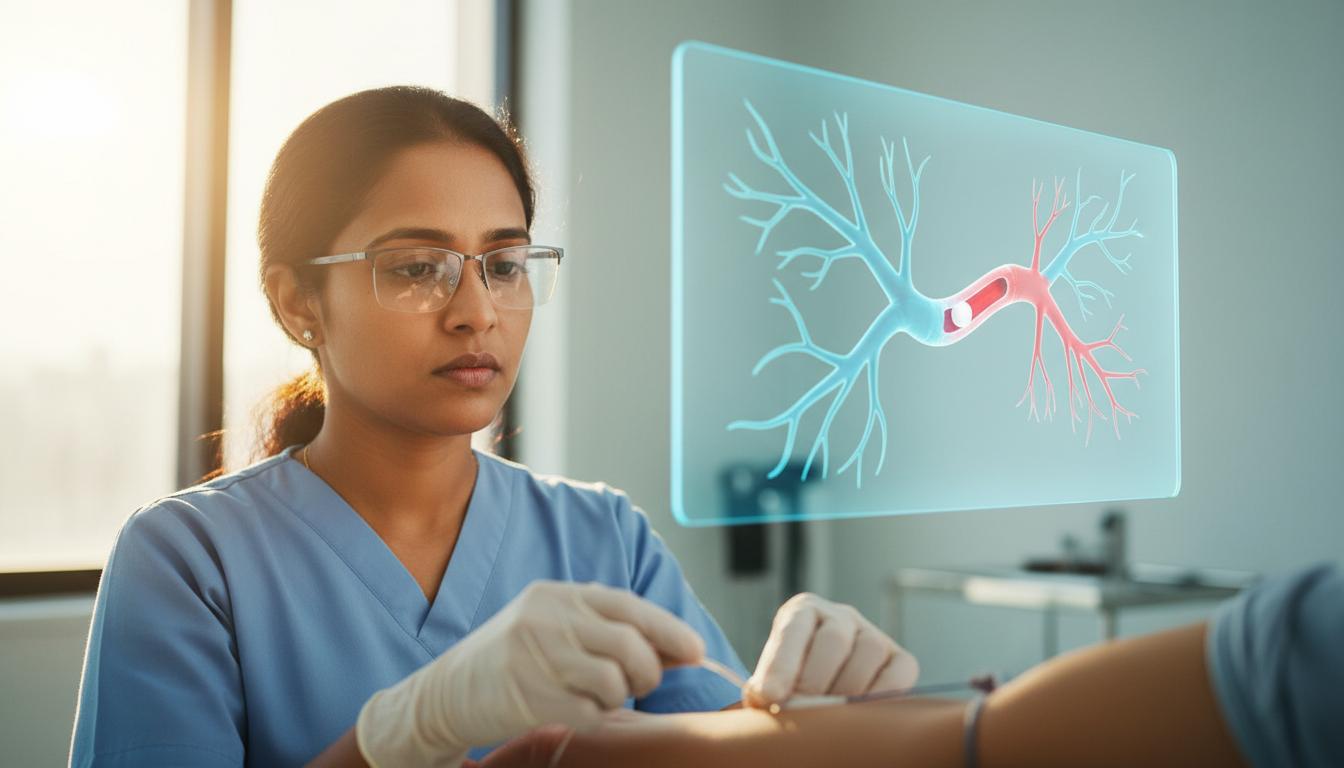
Imagine discovering that a blood vessel in your body is constantly leaking, or perhaps a vessel feeding a growth is causing it to enlarge day by day. In the past, treating such conditions often meant undergoing major surgery, involving significant incisions and recovery time. But thanks to advancements in medical science, there's now an incredible option: a minimally invasive procedure that involves making only a tiny puncture to access and 'block' the problematic vessel from within. Today, we delve into the world of Embolization – a treatment many haven't heard of, yet it holds immense importance for countless individuals.
What Exactly is Embolization?
Simply put, Embolization is a minimally invasive medical technique. It involves intentionally blocking or closing off a specific blood vessel within the body. Think of it like stopping water flow through a pipe by inserting something to obstruct it – that's essentially what happens during embolization. This procedure can be planned in advance, scheduled after careful examination and diagnosis by your doctor. However, it can also be performed as an emergency treatment to rapidly stop severe internal or external bleeding.
How Can Embolization Help?
Through this remarkable procedure, we can achieve temporary or permanent solutions for a wide range of medical issues. The primary goals include:
- Separating Abnormal Blood Vessel Connections: Sometimes arteries and veins in the body form unusual connections (like Arteriovenous Malformations or AVMs). Embolization can close these abnormal pathways.
- Stopping Blood Supply to Growths: By blocking the blood vessels that feed tumors (like certain cancers) and other abnormal growths, embolization deprives them of nutrients, potentially causing them to shrink or stop growing.
- Controlling or Preventing Excessive Bleeding: This technique is highly effective in stopping both internal and external hemorrhages.
Conditions Treated with Embolization
Embolization is a versatile treatment used for numerous conditions affecting various parts of the body. Here’s a closer look at some common applications:
| Condition | Simple Explanation |
|---|---|
| Arteriovenous malformations (AVM) | Abnormal connections between arteries and veins. These can occur in the brain or elsewhere. |
| Brain aneurysms | Weak, bulging spots in a brain artery wall that can rupture dangerously. |
| Bleeding tumors and other growths | Blocking blood supply to growths that are causing bleeding. |
| Severe nosebleeds (Epistaxis) | Stopping persistent, heavy nosebleeds unresponsive to other treatments. |
| Gastrointestinal bleeding | Controlling bleeding from stomach ulcers or conditions like diverticulosis. |
| Heavy menstrual bleeding (Menorrhagia) | Reducing excessive and prolonged periods in women. |
| Uterine fibroids | Non-cancerous growths in the uterus; blocking their blood supply causes them to shrink. |
| Traumatic internal bleeding | Stopping bleeding from injuries to organs like the spleen, liver, or lungs. |
| Varicocele | Enlarged veins in the scrotum (testicular area) causing pain or infertility. |
How is Embolization Performed?
The procedure is typically performed by an Interventional Radiologist – a specialist trained in using imaging techniques (like X-rays) to guide minimally invasive procedures. They use specialized equipment to access blood vessels without major surgery.
Here’s a step-by-step overview:
- Access: The radiologist makes a very small puncture in your skin, usually in the groin (femoral artery), wrist (radial artery), or sometimes the neck.
- Catheter Insertion: A thin, flexible tube called a catheter is inserted through the puncture and guided through the blood vessels using real-time X-ray imaging (fluoroscopy) to the target area.
- Contrast Injection: A special dye (contrast agent) may be injected through the catheter to clearly visualize the blood vessels and pinpoint the exact location needing treatment.
- Embolization: Once the target vessel is identified, tiny particles or other embolic agents are delivered through the catheter to block the blood flow.
- Confirmation & Removal: The radiologist confirms that the blockage is successful before carefully removing the catheter and applying a small bandage over the puncture site. No stitches are usually required.
Throughout the procedure, you'll likely receive mild sedation to keep you comfortable, but you won’t be fully asleep. You might feel a slight sensation when the local anesthetic is injected or when the catheter is inserted.
Types of Embolic Agents
The specific material used to block the vessel depends on the condition being treated and the characteristics of the blood vessel. Common agents include:
- Balloons: Tiny balloons inflated within the vessel to block flow (can be temporary or permanent).
- Gelatin foam: A sponge-like material that dissolves naturally over days.
- Liquid glue: Fast-acting adhesives used for certain types of abnormal vessels.
- Metallic coils: Very fine, non-corrosive coils made of platinum or steel placed within the vessel.
- Particulate agents: Small particles injected to fill and block the vessel.
Before, During, and After the Procedure
Preparation: Your doctor will order imaging tests (like Ultrasound, CT, or MRI) to map your blood vessels. If you take blood thinners, you may need to stop them temporarily before the procedure.
During: You'll receive mild sedation. The procedure typically takes between 30 minutes and several hours, depending on complexity. You’ll be awake but relaxed.
After: Most patients require a short hospital stay, often just overnight, for monitoring. Recovery is generally much faster than with open surgery. You'll need to rest and avoid strenuous activities for a period, as advised by your doctor. Drinking plenty of fluids is important.
Recovery and What to Expect
Rest is crucial after embolization. Depending on the access site:
- Groin Access: Avoid heavy lifting, strenuous exercise, and prolonged standing for a few days.
- Wrist Access: Limit arm movements and avoid lifting heavy objects for a short period.
Light activity like walking is encouraged to prevent blood clots. Keep the puncture site clean and dry. Your doctor will provide specific instructions.
Potential Risks and Side Effects
While embolization is generally safe, potential risks include:
- Allergic reaction to the contrast dye.
- Bleeding or bruising at the puncture site.
- The embolic agent migrating to unintended locations (rare).
- Infection (rare).
- Nerve damage (very rare).
- In procedures involving head/neck vessels, a very small risk of stroke or vision changes exists.
Your doctor will discuss these risks with you in detail.
When to Seek Medical Attention After Embolization
Contact your doctor immediately if you experience any of the following after returning home:
- Fever or signs of infection (redness, warmth, pus) at the puncture site.
- Signs of a blood clot (leg swelling, pain, redness).
- Uncontrolled bleeding from the puncture site.
- Difficulty breathing.
- Sudden severe pain or a rapidly growing lump near the puncture site.
- Persistent nausea or vomiting.
Key Takeaways
- Embolization is a minimally invasive procedure to block blood flow in specific vessels.
- It’s used to treat various conditions like heavy bleeding, fibroids, AVMs, and tumors.
- Compared to open surgery, it offers faster recovery, less pain, and minimal scarring.
- While generally safe, potential risks exist and should be discussed with your doctor.
- Prompt medical attention is needed for any concerning symptoms after the procedure.
Disclaimer: This article provides general information about this condition and should not replace the advice from your doctor. Always consult a healthcare professional.
Frequently Asked Questions (FAQs)
What is Embolization?
Embolization is a minimally invasive medical procedure used to intentionally block one or more blood vessels, typically to stop bleeding, shrink tumors or fibroids, or treat abnormal vascular conditions.
Is Embolization surgery?
No, Embolization is not traditional open surgery. It's a minimally invasive procedure performed by an Interventional Radiologist using imaging guidance and small catheters inserted through tiny punctures in the skin.
How long does recovery take after Embolization?
Recovery time varies depending on the procedure and individual factors, but it's generally much faster than open surgery. Many patients can resume normal activities within a few days to a week, although strenuous activity may be restricted for longer.
What are the main risks of Embolization?
While generally safe, potential risks include allergic reactions to contrast dye, bleeding or bruising at the puncture site, infection (rare), nerve damage (very rare), and in some cases, migration of embolic material or complications related to the targeted vessel.
Is Embolization painful?
The procedure itself is usually not painful. You'll receive mild sedation to stay comfortable. You might feel pressure or a brief sting when the local anesthetic and catheter are inserted, but significant pain is uncommon.
💬 අදහස් (0)
තවමත් කිසිදු අදහසක් පළ කර නොමැත. ඔබේ අදහස පළමු වරට මෙහි එක් කරන්න.
ඔබේ අදහස එක් කරන්න