

Have you ever noticed that your child is sometimes unusually happy, very active, and then suddenly becomes very angry, sad, and stays in his room alone for even the smallest of reasons? If you notice this kind of strange behavior that quickly switches between two extremes, now is the best time to talk about it. Today we are talking about bipolar disorder , a mental condition that many parents are not aware of, but can also be seen in children.
Simply put, what is bipolar disorder?
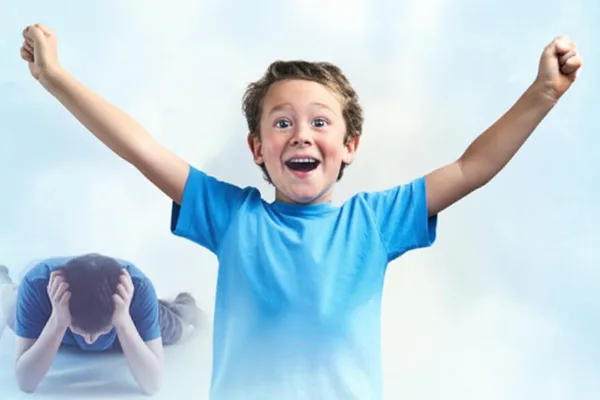
Bipolar disorder was previously called manic-depression. Simply put, it is a mental state in which a person's mood, energy level, and behavior go from one extreme to the other. Imagine, one moment you are incredibly happy and hyperactive. We call that a manic episode . The next moment, you are extremely sad, depressed, and have no interest in anything for no reason. We call that a depressive episode .
Most often, this condition is seen in adults. However, sometimes these symptoms can also appear in children as young as 7-8 years old.
Let's imagine this scenario. A mother had an 8-year-old son. He suddenly went without sleep for days, became hostile towards his family, threatened them with knives, and tried to attack his own brother. When the frightened parents took the boy to the hospital, after several days of tests, the doctors determined that the boy had bipolar disorder. This is a very real possibility.
The important thing is, this is not a child's bad behavior, mischief, or the parents' fault. This is a medical condition that requires treatment.
How do you know if a child has this condition?
If a child exhibits these behavioral symptoms for more than two weeks, it is important to seek medical advice. These symptoms can be divided into two categories: manic and depressive.
| Manic Symptoms | Depressive Symptoms |
|---|---|
| Being unusually happy, joking, or suddenly becoming extremely angry/aggressive. | Feeling sad or crying all the time. |
| Having a high, unrealistic self-esteem (e.g., thinking that they can fly and that no one can stop them). | Withdrawal from friends and usual activities. |
| Excessive increase in body energy. Not feeling tired even after not sleeping for days. | Loss of energy, interest or motivation in anything. |
| Engaging in multiple tasks at once, but not completing any of them properly. Quickly shifting attention. | Feelings of worthlessness and of doing everything wrong. |
| Talking too fast and incessantly. Changing topics quickly. Not allowing interruptions to occur. | Being overly sensitive to rejection or failure. |
| Engaging in risky activities (e.g., drug use, dangerous stunts, unsafe sex). | A major change in eating and sleeping habits (sleeping too much or eating too much). |
| Feeling like thoughts are racing. | Frequent physical complaints such as headaches and stomachaches. |
| Recurrent thoughts about death, suicide, or self-harm. |
How is this different from ADHD?
Often, when parents see these symptoms, they think their child has ADHD (Attention Deficit Hyperactive Disorder). This is because both hyperactivity and inattention are present. However, there is a big difference between these two conditions.
As doctors say, "An ADHD child can get angry for about five minutes, forget about it and apologize after a while. But a bipolar child's anger can last for hours, maybe even a whole day. It's a violent outburst of anger. It's followed by a severe depression."
Therefore, it is essential to accurately recognize these symptoms and obtain an accurate diagnosis.
Why do children have this condition?
It is difficult to say the only reason for this. But the main thing is the genetic link in the family . That is, if a close relative in the family (mother, father, grandmother, uncle) has bipolar disorder or another mental illness, there is a certain risk of the child developing it too. Also, imbalances in certain chemicals in the brain ( Neurotransmitters ) can affect this.
How can I help my child? What are the treatments?
If you suspect that your child has these symptoms, never panic or make decisions on your own. The first and best thing to do is to see a pediatrician or psychiatrist.
The doctor will ask you a detailed question about your child's behavior and family history. They will also check to see if these symptoms are caused by other physical conditions, such as epilepsy or brain tumors. Only then will they arrive at an accurate diagnosis.
There are two main parts to treatment :
1. Medication: Medications are given to stabilize the child's mood. These may include drugs such as `(Mood stabilizers)`, `(Antipsychotics)`. It can be a challenge to continue giving these medications to the child. Because some side effects may occur. But as a doctor said, "Taking medication is a hassle, but the alternative is hospitalization." Therefore, it is essential to give medications exactly as directed by the doctor.
2. Counseling and Behavioral Therapy: Medication alone cannot do everything. The child needs to be taught to live with this condition, manage their emotions, be good with friends, and deal with problems when they arise. This is called ``Psychoeducation.'' When an adult has this condition, they have some experience in life. But when a young child has this condition, they have not had the opportunity to learn these social skills. What this therapy does is to impart those skills to the child.
Part of the treatment is also providing parents with an understanding of this situation and advising them on how to deal with the child.
Take-Home Message
- Childhood bipolar disorder is actually a medical condition that can be seen in children. It is not a bad behavior in the child.
- In this condition, the child's mood rapidly switches between extreme happiness ( mania ) and extreme sadness (depression).
- This is different from ADHD, which can be distinguished by the severity and duration of symptoms.
- If your child has these symptoms, don't panic and immediately see a pediatrician or psychiatrist to get an accurate diagnosis.
- As well as medication as treatment, counseling and behavioral therapy for the child and family are also very important.
- As a parent, you are not alone. There are many people and organizations that can help you and your child. It is your responsibility to find the right help.




💬 Comments (0)
No comments yet. Be the first to share your thoughts here.
Add Your Comment