

A college student cramming for finals accepts a pill promised to keep them alert for days. A clubgoer tries a clear crystal shard offered by a friend, seeking an effortless burst of euphoria and confidence. Within minutes, their heart accelerates into overdrive, pupils dilate, and a powerful wave of stimulation convinces them they can conquer anything. Yet beneath this transient surge lies one of the most destructive neurotoxins known to medicine: methamphetamine (commonly known on the street as "crystal meth," "ice," "speed," or "glass"). What begins as an experimental pursuit of boundless energy rapidly cascades into profound receptor depletion, irreversible dental decay, paranoid psychosis, and fatal cardiovascular collapse. Understanding the pharmacology of this synthetic stimulant is the first critical step toward recognizing its dangers and intervening before irreversible organ damage occurs.
Key Clinical Takeaways.
- Extreme Neurochemical Disruption: Methamphetamine triggers an unnatural surge of synaptic dopamine—exceeding baseline physiological levels by up to 1,000%—while destroying dopamine transporter terminals and depleting natural pleasure pathways.
- Rapid Multiorgan Toxicity: Sustained use causes severe sympathomimetic toxicity, driving hyperpyrexia, malignant hypertension, acute myocardial infarction, aortic dissection, and ischemic stroke.
- Distinct Physical signs: Chronic consumption presents with signature physical hallmarks, including profound weight loss, rampant caries with enamel erosion ("meth mouth"), and excoriation disorder ("crank bugs").
- Evidence-Based Rehabilitation: While no FDA-approved antagonist reversal agent exists for meth, structured behavioral therapies—specifically Cognitive Behavioral Therapy (CBT) and the Matrix Model—yield substantial, verified recovery rates.
Know your body mass index (BMI) and weight classification
What Is Methamphetamine? Pharmacology and Street Terminology.
Methamphetamine is a potent central nervous system (CNS) stimulant belonging to the substituted amphetamine class. Although a tightly regulated prescription form (desoxyn) exists for rare, treatment-resistant cases of attention deficit hyperactivity disorder (ADHD) and severe narcolepsy, the vast majority of consumption involves illicitly synthesized d-methamphetamine or racemic formulations.
Illicit meth appears in various preparations: fine white or off-white powders, pressed oral tablets, or semi-translucent, coarse architectural crystalline shards known universally as crystal meth or ice. In clinical environments and street settings, the compound is identified by numerous aliases, including:
- Ice, Glass, and Shards: High-purity crystalline d-methamphetamine hydrochloride, primarily smoked using glass pipes or vaporized.
- Speed, Uppers, and Chalk: Powdered formulations typically ingested orally or insufflated (snorted).
- Crank: Historically crude powdered methamphetamine, often dissolved in saline and injected intravenously ("slamming").
- Tina or Crystal: Common colloquial designations encountered in urban and nightlife settings.
Routes of Administration and Pharmacokinetics.
The severity and onset of methamphetamine's physiological effects depend heavily on the route of administration:
- Smoking / Inhalation: Vaporized crystals reach the pulmonary capillary bed instantly, entering arterial circulation and crossing the blood-brain barrier within 7 to 15 seconds. This produces an immediate, overwhelming "rush" or "flash.".
- Intravenous Injection: Direct delivery into venous circulation yields an equally instantaneous high (within 15 to 30 seconds), carrying profound risks of infective endocarditis, sepsis, and bloodborne virus transmission (HIV, Hepatitis B and C).
- Insufflation (Snorting): Absorption across the nasal mucosa produces localized vasoconstriction and psychoactive onset within 3 to 5 minutes.
- Oral Ingestion: digestive absorption delays peak plasma concentration for 20 to 40 minutes, producing an extended but less intense plateau that often leads users to ingest dangerous redoses.
how it happens: What Happens to the Brain and Body?
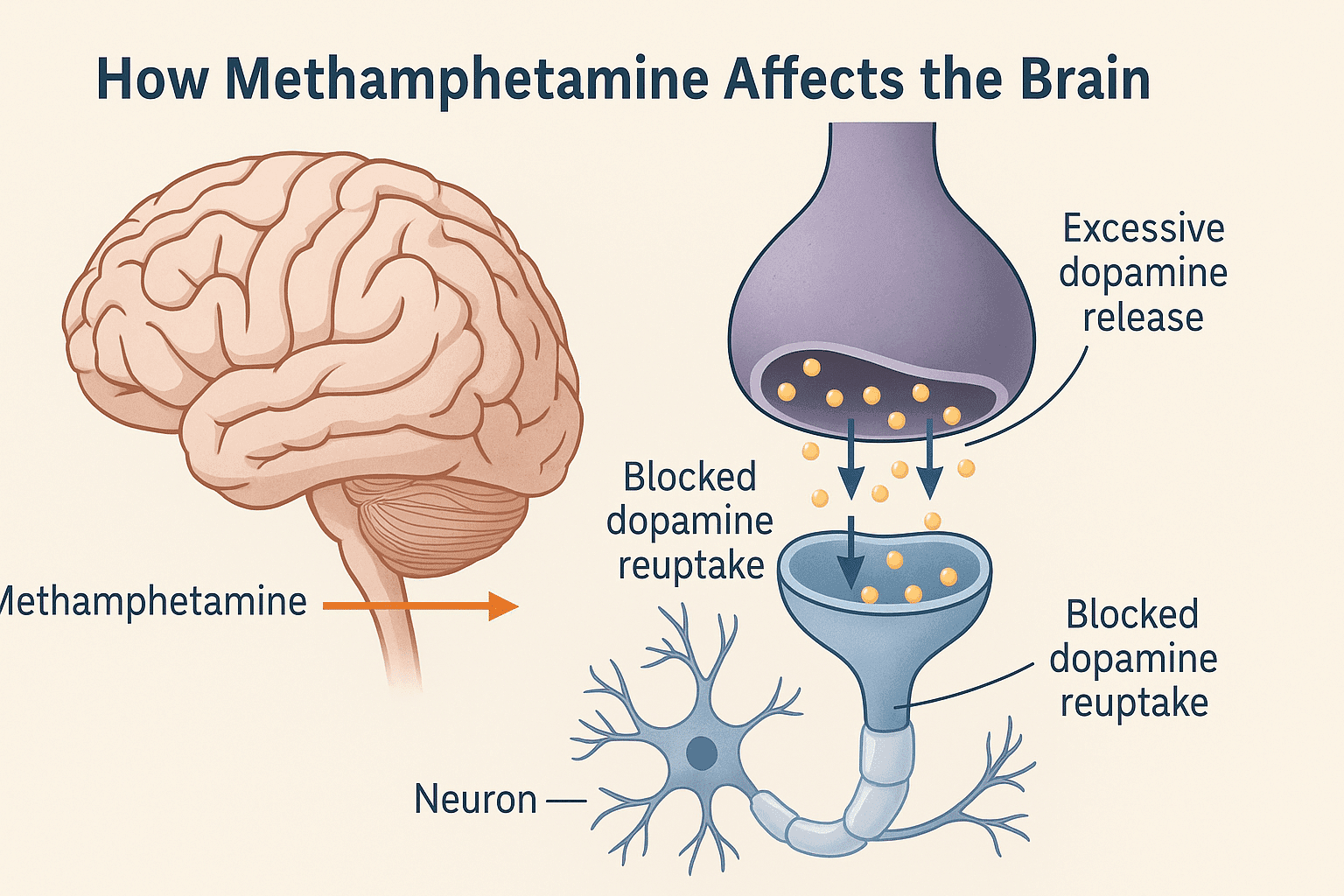
To understand the profound addictiveness and destructive nature of methamphetamine, one must examine its actions at the presynaptic neuronal junction.
1. The Neurochemical Flood: Dopamine, Norepinephrine, and Serotonin.
In a healthy nervous system, neurotransmitters such as dopamine regulate natural reward, motivation, motor coordination, and mood. Natural stimuli—such as eating a wholesome meal or achieving an important goal—produce controlled, physiological pulses of dopamine.
Methamphetamine enters presynaptic dopaminergic neurons both via diffusion and through the dopamine active transporter (DAT). Once inside, it inhibits vesicular monoamine transporter 2 (VMAT2), forcing dopamine out of protective storage vesicles and into the neuronal cytoplasm. Simultaneously, it reverses the normal function of DAT, pumping massive amounts of dopamine directly into the synaptic cleft while blocking enzymatic degradation by monoamine oxidase (MAO). The resulting synaptic dopamine concentrations dwarf physiological baselines, producing intense euphoria, hypersexuality, inflated confidence, and artificial wakefulness. It simultaneously triggers massive systemic releases of norepinephrine (provoking extreme flight-or-fight cardiovascular stress) and serotonin.
2. Direct Neurotoxicity and Structural Brain Remodeling.
This neurochemical flooding comes at a devastating biological cost. The excessive accumulation of intracellular dopamine oxidizes into toxic quinones and creates reactive oxygen species (ROS), starting intense cellular oxidative stress:
- Axonal Terminal Pruning: Methamphetamine causes terminal degeneration of both dopaminergic and serotonergic axons. Positron emission tomography (PET) scans reveal marked, persistent reductions in striatal dopamine transporter density that can endure for years after cessation.
- Receptor Downregulation and Anhedonia: To protect against chemical overstimulation, the post-synaptic brain downregulates and internalizes dopamine receptors. so, when the drug leaves the system, the person plunges into profound anhedonia—a clinical state where they cannot experience joy, pleasure, or motivation from any natural human activity.
- Microglial Activation and Cortical Shrinkage: Chronic exposure triggers chronic neuroinflammation. Magnetic resonance imaging (MRI) studies document significant gray matter loss in the prefrontal cortex, hippocampus, and amygdala, explaining the enduring deficits in emotional regulation, working memory, and impulse control seen in chronic users.
3. "Meth Mouth": Mechanism of Severe Oral Destruction.
One of the hallmark clinical signs of advanced methamphetamine use is catastrophic oral disease, characterized by crumbling, blackened, and devitalized teeth. This condition stems from three converging factors:
- Profound Xerostomia: Potent stimulation of alpha-2 adrenergic receptors induces severe, persistent salivary gland hyposecretion. Without the buffering, remineralizing, and antibacterial benefits of saliva, oral pathogens proliferate unchecked.
- Severe Bruxism: Dopaminergic excess in motor loops triggers uncoordinated, relentless grinding and clenching of the jaw, fracturing enamel.
- Acidic Diet and Poor Self-Care: Users often eat large volumes of sugary, carbonated beverages to counteract dehydration and extreme dry mouth, combined with prolonged lapses in basic oral hygiene.
🚨 Red Flags: Recognizing Acute Methamphetamine Overdose.
Methamphetamine overdose is an acute, life-threatening medical emergency driven by massive adrenergic overstimulation. Call 911 (US/Canada), 999 (UK), or proceed right away to the nearest Emergency Department (ER / A&E) if any of the following critical signs appear:
- Malignant Hyperthermia: Core body temperature exceeding 104°F (40°C), accompanied by hot, flushed skin or sudden cessation of sweating.
- Acute Cardiac Symptoms: Crushing substernal chest pressure, radiation into the arm or jaw, severe palpitations, or ventricular arrhythmias.
- Neurological Crises: Tonic-clonic seizures, status epilepticus, acute unilateral paralysis, sudden slurred speech, or loss of consciousness.
- Severe Excited Delirium: Extreme physical agitation, paranoia, hallucinations, unprovoked violent outbursts, and imperviousness to physical pain.
- Rhabdomyolysis and Renal Shutdown: Dark, tea-colored urine, profound muscular rigidity, and acute oliguria (lack of urine output).
Clinical Complications: Acute Symptoms vs. Chronic Damage.
The physiological toll of methamphetamine affects nearly every organ system, progressing rapidly from acute physical intoxication to chronic systemic disease:
| System. | Acute Intoxication Effects. / Chronic / Long-Term Complications. |
|---|---|
| Cardiovascular. | Acute Intoxication Effects.: Sinus tachycardia, acute hypertension, chest pain, palpitations, peripheral vasoconstriction. Chronic / Long-Term Complications.: Methamphetamine-associated cardiomyopathy (MAC), dilated congestive heart failure, pulmonary arterial hypertension, aortic dissection, accelerated coronary atherosclerosis. |
| Central Nervous System. | Acute Intoxication Effects.: Insomnia, tremors, hyperreflexia, pupil dilation (mydriasis), euphoria, motor agitation. Chronic / Long-Term Complications.: Hemorrhagic or ischemic stroke, permanent executive cognitive dysfunction, Parkinsonian movement disorders, persistent sleep architecture breakdown. |
| Psychiatric & Behavioral. | Acute Intoxication Effects.: Hypervigilance, irritability, panic, grandiosity, logorrhea (rapid, nonstop speech). Chronic / Long-Term Complications.: Methamphetamine-induced psychosis (persecutory delusions, auditory and visual hallucinations), violent impulsivity, profound depressive episodes with elevated suicide risk. |
| Dermatologic & Systemic. | Acute Intoxication Effects.: Diaphoresis (profuse sweating), piloerection ("goosebumps"), acute appetite suppression (anorexia). Chronic / Long-Term Complications.: Formication delusions ("crank bugs"), severe chronic skin excoriations, non-healing cellulitis, abscesses, severe nutritional wasting and cachexia. |
Clinical Diagnosis, Workup, and Lab Parameters.
When an person presents to an emergency department or primary clinic with suspected methamphetamine toxicity, clinicians perform a systematic diagnostic workup to quantify end-organ damage and guide supportive care:
- Toxicology Screening: Immunoassay urine drug screens detect amphetamines for 48 to 96 hours post-consumption. Confirmatory testing is performed via gas chromatography-mass spectrometry (GC-MS) to exclude false positives from medicines such as pseudoephedrine, bupropion, or labetalol.
- Serum Biomarkers & Renal Panels:
- Creatine Kinase (CK): Markedly elevated serum levels (>1,000 U/L, often climbing over 10,000 U/L) confirm rhabdomyolysis resulting from muscle hyperactivity and hyperthermia.
- Blood Urea Nitrogen (BUN) & Serum Creatinine: Elevated levels indicate acute kidney injury (AKI) from myoglobin precipitation and renal hypoperfusion.
- Cardiac Troponins: Elevated high-sensitivity cardiac troponin T or I confirms ongoing myocardial necrosis, coronary vasospasm, or non-ST-elevation myocardial infarction.
- Electrocardiogram (12-Lead ECG): Used to identify tachydysrhythmias, QTc prolongation, ST-segment elevation or depression, and right- or left-axis strain.
- Computed Tomography (Non-Contrast Head CT): Indicated right away for any patient exhibiting acute focal neurological deficits, unremitting severe headaches, or altered mental status to rule out intracerebral hemorrhage or acute ischemic stroke.
Evidence-Based Medical Treatment and Recovery Pathways.
Treating methamphetamine toxicity and dependency requires a clear, stage-specific clinical strategy. Unlike opioid use disorder—which can be reversed with naloxone and managed with buprenorphine or methadone—there are currently no FDA-approved medicines specifically indicated for methamphetamine reversal or maintenance. Medical management focuses on aggressive acute stabilization followed by structured behavioral therapies.
Acute Emergency Management.
- Sedation via Benzodiazepines: Intravenous diazepam, lorazepam, or midazolam forms the frontline therapy for acute toxicity. Benzodiazepines enhance GABA-A receptor signaling, blunting sympathetic outflow, controlling psychomotor agitation, lowering core body temperature, and reducing seizure risk.
- Aggressive External Cooling: For patients presenting with hyperthermia (>104°F / 40°C), cooling must begin right away using evaporative ice baths, mist fans, or internal cooling catheters to prevent multiorgan failure and fatal coagulopathies.
- Intravenous Fluid Resuscitation: Generous infusion of balanced crystalloid fluids (e.g., Lactated Ringer's) restores intravascular volume, preserves renal perfusion, and helps clear heavy myoglobin loads from rhabdomyolysis.
- Cautious Antihypertensive Selection: Direct vasodilators (such as nitroglycerin or nitroprusside) or phentolamine are preferred for refractory hypertensive crises. Pure beta-blockers (e.g., propranolol) are typically avoided in acute intoxication due to the risk of "unopposed alpha-adrenergic stimulation," which can paradoxically worsen coronary vasospasm and systemic hypertension.
Long-Term Rehabilitation and Psychosocial Therapies.
Once acute withdrawal symptoms—such as hypersomnia, dysphoria, hyperphagia, and severe psychomotor slowing—begin to stabilize, the focus shifts to complete, outpatient or residential behavioral rehabilitation:
- Cognitive Behavioral Therapy (CBT): Helps patients identify maladaptive thought patterns, anticipate behavioral triggers, and develop reliable coping mechanisms to prevent relapse.
- The Matrix Model: A rigorous 16-week structured clinical framework combining behavioral therapy, person counseling, family education, 12-step mutual aid participation, and periodic drug monitoring.
- Contingency Management (CM): An evidence-based behavioral intervention using motivational incentives, where patients earn tangible rewards (such as vouchers) for documented negative drug screens. Clinical trials show that CM produces among the highest retention and abstinence rates for stimulant use disorders.
- Emerging Pharmacotherapies: Recent clinical trials (such as the ADAPT-2 trial published in the New England Journal of Medicine) show modest efficacy for combination therapy using injectable extended-release naltrexone plus oral bupropion to curb cravings in moderate-to-severe methamphetamine use disorder.






No comments yet. Be the first to share your question or experience below.