
Have you just been handed a prescription for a biologic injection, or did you open your online patient portal on a Friday evening and search Human Monoclonal Antibody: Clinical Meaning, Causes, Normal Ranges & Next Steps? Either way, take a slow breath. In everyday clinic practice across the United States, the United Kingdom, Canada, and Australia, we doctors see patients confused by this exact term every single week—and for a very understandable reason.
Think about it for a second: the phrase "monoclonal antibody" gets used in two completely different medical conversations. Most often, a human monoclonal antibody refers to a modern, precision-engineered biologic medication—usually ending in the letters -umab—prescribed to calm stubborn autoimmune conditions, severe allergies, high cholesterol, migraines, or specific cancers. Less commonly, people stumble across the word "monoclonal" on a routine blood protein test and wonder what a "normal range" looks like. Pretty easy to mix those two up, right?
Let us walk through both meanings clearly together, explain how these remarkable therapies work inside your body, review exact lab cutoffs and dosing schedules, and outline the practical steps that keep you safe at home.
📌 Key Takeaways at a Glance
- 100% Human Design: Fully human monoclonal antibodies (medications ending in -umab, such as adalimumab or dupilumab) are built from human immune genes, greatly lowering the risk of allergic rejection compared with older animal-derived biologics.
- Medication vs. Lab Result: Taking a prescribed human monoclonal antibody drug is completely different from having your own bone marrow produce an abnormal "monoclonal spike" (M-protein) on a blood test.
- Exact Normal Lab Ranges: On a blood protein separation test (serum protein electrophoresis), a normal monoclonal M-protein level is 0 g/dL (undetectable), and a normal free light chain ratio sits between 0.26 and 1.65.
- Mandatory Safety Screening: Before your very first dose of most immune-modulating biologics, we doctors check blood tests for hidden tuberculosis (latent TB) and Hepatitis B and C.
- Home Storage & Live Vaccines: Store self-injection pens in your refrigerator at 36°F–46°F (2°C–8°C), and avoid live vaccines while on immune-targeting therapy unless your specialist clears them.
What Is a Human Monoclonal Antibody, and What Is Its Clinical Meaning?
A human monoclonal antibody is a precision-engineered biologic medication made from 100% human immune protein genes to target one specific disease trigger in your body. Unlike older animal-derived therapies, these "-umab" medications treat autoimmune diseases, cancers, and severe allergies while minimizing allergic rejection, whereas blood tests normally show zero abnormal monoclonal spikes.
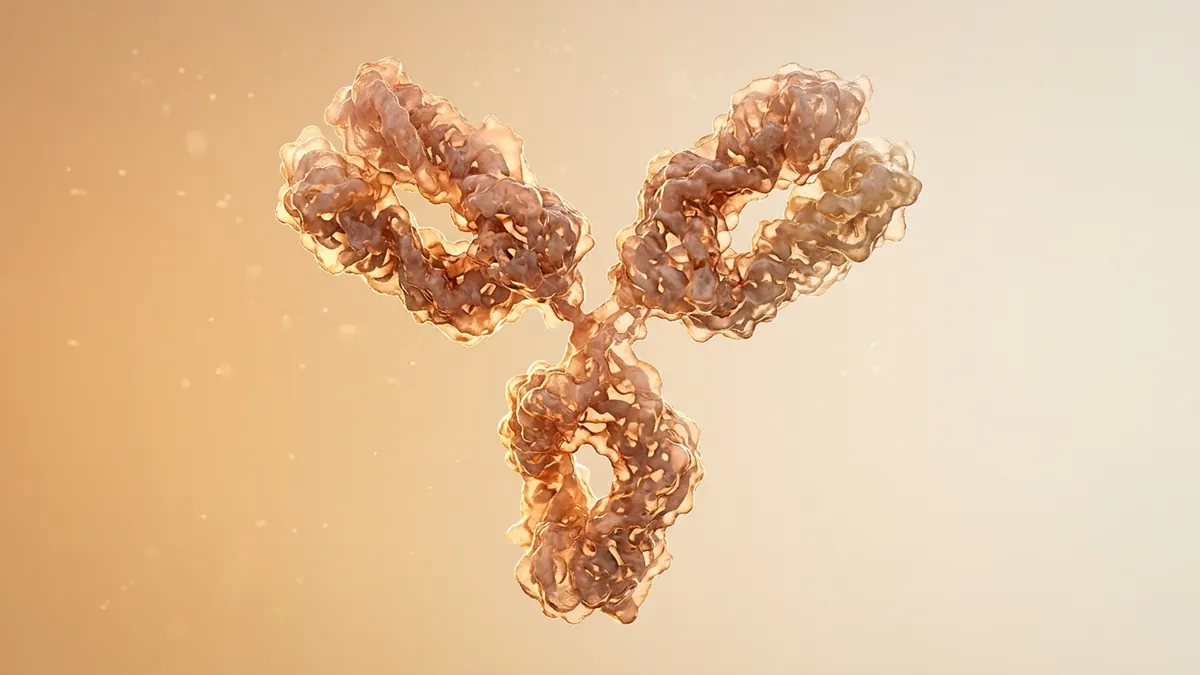
To make complete sense of its clinical meaning, let us break down the three words themselves. Your immune system naturally makes Y-shaped defender proteins called antibodies (immunoglobulins) to tag germs or rogue cells. "Mono-clonal" simply means every single antibody copy in that batch comes from one identical parent cell line, so every molecule locks onto the exact same microscopic target. And "human" means the entire protein structure matches natural human antibodies, without leftover mouse or rat segments attached.
What do you think happens when patients see "monoclonal" on bloodwork instead of a prescription label? In a lab report, your Primary Care Physician (PCP) or family GP is checking whether a single group of your own plasma cells is overproducing one identical antibody fragment—called a monoclonal protein (M-protein or paraprotein). Curiously, if you are already taking a high-dose therapeutic human monoclonal antibody for an illness, trace amounts of your medication can occasionally show up on sensitive blood electrophoresis tests too! Knowing which context applies to you immediately clears away unnecessary worry, doesn't it?
How Do Fully Human Monoclonal Antibodies Work Inside Your Body?
Have you ever wondered why conventional pills like steroid tablets or older immune-suppressing drugs cause so many whole-body side effects, while a human monoclonal antibody feels much more targeted? Traditional medications act a bit like turning off the power to an entire neighborhood just to stop one noisy house alarm. A human monoclonal antibody, on the other hand, works like a laser-cut key built to fit one single lock on one specific cell or inflammatory messenger.
Look closely at what happens once the medication enters your bloodstream: some human monoclonal antibodies latch onto overactive inflammation signals—such as tumor necrosis factor-alpha (TNF-alpha) or interleukins—neutralizing them before they attack your joints, skin, or gut lining. Others attach directly to markers on cancer cells, flagging them so your own natural killer cells can spot and destroy them, or block cholesterol-recycling proteins in the liver so bad LDL cholesterol drops dramatically.
How did scientists make them 100% human? Early lab-made antibodies in the 1980s came from mice (ending in -omab), which often triggered immune rejection called human anti-mouse antibodies (HAMA). Researchers then built part-mouse, part-human chimeric drugs (-ximab, about 65% human) and humanized drugs (-zumab, about 90%–95% human). Using Nobel Prize–winning viral protein libraries (phage display) and genetically humanized mice, scientists created fully human monoclonal antibodies (historically ending in -umab, alongside newer World Health Organization stems like -tug and -bart). Because your body recognizes the protein as fully human, long-term tolerance is far smoother. Pretty remarkable, right?
What Conditions Cause Doctors to Prescribe Human Monoclonal Antibodies?
Remember how we talked about that single lock-and-key design a moment ago? Because labs can engineer a human monoclonal antibody against almost any specific biological target, we doctors refer patients to specialists—such as rheumatologists, dermatologists, gastroenterologists, neurologists, cardiologists, or oncologists—to use these medicines across half a dozen major health areas.
- Autoimmune Joint & Gut Conditions: Drugs like adalimumab, golimumab, and ustekinumab calm joint destruction in rheumatoid and psoriatic arthritis and heal intestinal inflammation in Crohn's disease and ulcerative colitis when standard tablets fall short.
- Chronic Skin & Airway Allergies: Dupilumab and secukinumab target specific allergy and skin pathways to clear severe eczema (atopic dermatitis), plaque psoriasis, nasal polyps, and hard-to-control eosinophilic asthma.
- Targeted Cancer Immunotherapy: Medications like nivolumab and ipilimumab release the "brakes" on your own T-cells (immune checkpoint inhibition) to fight melanoma, lung, or kidney cancers, while daratumumab targets malignant plasma cells directly.
- Stubborn High Cholesterol & Heart Risk: Evolocumab and alirocumab block the PCSK9 liver protein, slashing LDL cholesterol by 50% to 60% in people with familial high cholesterol or prior heart attacks who cannot tolerate high-dose statins.
- Migraine & Bone Health: Erenumab blocks migraine pain receptors (CGRP receptors) to prevent chronic headaches, while denosumab slows bone breakdown in severe osteoporosis.
Notice a common thread here? None of these conditions are caused by a "deficiency" of medication; rather, a runaway biological signal causes tissue damage, and the human monoclonal antibody steps in to quiet that exact signal.
What Are the Normal Ranges for Monoclonal Antibody Lab Tests and Pre-Dosing Checks?
If you typed "normal ranges" into Google, you are likely staring at either diagnostic blood protein results or pre-treatment safety bloodwork ordered at your family GP clinic. Let us put exact, evidence-based numbers right in front of you so nothing feels mysterious— though always check the reference column printed on your own lab sheet, since local hospital analyzers vary slightly.
- Blood Protein Separation Test (Serum Protein Electrophoresis / SPEP & Immunofixation): Normal monoclonal M-protein is 0 g/dL (0 g/L — Negative / No monoclonal spike detected). If an unexplained M-spike appears (often under 3.0 g/dL without organ issues in a benign condition called MGUS), your doctor will check further or refer you to a blood specialist (hematologist).
- Serum Free Light Chains (Kappa/Lambda Ratio): Normal free kappa/lambda ratio is 0.26 to 1.65 (up to 3.10 in chronic kidney disease).
- Total Immunoglobulin G (Quantitative IgG): Normal adult polyclonal IgG sits around 700 to 1,600 mg/dL (7.0 to 16.0 g/L)—reflecting healthy everyday immune diversity rather than a single clone.
- Anti-Drug Antibody (ADA) or HAMA Testing: Normal is Negative / Undetectable. Specialists occasionally order this if a biologic medication stops working well before your next scheduled dose.
- Mandatory Pre-Biologic Screening Cutoffs: Before starting immune-suppressing human monoclonal antibodies, your latent tuberculosis blood test (IGRA / QuantiFERON-TB Gold) and Hepatitis B surface antigen (HBsAg), Hepatitis B core antibody (anti-HBc), and Hepatitis C antibody must be Negative (Non-reactive), alongside safe baseline blood counts and liver enzymes.
See why we doctors insist on those baseline tests before writing your first refill? Quietly dormant germs like tuberculosis can wake up if we block key immune messengers without checking first!
How Are Human Monoclonal Antibodies Dosed, Prepared, and Given Safely?
Be honest—have you ever wondered why human monoclonal antibodies never come as an everyday swallowable pill? Because antibodies are large, delicate proteins, your stomach acid and digestive enzymes would digest them just like a piece of grilled chicken before a single drop reached your bloodstream! That is why every human monoclonal antibody is given either as a quick under-the-skin shot (subcutaneous injection) at home or a supervised vein drip (intravenous infusion) at an outpatient clinic or hospital unit.
Dosing schedules depend on the antibody's natural half-life—usually 14 to 28 days. Many treatment plans start with slightly closer loading doses over the first 2 to 4 weeks to build steady blood levels quickly, followed by maintenance doses spaced every 2, 4, 8, or even 24 weeks. For home auto-injector pens or prefilled syringes, preparation makes a massive difference in comfort: take the pen out of the fridge 30 to 45 minutes beforehand so it warms naturally to room temperature. Never microwave it, drop it in hot water, or shake the vial vigorously, as heat and foam damage the protein.
Clean the front of your thigh or lower abdomen (at least 2 inches / 5 cm away from your belly button) with an alcohol swab, let it dry completely so it doesn't sting, and rotate your injection spot each time. Hold your dose and call your prescribing clinic first if you develop an active fever, a chesty cough, a painful urinary tract infection, an oozing skin wound, or an upcoming major surgery.
How Do Antibody Types, Lab Findings, and Side Effects Compare in Everyday Care?
Just like we mentioned earlier, sorting out medication types, lab findings, and everyday reactions becomes much simpler when you can scan them side by side. Here is a practical guide comparing what you may encounter and the exact step to take next:
| Factor, Finding, or Reaction | Clinical Explanation & Next Step |
|---|---|
| Fully Human (-umab) vs. Chimeric/Humanized (-ximab / -zumab) | Fully human antibodies contain 100% human protein sequences, carrying a much lower risk of neutralizing anti-drug antibodies than part-mouse chimeric drugs. What you should do: Take doses strictly on schedule—skipping or stretching doses makes your immune system far more likely to form antibodies against any biologic. |
| Mild Redness or Itching at Injection Site | A quarter-sized pink patch, mild warmth, or slight swelling for 24 to 48 hours after a home pen shot is a common, harmless local histamine response. What you should do: Apply a clean cool compress for 10 minutes, avoid scratching, and ask your doctor or pharmacist if an oral non-drowsy antihistamine helps. |
| Delayed Flu-Like Ache (3 to 7 Days Post-Dose) | Mild tiredness, low-grade muscle aches, or headache a few days after an infusion can signal mild immune-complex clearance. What you should do: Sip plenty of water or low-sugar electrolyte drinks, eat light nourishing meals, rest, and report worsening joint pain or rash to your clinic. |
| Unexpected M-Protein Spike on Blood Test (SPEP) | If you are not taking an IgG monoclonal drug, a detected M-spike means a single plasma cell clone is making extra protein (such as benign MGUS or a plasma cell disorder). What you should do: Book a prompt review with your PCP or family GP for repeat immunofixation, free light chain testing, and possible hematology referral. |
| Positive Latent TB or Hepatitis B Core Test | Indicates past exposure sitting quietly in your lungs or liver, which immune-modulating biologics could reactivate if untreated. What you should do: Complete the preventive antibiotic or antiviral protection plan prescribed by your specialist before starting your biologic therapy. |
In everyday life across North America, the UK, and Australia, simple habits make biologic therapy remarkably smooth. Keep unopened pens in the main body of your refrigerator—never the freezer or warm fridge door—and pack an insulated medical cooler pouch with a thermometer strip when flying or taking summer road trips. On infusion days, stay well hydrated with water or herbal tea and enjoy a balanced meal like oatmeal with berries, whole-grain toast with eggs, or warm chicken vegetable soup beforehand so you feel steady on your feet.
✔️ What You Should Do & ❌ What to Avoid
- ✔️ Do update dead (inactivated) vaccines ahead of time: Ask your family GP or PCP about your annual flu shot, COVID-19 booster, pneumonia vaccine, and recombinant shingles vaccine—ideally 2 weeks before starting an immune-suppressing antibody.
- ✔️ Do practice smart food and hand hygiene: If your monoclonal antibody suppresses immune messengers, wash produce thoroughly and avoid unpasteurized milk, raw-milk soft cheeses, undercooked poultry, or raw deli sprouts that carry Listeria or Salmonella.
- ✔️ Do carry a medication wallet card or phone list: Make sure every dentist, Urgent Care clinician, or hospital pharmacist knows the exact generic name and last dose date of your biologic.
- ❌ Don't get live vaccines without specialist clearance: Avoid live-virus shots—including measles-mumps-rubella (MMR), chickenpox (varicella), nasal-spray flu, and yellow fever travel vaccines—while on immune-blocking monoclonal antibodies.
- ❌ Don't inject into bruised, sunburned, scarred, or psoriasis-flared skin: Always choose healthy, intact skin at least 2 inches away from your last injection spot.
- ❌ Don't use a pen that froze or turned cloudy: Clear to pale-yellow liquid is normal for most human monoclonal antibodies; if the viewing window looks cloudy, flaky, or discolored, take it back to your specialty pharmacy.
🚨 When to Seek Immediate Emergency Care (Red-Flag Symptoms)
If you or someone near you develops any of these red-flag symptoms, do not wait — call 911 (or 999 in the UK / 000 in Australia) immediately or go straight to the nearest hospital Emergency Room (ER / A&E):
- Signs of a severe allergic reaction (anaphylaxis): Sudden swelling of your lips, tongue, face, or throat, widespread hives, noisy wheezing, dizziness, or trouble swallowing within minutes to hours of a dose.
- Severe infusion or immune chemical surge (cytokine release syndrome): Shaking chills, racing heartbeat, sudden chest tightness, shortness of breath, or feeling faint during or shortly after an intravenous drip.
- Serious infection warning signs on immune-blocking therapy: A fever of 100.4°F (38.0°C) or higher, drenching night sweats, confusion, stiff neck, or coughing up discolored phlegm or blood.
- New neurological symptoms: Sudden blurred or double vision, slurred speech, facial droop, numbness, or clumsiness in an arm or leg.
- Severe abdominal pain, dark tarry stools, or yellowing eyes (jaundice): Especially important for patients receiving cancer checkpoint antibodies, which can trigger urgent organ inflammation requiring hospital steroid care (you can also call NHS 111 in the UK for urgent after-hours triage if symptoms are mild, though true red flags always need 999, 911, or 000).
💡 Key Take-Home Message
- Precision over guesswork: Fully human monoclonal antibodies (-umab drugs) target single disease pathways with high accuracy and fewer whole-body side effects than older immune drugs.
- Know your context: Confirm whether you are looking at a prescribed biologic therapy or an SPEP blood test (where normal monoclonal protein is 0 g/dL).
- Consistency protects effectiveness: Complete your baseline TB and hepatitis checks, store pens properly in the fridge, and stay right on your dosing calendar.


No comments yet. Be the first to share your question or experience below.