

It can be a little scary to take your 18-month-old little one to the doctor's office, right? But this is a great opportunity to learn more about your baby's health and development. So let's take a look at what happens during this doctor's visit, and what you should expect.
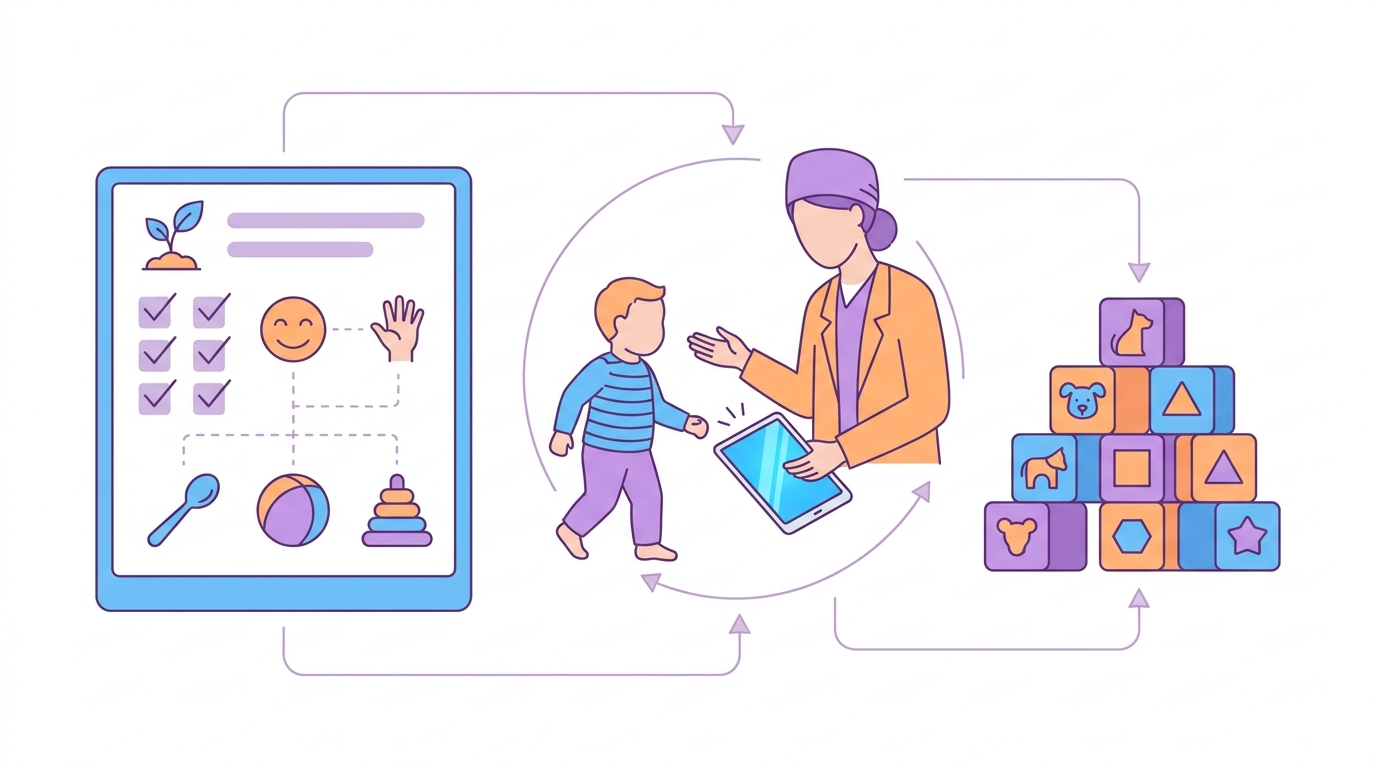
What happens during a doctor's visit?
First, the doctor or nurse will measure your baby's weight, height, and head circumference . They will record these measurements on a special chart called a 'growth chart'. This is how they will check if your baby is growing properly.
Next, a small test (`(Screening Test)`) can be done to help identify possible developmental delays or conditions like `(Autism)` early. If this is detected early, the baby can be given the help they need sooner.
Then the doctor will ask you some questions, talk about your problems, and give you advice on how your little one is doing these days. Let's see what that's about, shall we?
About food and drink
Your little one will be eating 3 main meals and 2-3 healthy snacks a day. At this age, that is, after a year, the growth rate of little ones slows down a bit, so their appetite may also decrease. Don't be surprised. They may now be able to drink from a cup and eat from a spoon, but they still probably prefer to eat by hand (finger-feed) .
About how to urinate and defecate
Check to see if your baby's diaper is dry for longer than usual. However, most toddlers are not fully toilet trained until they are a little older, usually between the ages of 2 and 3. If your baby has diarrhea, is constipated, or is having difficulty passing stool, be sure to tell your doctor.
About sleep
Toddlers this age typically need about 12-14 hours of sleep a day, including naps. By 18 months, most toddlers will have stopped taking morning naps .
About the development of the child (developmental milestones)
By 18 months, most toddlers should have started doing these things:
- After saying "mom" and "dad," they try to say 3 or more words .
- Understands and follows a simple command (1-step direction) without any gestures (e.g., "Fetch the ball").
- When they see something very strange, they point their finger at you.
- Helps with getting dressed; for example, holding hands out or lifting legs.
- While you are doing homework.Imitating you.
- Trying to eat with a spoon.
- Just scribble with a crayon.
- Plays with toys in a simple way; for example, pushing a car.
- Walking alone without anyone's help.
- Gets on and off a chair or sofa without help.
Important: If your child is not meeting one or more of these developmental milestones , or if they have lost skills they used to be able to do, be sure to tell your doctor.
The doctor will undress your baby in front of you and perform a thorough examination . This will include an eye exam, dental exam, listening to the heart and lungs, and paying attention to your baby's motor skills and behavior.
It's important to get your vaccines on time at this time. Vaccines protect young children from serious illnesses, so they're important to get them on time. However, vaccine schedules can vary slightly from one doctor's office to another. So talk to your doctor about what to expect.
If necessary, the doctor may also order tests to check for lead levels or anemia .
Keep these things in mind until your child turns 2 years old.
Okay, now let's see what else you need to be careful about until your little one's next checkup, that is, the 2-year checkup.
Be careful about food and drink.
- Give your baby whole milk until he is 2 years old. (Do not give low -fat or skim milk unless your doctor tells you otherwise.)
- When giving milk and 100% fruit juice, give it from a cup. Don't give more than 4 ounces (about 120 ml) of fruit juice per day. Avoid giving sugary drinks (like soda).
- Avoid giving foods that are high in sugar , salt, oil, and low in nutritional value .
- Continue to offer a variety of healthy foods . Offer iron-rich foods like beans, meat, fish, vegetables, and fruits.
- Let the baby decide what to eat, how much, and when.
- Choking hazards, such as hot dogs, whole grapes, raw vegetables, nuts, hard fruits , or candyAvoid giving them. It's best if you can cut them into small pieces and boil them well.
Let's help the little one learn.
- Young children learn best when they work together with others and explore their surroundings . Set aside time every day to talk, read books, sing songs, and play with your little one.
- Limit your child's screen time - that is, time spent with TV, computer, phone, tablet - to less than an hour a day. Choose good, quality programs to watch together with your child. Video chatting is okay, as it allows them to see relatives who are far away.
- Create a safe play area. Also, give your child plenty of time to explore the environment and play actively.
Let's also think about everyday care and safety.
- Watch for signs that your little one is ready to start potty training . For example, showing interest in the toilet, taking longer to dry his nappy, pulling his pants up and down, etc. Bring a small potty chair and take your baby with you when you go to the bathroom.
- Brush your baby's teeth with a soft toothbrush and a grain-sized amount of toothpaste . If you haven't already, schedule an appointment with your dentist. To help prevent tooth decay, your doctor or dentist can apply a fluoride varnish to your baby's teeth 2-4 times a year.
- Young children at this age are seeking independence and are testing the limits you set. So it's important to establish some fair, consistent rules.
- Tantrums are very common at this age. They can be especially severe when hungry or tired. Try to stop these things before they happen – redirect your baby’s attention or remove them from the distraction.
- Don't spank your child. Young children don't understand the connection between spanking and the misbehavior you're trying to correct. You can use a short ``Time-out'' to discipline your child.
- Establish a calm bedtime routine . If he wakes up in the night and can't get back to sleep, reassure him that you're there, but keep the conversation very brief.
- Place your baby in a rear-facing car seat in the back seat of the vehicle until he reaches the maximum weight or height recommended by the car seat manufacturer.
- Apply SPF 30 to your baby's skin at least 15 minutes before going outside to play.Apply sunscreen with a SPF of 30 or higher. Reapply every 2 hours.
- Protect your baby from secondhand smoke. It increases the risk of heart disease and lung disease. Secondhand vapor from e-cigarettes is also harmful.
- Make your home a safe place for your curious little one who wants to touch everything:
- Keep choking hazards; cords; hot, sharp, and fragile items; and poisonous substances (medicines, household chemicals, etc.) out of reach of the baby.
- Keep emergency phone numbers handy. Write down the National Poison Control Center number (0112686143) .
- Use safety gates . Supervise your baby on stairs.
- To prevent drowning, keep bathroom doors closed, keep the toilet seat lid closed, and always supervise your baby in any area where water is present (even while swimming).
- To protect your baby from gun injuries, don't keep a gun in the house. If you do, keep it locked up, empty of ammunition. Keep the ammunition locked up separately. Keep the keys out of reach of little ones.
The most important things to remember (Take-Home Message)
Okay, so this 18-month-old baby's visit to the doctor is really important. It gives you and your doctor a clear picture of your baby's health, growth, and development . Remember, this age is a time when little ones are learning new things very quickly and love to explore their surroundings. Therefore, it is very important to create a safe, loving environment for them, feed them nutritious food, play with them, and talk to them .
If you have any doubts or questions, never be afraid to ask your doctor. It's best to share your thoughts with them.
Until your little one's next checkup, which is the 2-year checkup, take note of the things mentioned above. All the best to you and your little one for a bright future!
` Child development, 18-month checkup, child health, developmental milestones, vaccinations, nutrition, child safety, (18-Month Well-Child Visit)
Doctor's Note
The 18-Month Well-Child Visit (18-Month Well-Child Visit) is a very critical time to detect developmental delays in the child. In particular, a basic assessment of the child's speech development (saying about 10-20 words), communication with others, and conditions such as autism is done here. The doctor will observe the child's motor skills such as walking alone, climbing stairs and handling toys. Vaccinations for the next 18 months will also be provided.
❓ Some more questions you may encounter (FAQ)
What are the main skills a child should have achieved at 18 months?▼
Walking alone, saying at least 10-15 single words, understanding simple instructions, and asking for things by hand are key.
Why is autism screening important at this age?▼
18-24 months is the best time to recognize early signs of autism (lack of eye contact, not turning around when name is called) and start early treatment.
What to do if the child still does not speak (Speech delay)?▼
Notify the doctor at this clinic immediately. You can check if there is a hearing problem and get advice to refer to speech therapy (Speech therapy).


💬 Comments (0)
No comments yet. Be the first to share your thoughts here.
Add Your Comment