

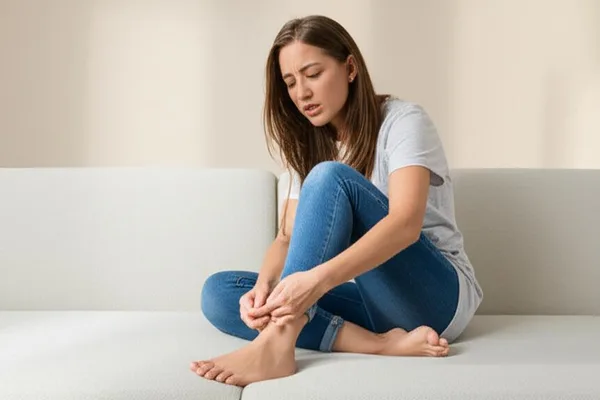
Do you also feel a strange, unexplainable tingling sensation in your legs when you're about to fall asleep at night, or when you've been sitting still for a while? It feels like there are worms crawling inside your legs, or someone is stirring inside you, and you feel like you have to move your legs? Then you may have Restless Legs Syndrome , or RLS for short, a common but somewhat annoying condition that many people experience. It's not a life-threatening condition, but it can have a big impact on your life. But the good news is that you can control this condition to a large extent by making small changes to your daily lifestyle.
What exactly is RLS?
Simply put, RLS is a condition related to the nervous system. It is characterized by an unbearable urge to move the legs while resting, especially in the evening or at night. Some describe this discomfort as a tickling, a burning sensation, a pulling sensation, or a burning sensation. Imagine you are watching a movie in a cinema hall. After half an hour, your legs start to dance and you feel like you can't sit still. Or when you go to bed at night to sleep, you completely lose sleep because of this discomfort in your legs. This is the nature of RLS.
Okay, so let's see what simple things we can do ourselves to manage this annoying situation.
8 habits you should add to your lifestyle
If you incorporate these habits into your life, you too will be able to achieve significant relief from RLS symptoms .
1. Use heat and coolness
Taking a warm bath before bed can often help relax your leg muscles and reduce RLS symptoms. You can also apply a hot or cold water bottle to your legs when you feel uncomfortable. This temperature difference can change the way your brain processes the sensations, which can help to suppress the disturbing feeling. In other words, it can distract you.
2. Move, massage well
Sitting still is the hardest thing for someone with RLS. So, the best immediate solution is to get up and walk around as soon as you feel uncomfortable.
- Do some stretching exercises before going to bed. Especially stretch the calf area by moving your ankles up and down as if you were rolling your feet.
- If you're going somewhere like a bus or a cinema hall, choose an aisle seat as close as possible. That way, it's easier for you to get up and move around whenever you want.
- A good foot massage is also very beneficial. This provides a counter-stimulation to the tingling sensation and reduces the discomfort.
3. Talk to your doctor about the medications you take (this is very important!)
Tell your doctor about all the medications you take, including over-the-counter medications, not just prescription medications. Some medications can make RLS symptoms worse.
For example, some allergy and cold medications, some antidepressants, antipsychotic drugs, and some anti-nausea drugs can worsen RLS.
Don't worry, there are alternatives to all of these. Your doctor will prescribe a different medication that is right for you and won't affect your RLS. Never start or stop taking medication without first consulting your doctor.
4. Exercise, but not too much!
Like everyone else, exercise is essential for your health. However, if you have RLS, you should avoid making sudden changes to your exercise routine. For example, suddenly training for a marathon or suddenly stopping your usual exercise routine can make RLS symptoms worse. The best thing for people with RLS is to maintain a consistent level of activity.
5. Stay away from caffeine.
Avoiding things like coffee, tea, chocolate, and caffeinated sodas can help you calm your mind and get a good night's sleep. A person with severe RLS may not be able to completely eliminate caffeine. However , if the condition is mild, quitting caffeine can make a big difference.
6. Stop using alcohol.
Although drinking alcohol may make you feel sleepy, it can actually wake you up in the middle of the night. When you wake up, your RLS symptoms may be worse than usual. So it's best to avoid alcohol altogether.
| Things to Avoid | Things to Do |
|---|---|
| Caffeine (coffee, tea, chocolate) | Bathing with warm water |
| Alcohol use | Leg massage and stretching |
| Staying in one place for too long | Maintaining a healthy diet |
| Changing your exercise routine all at once | Establishing good sleep habits |
7. Eat a healthy diet
A balanced, nutritious diet is very important for someone with RLS. Some cases of RLS are linked to iron deficiency . Iron is essential for the production of a chemical called dopamine, which carries nerve messages in the brain. It is believed that changes in these dopamine levels contribute to the condition.
So, if your doctor does a blood test and confirms that you have low iron levels, they may recommend taking iron supplements. Magnesium supplements may also help.
Very important: Never take iron or magnesium supplements without medical advice. Too much iron can be dangerous. Also, too much magnesium can cause side effects like diarrhea. Tell your doctor about all vitamins and supplements you take.
8. Improve your sleep habits
Because RLS has a major impact on sleep, it's important to do everything you can to get good sleep. We call this 'Sleep Hygiene' .
- Go to bed at the same time every day, wake up at the same time.
- Eat dinner 2-3 hours before going to bed.
- Make your bedroom cool, dark, and quiet .
- Avoid watching TV or using your phone before bed. Instead, do something relaxing like reading a book.
Making these habits a part of your life will improve the quality of your sleep and help you manage RLS symptoms.
Take-Home Message
- Restless Legs Syndrome (RLS) is a real medical condition, not something you've imagined. So don't be ashamed of it.
- This condition can be largely controlled with simple lifestyle changes (hot/cold therapy, exercise, massage).
- Be sure to talk to your doctor about every medication you take, as well as any vitamins/supplements you're thinking of starting.
- It is very important to avoid caffeine and alcohol as they can aggravate RLS symptoms.
- If you have difficulty controlling your symptoms despite following these instructions, see a doctor for treatment.




💬 Comments (0)
No comments yet. Be the first to share your thoughts here.
Add Your Comment