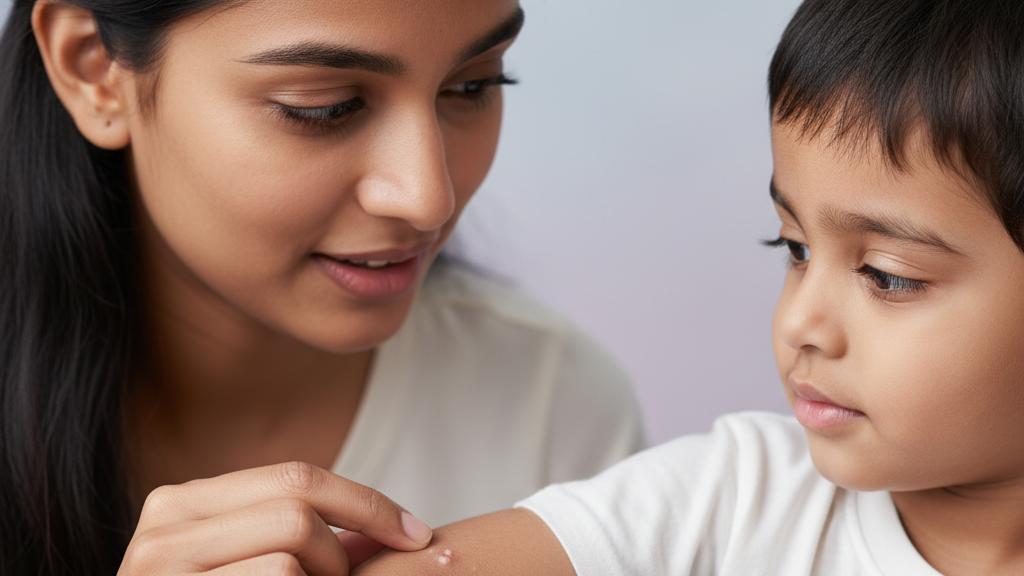
Have you ever noticed a sudden scattering of tiny, almost invisible bumps on your own skin or that of your child? They might not be red, itchy, or large, but possess a subtle sheen. It’s natural to feel a little concerned when something new appears on the skin. However, not every rash is cause for alarm. Today, we'll explore a specific skin condition that might initially cause worry but is generally harmless: Lichen Nitidus.
What Exactly is Lichen Nitidus?
Lichen Nitidus is a relatively uncommon, or rare, skin condition. It manifests as extremely small, shiny bumps (medically termed papules) on the surface of the skin. These papules are typically the same color as your skin, although they can sometimes appear slightly lighter. Imagine tiny, flat-topped bumps, like minuscule pinpricks, clustered together on the skin. That’s often how Lichen Nitidus looks. These lesions can appear anywhere on the body.
Who is Most Affected?
This condition is most frequently observed in children and young adults. However, it can occur at any age, including in older adults. A crucial point to remember is that Lichen Nitidus is not contagious. This means it cannot spread from person to person through touch or any other means. Therefore, there's no need for excessive worry about transmission.
In many cases, this condition requires no treatment at all. The bumps often fade away on their own over time.
How Common is Lichen Nitidus?
Lichen Nitidus is indeed a rare condition. Consequently, data regarding its prevalence can be somewhat varied and limited in medical literature.
Some reports suggest it might be slightly more common in males than females. Additionally, certain studies have indicated that individuals of African American descent may have a higher likelihood of developing Lichen Nitidus compared to Caucasians.
However, other medical opinions state that sex and ethnicity do not significantly influence the occurrence of this condition. What is clear is that Lichen Nitidus is more commonly seen in children and young adults rather than older individuals.
What Causes Lichen Nitidus?
This is a question many people have, but the honest answer is that the exact cause of Lichen Nitidus remains unknown to medical science. It appears to be a spontaneous condition.
Historically, doctors sometimes thought it was a variant of another skin disease called Lichen Planus, which involves purplish, itchy bumps. However, we now understand these two conditions are distinct.
Currently, the prevailing theory is that Lichen Nitidus might be related to a minor alteration in the activity of the body's immune system, leading to changes in skin cells. However, this is still an area of ongoing research and not definitively proven. So, it’s important not to blame yourself or think you did something wrong to cause it.
What are the Symptoms? Where Do the Bumps Appear?
The primary characteristic of Lichen Nitidus is the presence of small, shiny bumps. These papules can appear anywhere on the body. Sometimes they form clusters, while other times they might be scattered. In some individuals, the bumps may develop along lines where the skin has been scratched.
Let's detail the characteristics and common locations in the table below:
| Symptom Characteristic | Description | Common Locations |
|---|---|---|
| Papule Appearance | Tiny, shiny, flat-topped bumps | Abdomen |
| Skin Color | Usually skin-colored or slightly lighter | Outer arms |
| Distribution | Can be clustered or scattered | Torso (trunk) |
| Other Potential Symptoms | Chest | |
| Itching | Often not itchy, but mild itching can occur in some cases. | Forehead (especially hairline) |
| Nail Changes | Rarely, pitting or ridging of the nails may be seen. | Penis (in males) |
| Oral Lesions | Very rarely, small white or grayish bumps inside the mouth might appear. |
How is Lichen Nitidus Diagnosed?
If you or your child develops unexplained skin bumps, the best course of action is to consult a doctor. A healthcare professional typically diagnoses Lichen Nitidus by carefully examining the appearance and distribution of the lesions.
In most cases, the visual examination is sufficient for diagnosis. However, if it's necessary to differentiate Lichen Nitidus from other skin conditions, your doctor might recommend a biopsy.
A biopsy involves taking a tiny sample of affected skin under local anesthesia and examining it under a microscope. This allows for a definitive identification of the condition by observing the cells directly. It's a simple procedure and usually not painful.
Is Treatment Necessary? What are the Options?
Perhaps the most reassuring news regarding Lichen Nitidus is that most cases do not require any treatment. Yes, you read that correctly. The bumps typically resolve spontaneously over time.
However, if symptoms like significant itching are present, a doctor may prescribe treatments to manage them:
- Topical Corticosteroid Creams: These prescription creams help reduce inflammation and itching. They should be used exactly as directed by your doctor for the prescribed duration.
- Phototherapy: This involves controlled exposure to specific types of ultraviolet light, usually reserved for more persistent or bothersome cases.
It is crucial not to self-treat with over-the-counter creams without consulting a doctor, as some treatments could potentially worsen the condition.
Are There Any Complications?
No. Lichen Nitidus is a localized skin condition that does not cause any serious medical complications or affect internal organs or overall health.
The main concern for some individuals might be cosmetic, especially if the bumps appear on visible areas like the face. However, remember that this condition is temporary.
How Long Do the Bumps Last? Will They Leave Scars?
Lichen Nitidus typically lasts anywhere from a few months to about a year. After this period, the bumps gradually fade and disappear completely.
The good news is that once the lesions resolve, they do not leave permanent scars or changes in skin color. The skin usually returns to its normal appearance.
Should I See a Doctor?
Yes. If you or your child develops an unexplained rash or bumps on the skin, it's always best to seek medical advice promptly.
Many different skin conditions can look similar. A proper diagnosis is essential to rule out other conditions that might require specific treatment. Seeing a doctor also helps alleviate anxiety and provides reassurance.
When you visit the doctor, consider asking questions like:
- Is this condition serious?
- Does it require treatment? What should we do?
- How long will the bumps last?
Understanding the answers to these questions can provide clarity and peace of mind.
Key Takeaways
- Lichen Nitidus is a harmless, non-damaging skin condition.
- It is not contagious, so there's no risk of spreading it to others.
- Most cases resolve on their own without treatment over several months to a year.
- The bumps typically do not leave scars or permanent skin discoloration.
- Always consult a healthcare professional for any unexplained skin rashes or bumps to ensure an accurate diagnosis and appropriate guidance.
Disclaimer: This article provides general information about this condition and should not replace the advice from your doctor. Always consult a healthcare professional.
💬 අදහස් (0)
තවමත් කිසිදු අදහසක් පළ කර නොමැත. ඔබේ අදහස පළමු වරට මෙහි එක් කරන්න.
ඔබේ අදහස එක් කරන්න