
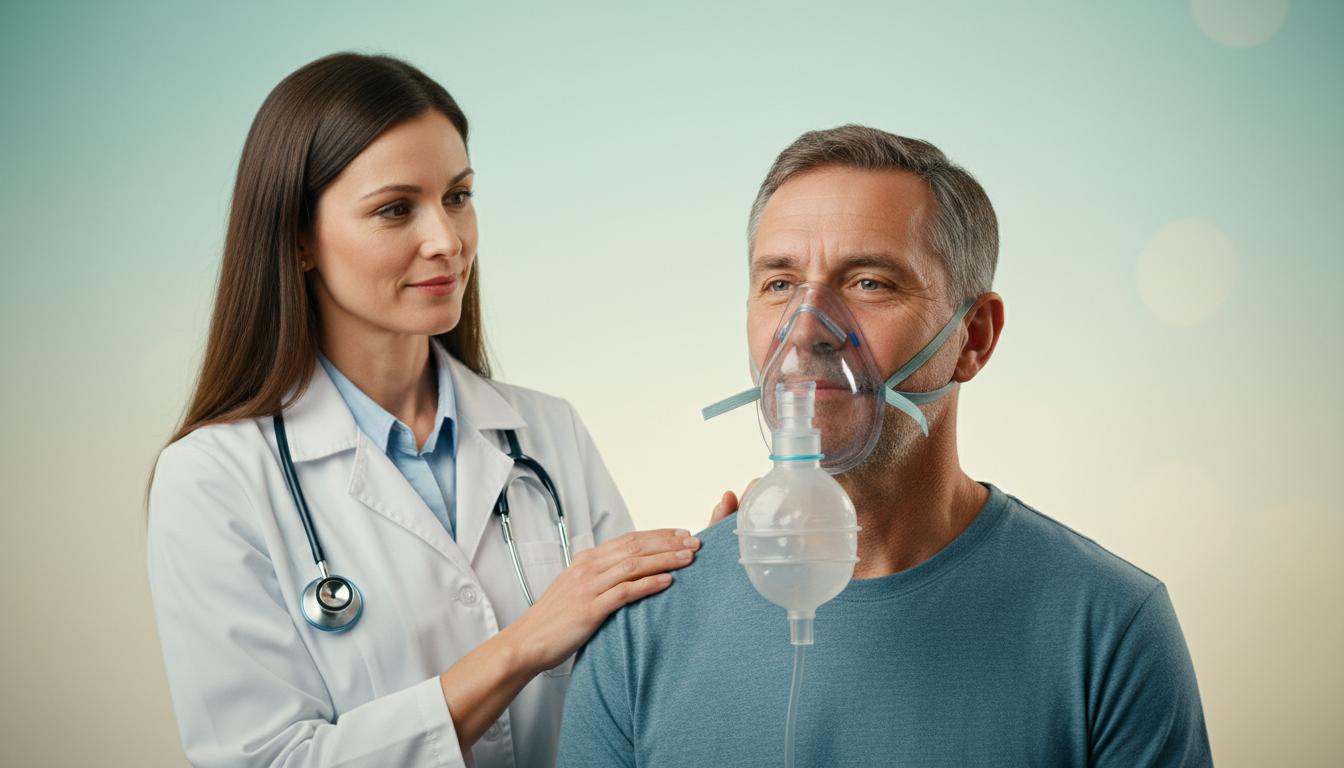
Have you ever witnessed an ambulance crew or seen emergency room staff place a mask over someone struggling to breathe, connected to a small bag-like device? Chances are, they were using a Non-Rebreather Mask (NRM). This seemingly simple tool is a vital piece of medical equipment used in emergencies to potentially save lives. Let's break down what it is and how it works in clear, understandable terms.
What Exactly is a Non-Rebreather Mask (NRM)?
Simply put, a Non-Rebreather Mask (NRM) is a specialized face mask designed to deliver a very high concentration of oxygen quickly to someone in distress. It's commonly used in emergency situations where a person needs an immediate boost in their blood oxygen levels.
Think of it as a tight-fitting mask that covers the patient's mouth and nose, creating a seal. An elastic strap holds it securely in place. Connected to the mask is a clear, bag-like reservoir filled with oxygen – this is known as the 'reservoir bag'. This bag is attached via tubing to an oxygen source, typically an oxygen tank or wall outlet found in hospitals, emergency departments (ETUs), or ambulances.
The Key Feature: One-Way Valves
The most significant feature of the NRM is its one-way valves. These valves ensure that when the patient inhales, they draw only pure oxygen from the reservoir bag. Crucially, the exhaled air (containing carbon dioxide) doesn't go back into the reservoir bag; instead, it exits through different ports in the mask. This means the patient breathes fresh oxygen with each inhalation, and no room air mixes with the supplied oxygen. Consequently, a very high percentage of oxygen reaches the lungs.
When is a Non-Rebreather Mask Used?
An NRM is typically used when a person's blood oxygen levels are dangerously low, but they are still able to breathe on their own. It's not a ventilator that breathes for the patient; it simply delivers a much higher concentration of oxygen than other mask types.
Here are some common emergency scenarios where an NRM might be employed:
- Severe Smoke Inhalation: After being rescued from a fire, someone who inhaled smoke may have lung damage and critically low oxygen levels. An NRM provides immediate high-flow oxygen.
- Carbon Monoxide Poisoning: Exposure to carbon monoxide (from sources like faulty heaters or car exhaust in enclosed spaces) can be fatal. High concentrations of oxygen delivered via an NRM are crucial for treatment.
- Trauma with Lung Injury: Severe injuries from accidents, such as chest trauma affecting the lungs, can impair breathing and oxygen uptake, necessitating NRM use.
- Cluster Headaches: While less common, some studies suggest that administering high-concentration oxygen via an NRM can provide relief for severe cluster headaches.
- Acute Exacerbation of Chronic Respiratory Diseases: Patients with conditions like COPD (Chronic Obstructive Pulmonary Disease) or Cystic Fibrosis experiencing a sudden worsening of their breathing difficulties may receive oxygen via an NRM upon hospital admission.
Important Note: If you suspect someone has inhaled carbon monoxide or another toxic gas, call emergency services immediately. While waiting for help, contact the National Poisons Information Centre in Colombo for guidance.
NRM vs. Other Oxygen Masks
You might have seen other types of oxygen masks in hospitals. A key distinction is between the Non-Rebreather Mask and the Partial Rebreather Mask. The main difference lies in how much exhaled air or room air mixes with the supplied oxygen.
| Feature | Non-Rebreather Mask (NRM) | Partial Rebreather Mask |
|---|---|---|
| Valves | One-way valves | Two-way valves |
| Inhaled Air | Pure oxygen from the reservoir; no room air enters. | A mix of oxygen, exhaled air, and some room air. |
| Oxygen Concentration (FIO2) | Very high (approx. 60% - 90%) | High, but lower than NRM (approx. 40% - 60%) |
| Risk of Suffocation | Higher if oxygen supply fails. | Lower as room air can enter. |
The term FIO2 (Fraction of Inspired Oxygen) refers to the percentage of oxygen a person inhales. Normal air contains about 21% oxygen. An NRM can increase this significantly, often up to 90%, demonstrating its potency.
Advantages and Disadvantages
Advantages:
- The primary advantage is the ability to deliver a very high concentration of oxygen rapidly. This can be life-saving when blood oxygen levels are critically low.
Disadvantages and Risks:
The most significant risk associated with an NRM is suffocation. Because the mask relies solely on the oxygen supply from the tank or outlet, if that supply fails (e.g., the tank runs empty), the patient will not receive any air to breathe, leading to potential suffocation. This necessitates constant monitoring by healthcare professionals.
Warning: Due to the risk of suffocation, Non-Rebreather Masks should only be used under direct medical supervision in a hospital or emergency setting. Never attempt to use one at home without explicit instructions and monitoring from a healthcare professional.
Can You Use an NRM at Home?
Absolutely not. The risks are too high for unsupervised home use. If you or a family member requires long-term oxygen therapy due to chronic respiratory conditions, safer devices like a Nasal Cannula (small tubes placed in the nostrils) are typically used. While these deliver lower oxygen concentrations, they allow room air to mix in, reducing the risk of suffocation if the oxygen supply is interrupted. Always discuss appropriate home oxygen options with your doctor.
When to Seek Immediate Medical Help
If you or someone you know experiences difficulty breathing accompanied by any of the following symptoms, seek emergency medical attention immediately:
- Bluish discoloration of lips or skin (cyanosis)
- Rapid breathing or extreme effort to breathe
- Nasal flaring (nostrils widening with each breath)
- Wheezing, gasping, or other abnormal breathing sounds
These are warning signs of severe oxygen deprivation.
Key Takeaways
- The Non-Rebreather Mask (NRM) is a critical device for delivering high concentrations of oxygen in emergencies.
- Its one-way valves ensure the patient breathes primarily pure oxygen.
- The main risk is suffocation if the oxygen supply fails, requiring constant medical supervision.
- NRMs are not suitable for home use due to safety concerns.
- If you have chronic breathing problems, consult your doctor about appropriate long-term oxygen therapy options.
Understanding the role and limitations of the Non-Rebreather Mask highlights its importance in emergency medicine and reinforces the need for professional medical care when dealing with respiratory distress.
Disclaimer: This article provides general information about this condition and should not replace the advice from your doctor. Always consult a healthcare professional.
Frequently Asked Questions (FAQs)
What is the main difference between a Non-Rebreather Mask and a regular oxygen mask?
The key difference lies in the valves and the concentration of oxygen delivered. A Non-Rebreather Mask has one-way valves that prevent exhaled air from mixing with fresh oxygen, allowing for delivery of very high oxygen concentrations (60-90%). Regular masks often allow some mixing of room air or exhaled air, resulting in lower oxygen percentages.
Is it safe to use a Non-Rebreather Mask at home?
No, it is not safe. Due to the high risk of suffocation if the oxygen supply fails, Non-Rebreather Masks should only be used under direct medical supervision in a hospital or emergency setting. Safer devices are available for home oxygen therapy.
What does FIO2 mean?
FIO2 stands for Fraction of Inspired Oxygen. It represents the percentage of oxygen that a person inhales with each breath. Normal room air has an FIO2 of about 21%. A Non-Rebreather Mask can significantly increase this, often to 60% or higher.
What are the signs that someone needs emergency oxygen?
Signs include difficulty breathing, shortness of breath, bluish lips or skin (cyanosis), rapid breathing, wheezing, gasping, or extreme effort to breathe. These symptoms require immediate medical attention.
💬 අදහස් (0)
තවමත් කිසිදු අදහසක් පළ කර නොමැත. ඔබේ අදහස පළමු වරට මෙහි එක් කරන්න.
ඔබේ අදහස එක් කරන්න