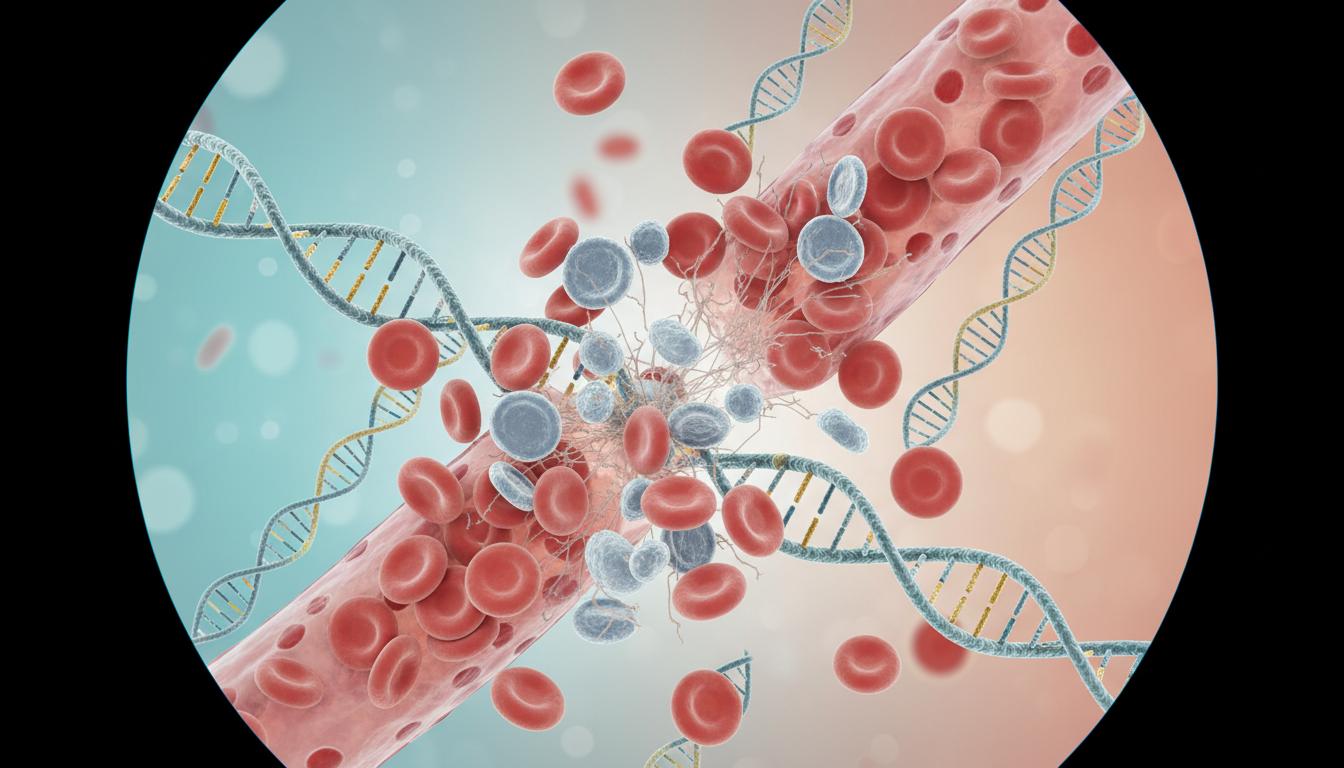
Have you ever heard stories of someone suddenly developing a swollen, painful leg, only to be told by a doctor they had a 'blood clot'? Or perhaps the story of a young, healthy person experiencing sudden breathing difficulties and chest pain requiring hospitalization? These scenarios might leave us wondering what could cause such events. Often, we associate these issues with aging or obesity. However, sometimes the root cause can be inherited traits, like eye color or hair type – specifically, genes passed down from our parents that increase the risk of blood clots. Today, we'll delve into one such inherited condition: Prothrombin Gene Mutation.
What is Prothrombin Gene Mutation?
While the name sounds technical, the concept is straightforward. First, let's understand how blood clotting normally works in our bodies. When you get a minor cut, bleeding stops relatively quickly, right? This happens because your body activates its natural blood clotting system. Many proteins help with this process, known as clotting factors.
Prothrombin is one such protein, also called Factor II. Normally, our bodies produce just the right amount of prothrombin needed for proper clotting. However, in individuals with Prothrombin Gene Mutation, their bodies produce too much prothrombin. Imagine adding too much sugar to your tea – it becomes overly sweet. Similarly, excess prothrombin makes blood slightly more prone to clotting, increasing the risk of developing unwanted blood clots (thrombosis) within veins, especially deep veins in the legs. This condition is known as Deep Vein Thrombosis (DVT).
In some cases, a piece of this clot can break off and travel through the bloodstream to the lungs, blocking blood flow. This is a life-threatening emergency called Pulmonary Embolism (PE).
How is this Gene Inherited? Heterozygous vs. Homozygous
Understanding the inheritance pattern is relatively simple. We inherit one copy of each gene from our mother and one from our father. In the case of the prothrombin gene:
- Heterozygous: You inherit one mutated copy of the gene (from either your mother or father) and one normal copy. This is the most common scenario for people with this mutation. While the risk of blood clots is slightly higher than average, it's generally not dramatically increased. Approximately 2 out of every 1,000 individuals with this condition may develop a clot.
- Homozygous: You inherit two mutated copies of the gene – one from each parent. This is much rarer. In this case, the risk of developing blood clots is significantly higher (several times greater) than for heterozygous individuals.
Can I Pass This On to My Children?
This is a common concern for parents with this condition:
- If you are Homozygous (have two mutated gene copies), each of your children has a 100% chance of inheriting one mutated copy.
- If you are Heterozygous (have only one mutated copy), each child has a 50% chance of inheriting the mutated copy and a 50% chance of inheriting the normal copy. It's like flipping a coin – they might inherit it, or they might not.
What are the Symptoms of This Condition?
Here’s a crucial point: Prothrombin Gene Mutation itself does not cause any symptoms. You won't feel sick or experience discomfort just because you have this genetic variation. Many people live their entire lives unaware they carry the mutation, never developing a blood clot.
The problem arises only if a blood clot actually forms due to the increased risk associated with the gene. In that case, you would experience symptoms related to the clot itself:
| Location of Clot | Potential Symptoms |
|---|---|
| Deep vein in the leg or arm (DVT) | Sudden pain, especially when standing or walking Swelling in the affected limb Redness or discoloration Warmth to the touch compared to other areas |
| Lungs (Pulmonary Embolism - PE) | Sudden shortness of breath Sharp chest pain, often worse with deep breathing Rapid heart rate Coughing, sometimes with bloody sputum Lightheadedness or fainting |
Important Note: A Pulmonary Embolism (PE) is a medical emergency. If you experience symptoms like sudden shortness of breath or chest pain, seek immediate medical attention.
Are There Other Factors That Increase Clot Risk?
Yes, absolutely. Having the Prothrombin Gene Mutation doesn't guarantee you'll develop a clot. However, certain other factors can significantly increase your risk, especially when combined with the genetic predisposition. Think of it like adding fuel to a fire:
- Smoking: Damages blood vessels and increases clotting risk.
- Major Surgery: Prolonged immobility after surgery increases clot risk.
- Obesity: Puts extra pressure on veins, slowing blood flow.
- Pregnancy: Hormonal changes and pressure from the growing uterus increase risk.
- Birth Control Pills or Hormone Therapy: Estrogen can increase clotting factors.
- Aging: Risk naturally increases with age.
- Prolonged Immobility: Long travel (plane, car), bed rest after illness or injury.
How is This Condition Diagnosed?
Standard blood tests like a Full Blood Count won't detect this mutation. Diagnosis requires a specific Genetic Test performed on a blood sample.
However, doctors don't routinely test everyone. They typically recommend genetic testing if:
- You have had multiple unexplained blood clots.
- You developed a clot at a young age without other obvious risk factors.
- A close family member (parent, sibling) has a history of blood clots or this specific mutation.
How is This Condition Treated?
It's important to distinguish between two aspects of treatment:
- Treating the Gene Mutation: Currently, there is no way to change or correct the gene itself. The mutation is a permanent part of your genetic makeup.
- Managing Clot Risk and Treating Clots: While the gene can't be changed, doctors can manage the increased risk of clotting and treat clots if they occur. If you develop DVT or PE, treatment usually involves Anticoagulants (blood thinners) to prevent further clot formation and allow existing clots to dissolve. In severe cases, procedures called Thrombolysis (using drugs to break up clots) or Thrombectomy (surgically removing clots) might be necessary.
The duration of anticoagulant therapy varies. Some individuals may need it for a few months, while others might require lifelong treatment. This decision is made by your doctor based on your individual risk factors and medical history.
How Does This Condition Affect Pregnancy?
This is a significant concern for many women with the mutation:
- If you have the mutation and a history of blood clots, your doctor may recommend low-dose anticoagulant injections (like Heparin) throughout pregnancy and for several weeks postpartum to prevent clots. These medications are generally safe for the baby.
- If you have the mutation but have never had a clot, anticoagulation during pregnancy is usually not necessary.
Regardless, it's crucial to inform your obstetrician and other healthcare providers about your condition if you plan to become pregnant or are already pregnant.
When Should I See a Doctor?
Early recognition of symptoms is key to preventing serious complications. Seek medical attention immediately if:
- You experience symptoms suggestive of DVT (leg/arm pain, swelling, redness, warmth). Contact your doctor or go to the emergency room.
- You experience symptoms suggestive of PE (sudden shortness of breath, chest pain, rapid heart rate). Go to the emergency room immediately.
- You are already taking anticoagulants and notice signs of bleeding (unusual bruising, nosebleeds, blood in urine/stool) or miss doses.
Always inform any doctor you see, especially before surgery or starting new medications, that you have this condition.
Understanding Prothrombin Gene Mutation is the first step towards managing your health effectively. While it increases the risk of blood clots, most individuals with this mutation live long, healthy lives. By being aware of the risks, adopting a healthy lifestyle, and seeking prompt medical care when needed, you can significantly reduce your chances of developing complications.
Disclaimer: This article provides general information about this condition and should not replace the advice from your doctor. Always consult a healthcare professional.
💬 අදහස් (0)
තවමත් කිසිදු අදහසක් පළ කර නොමැත. ඔබේ අදහස පළමු වරට මෙහි එක් කරන්න.
ඔබේ අදහස එක් කරන්න