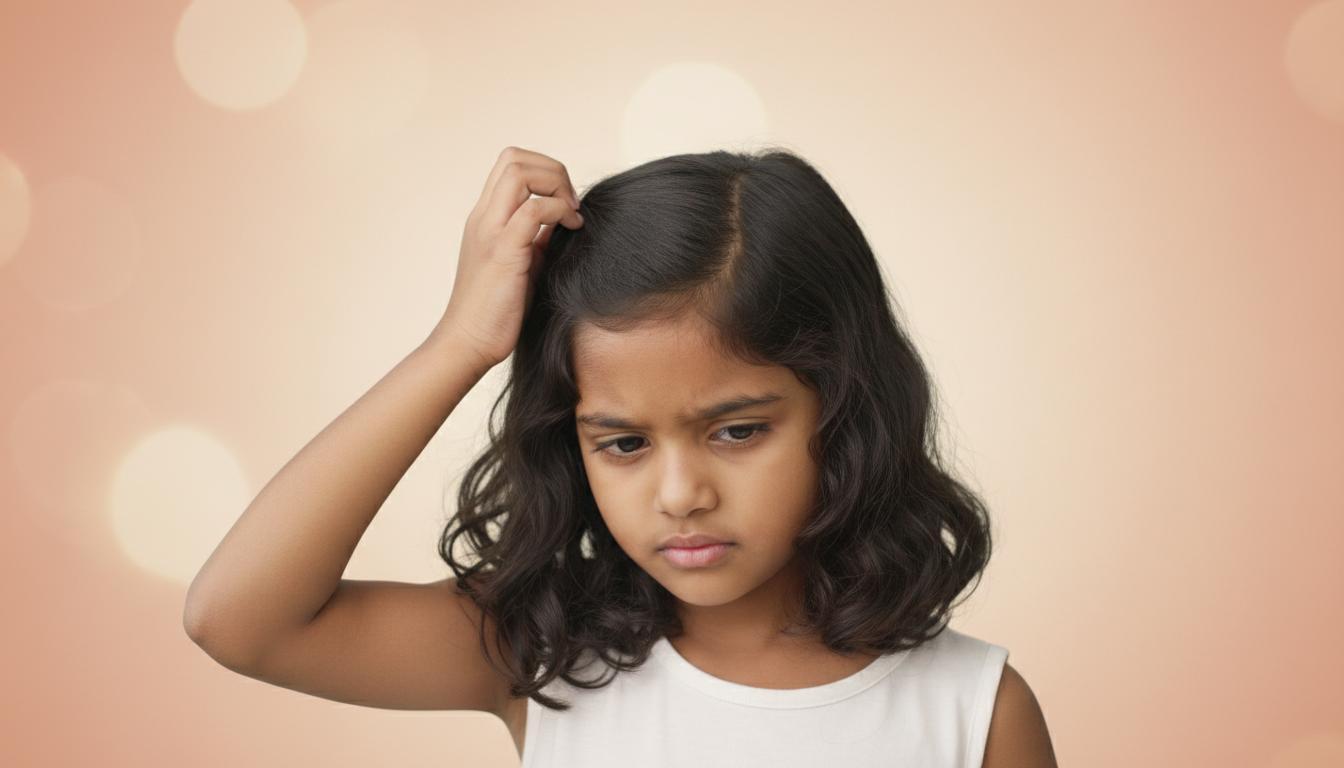
Have you ever seen your little child continuously scratching their head? Or do they come home from school saying, "Mom/Dad, my head is itching"? Perhaps you also experienced this as a child. A main reason for this could be Head Lice. This is indeed a common nuisance for many, but there's nothing to be afraid of.
What are Head Lice?
Okay, so who are these Head Lice? Simply put, lice are very small, wingless insects. To be precise, they are like tiny ants, but even smaller, not even the size of a sesame seed. They live inside people's hair, close to the scalp. Their food is the blood they suck from our scalp. Imagine, our head is like a dining table for them!
Head lice are very common, especially among young children. If your child goes to school or plays together with friends, the chances of lice spreading are higher. But even adults can get lice; it's a normal occurrence. These lice spread very quickly from one person to another. Sometimes it can be a bit difficult to get rid of them. When they bite our scalp, those areas start to itch, sometimes becoming red and forming small sores. This itching is usually how we know there are lice on the head.
A louse typically lives for about a month. During this period, it can lay about 5-6 louse eggs (which we also call 'nits') per day. These eggs are firmly attached to the hair shaft, almost like they're glued with a tiny bit of glue. So, they don't simply wash away when you shampoo your hair. From these eggs, small lice emerge within 7-10 days. So, imagine how quickly a large number of lice can spread from just one louse! This is why it's important to treat lice as soon as a few are present.
Are Head Lice really dangerous? Do they spread diseases?
Now you might be thinking, 'Oh my goodness, are Head Lice a major disease? Do they cause other illnesses?' The best news is that lice are not dangerous creatures. They are bothersome, but they do not transmit serious diseases. Lice are not disease-carrying insects like dengue mosquitoes.
Another common misconception is that lice are caused by uncleanliness. This is a completely false belief! Whether your hair is clean or dirty doesn't matter to lice at all. All they want is blood to survive. So, no matter how well you bathe or how clean your hair is, you can still get lice from someone who has them. Therefore, there's no reason to feel ashamed or upset thinking, 'Oh, I have lice, it must be because I'm unclean.' This can happen to anyone.
"Remember, having Head Lice is neither a cause for shame nor a sign of uncleanliness!"
However, there is one thing. When lice bite the head, it gets very itchy. So, if we scratch our head frequently, small scratches and wounds can sometimes occur on the skin. If this happens, bacteria or similar things can enter through these wounds, potentially causing small infections. In such cases, you might need to see a doctor and get medication. That's why it's important to get rid of lice as soon as you know they are present. This can reduce the itching and other minor problems that might arise from it.
How do Head Lice spread?
Alright, now let's see how these tiny troublemakers jump from one person to another, meaning how they spread. Lice cannot fly or jump long distances. They crawl from one head to another.
- Head-to-head contact: This is the primary way lice spread. Imagine children playing with their heads close together at school, whispering secrets, or siblings cuddling at home. In such situations, a louse on one child's head can very easily transfer to another child's head.
- Sharing personal items: Lice can also spread through some personal items used by an infested person. However, this possibility is less than the first method, because a louse won't survive long once it's off a human head. Nevertheless, it's good to be careful about these things:
- Combs, brushes
- Hats, helmets
- Hair clips, hair ties, ribbons
- Towels, pillowcases, bed sheets (the chance of spread through these is lower, but not impossible)
"The most important thing is that Head Lice spread directly through head-to-head contact. Therefore, it's common to see this in places where children gather and play, such as schools and daycares."
Another point: if one person in a household gets lice, the chances of others getting them are higher. So, if you find out someone in the family has lice, it's very important to check everyone else's heads too. Otherwise, they can keep spreading back and forth among family members.
How to identify Head Lice? What are the symptoms?
Now you might have a question, 'How do I know for sure if my child or I have Head Lice?' There are several key symptoms.
- Head itching: This is the main and most common symptom. When lice suck blood from the scalp, our skin reacts to their saliva. This is what causes the itching sensation. The itching is especially severe behind the ears and around the nape of the neck. Sometimes, this itching can be worse at night than during the day.
- Feeling something crawling on the head: Some people might feel small creatures moving on their head. It's an uncomfortable sensation.
- Seeing lice or nits: The best way is to comb the hair thoroughly, sit in a well-lit area, and if possible, use a magnifying glass to inspect the hair.
- Lice: These are small, grayish-brown insects, smaller than a sesame seed. They move very quickly, so they can be hard to catch.
- Nits (louse eggs): These are louse eggs. They are very tiny, yellowish-white or brownish, like small dots. They are firmly stuck to the hair shafts and cannot be blown away like dandruff. They are most commonly seen on hair shafts near the scalp, especially behind the ears and near the neck. Dandruff can be brushed off with a finger, but nits are not easily removed that way.
- Scratches and infections due to itching: Continuous head scratching can sometimes cause red patches and small scratches on the skin. Through these, germs can enter, potentially leading to small wounds, blisters, or other secondary infections. If this happens, those areas might become painful, and lymph nodes might swell.
"If you have such symptoms, or if your child scratches their head frequently, be sure to inspect their head. Sometimes, with just a few lice, there might not be a lot of itching. So, if there's any suspicion, checking is the best approach."
What to do when Head Lice appear? What are the treatment methods?
Okay, now we know what Head Lice are, how they spread, and how to identify them. So, the most important thing now is, what do you do when lice appear? How do you get rid of this nuisance? Don't worry, there are things you can do.
There are several main treatment methods.
1. Medicated Shampoos, Lotions, or Creams
- Special shampoos, lotions, or creams that can treat lice are available at pharmacies. These are called pediculicides. These medications kill lice and sometimes louse eggs (nits).
- When using these products, you must read the instruction leaflet carefully and follow it precisely. It will clearly state how long to leave it on the head, how to wash it off, and when to use it again (e.g., after how many days).
- Typically, it's recommended to use it once and then again after 7-10 days. The reason is that some nits might survive the first application. The second application is done before new lice emerge from those eggs.
- For children under 2 years old, pregnant mothers, and breastfeeding mothers, it is essential to consult a doctor before using such medications. Some medications might not be suitable for them.
2. Wet-Combing Method
- This is a good method to remove lice without medication. However, it is a time-consuming and patient process.
- What you need to do is thoroughly wet the hair, apply some conditioner if possible, and then use a very fine-toothed nit comb to comb small sections of hair carefully. Position the nit comb as close to the scalp as possible and pull it down from the root to the tip of each hair strand.
- When combing this way, lice and nits get caught in the comb. After each stroke, wipe the comb clean with a tissue or rinse it in a bowl of water.
- This method should be done every 3-4 days for about two weeks. This way, any new lice emerging from eggs can also be removed.
- Even if you are using a medicated shampoo, performing the wet-combing method can further enhance the results.
3. Let's also learn about Home Remedies
- Some people use vinegar, coconut oil, tea tree oil, and similar substances. Some of these are said to help suffocate lice. However, there is less scientific evidence for these. Also, some oils can cause skin allergies. Therefore, it's good to do some research before trying such remedies and, if possible, seek medical advice.
When should you see a doctor?
- If lice do not decrease even after using medications bought from the pharmacy.
- If the scalp is severely wounded, red, or shows pus-like discharge (indicating an infection).
- If you are unsure whether it's truly lice or some other skin condition.
- If a baby under 2 years old has lice.
Treating the entire family and cleaning the environment
- If one person in the house has Head Lice, everyone else in the family should also be checked. It is best to start treatment for those with lice on the same day.
- Bedding, pillowcases, towels, and clothes used by the person with lice should be thoroughly washed in hot water (at least 55-60 degrees Celsius / 130°F) and, if possible, dried well in the sun. Alternatively, put them in a hot dryer.
- Combs, brushes, and similar items should be soaked in hot water for 5-10 minutes, or immersed in a lice treatment solution.
- Toys, hats, and other items that cannot be washed in hot water should be placed in a plastic bag, sealed tightly, and left for about two weeks. This will cause any lice and nits present to die from lack of food.
- Thoroughly vacuum carpets and sofas.
How to prevent Head Lice from returning?
Okay, now we've treated Head Lice. The next biggest question is, 'What can we do to prevent this nuisance from returning?' It's difficult to completely stop lice from appearing, because children inevitably come into close contact with each other when they go to school or play together. But we can do certain things to reduce this risk.
- Reduce head-to-head contact as much as possible: Teach children to avoid touching their heads against others' heads while playing or talking. This might be a bit difficult for young children, but it's good to encourage the habit.
- Teach them not to share personal items with others: Specifically, tell children not to share combs, brushes, hats, helmets, hair clips, and ribbons with others.
- Regularly inspect children's hair: Especially during periods when lice are widespread in school, check your child's head at least once a week. If you detect a few lice early, you can control them before they multiply significantly.
- If your child has long hair...: For children with long hair, tying it up, braiding it, or putting it in a bun when going to school can somewhat reduce the chance of lice entering the hair.
- If you find out about lice...: If you discover your child has lice, inform the school, daycare, or other people your child interacts with (friends' parents) immediately. This will allow them to check their children too. This greatly helps in preventing further spread of lice. This is not something to be ashamed of; it's a responsible action.
- Complete the treatment properly: When treating lice, ensure the treatment is completed thoroughly. If it's stopped halfway, the remaining lice can restart the problem.
"Remember, Head Lice are not a severe illness. But they are a nuisance. With patience and proper treatment, and by being mindful of preventive measures, you can get rid of this problem."
The most important things we need to remember (Take-Home Message)
Alright then, let's recap the essential points from our discussion that you should keep in mind.
- Head Lice are not a dangerous illness, nor do they transmit diseases. This is just a common nuisance seen among young children.
- Lice are not caused by uncleanliness. Anyone can get lice. So, don't be ashamed.
- The main symptom is head itching. But checking for lice and nits in the hair is the best way to confirm.
- There are treatment methods. Special medicated shampoos, lotions, and the wet-combing method available at pharmacies are primary. Always follow instructions precisely.
- If one person in the household gets lice, check everyone in the family, and if necessary, everyone should get treatment together.
- Wash clothes, bedding in hot water, and clean combs and other items.
- If you find out about lice, inform the school. This helps others too.
- Prevention is important. Reducing head-to-head contact and not sharing personal items helps reduce the spread of lice.
"If you are aware of these things, even if the nuisance of Head Lice arises, you can face it properly without panicking. We wish you and your family good health!"
👩🏽⚕️ Additional Questions (FAQs)
💬 How do head lice infest a child's head?
Lice cannot jump or fly. Therefore, lice are transmitted only through head-to-head contact with an infested person, or by sharing combs, towels, pillows, and head coverings they use.
💬 Are there any severe diseases transmitted to the head from these insects?
No. Head lice do not transmit any dangerous diseases or viruses to the body. However, when they feed on blood, the head becomes very itchy. This scratching can lead to wounds and subsequent bacterial infections.
💬 How can head lice and nits be completely removed from a child's head?
Use a special anti-lice shampoo available from a pharmacy. Also, it is essential to comb the head continuously for several days with a fine-toothed comb (nit comb) to remove all nits.
Head Lice, Head Lice Treatment, Nits, Children's Lice, Lice Infestation
💬 අදහස් (0)
තවමත් කිසිදු අදහසක් පළ කර නොමැත. ඔබේ අදහස පළමු වරට මෙහි එක් කරන්න.
ඔබේ අදහස එක් කරන්න