
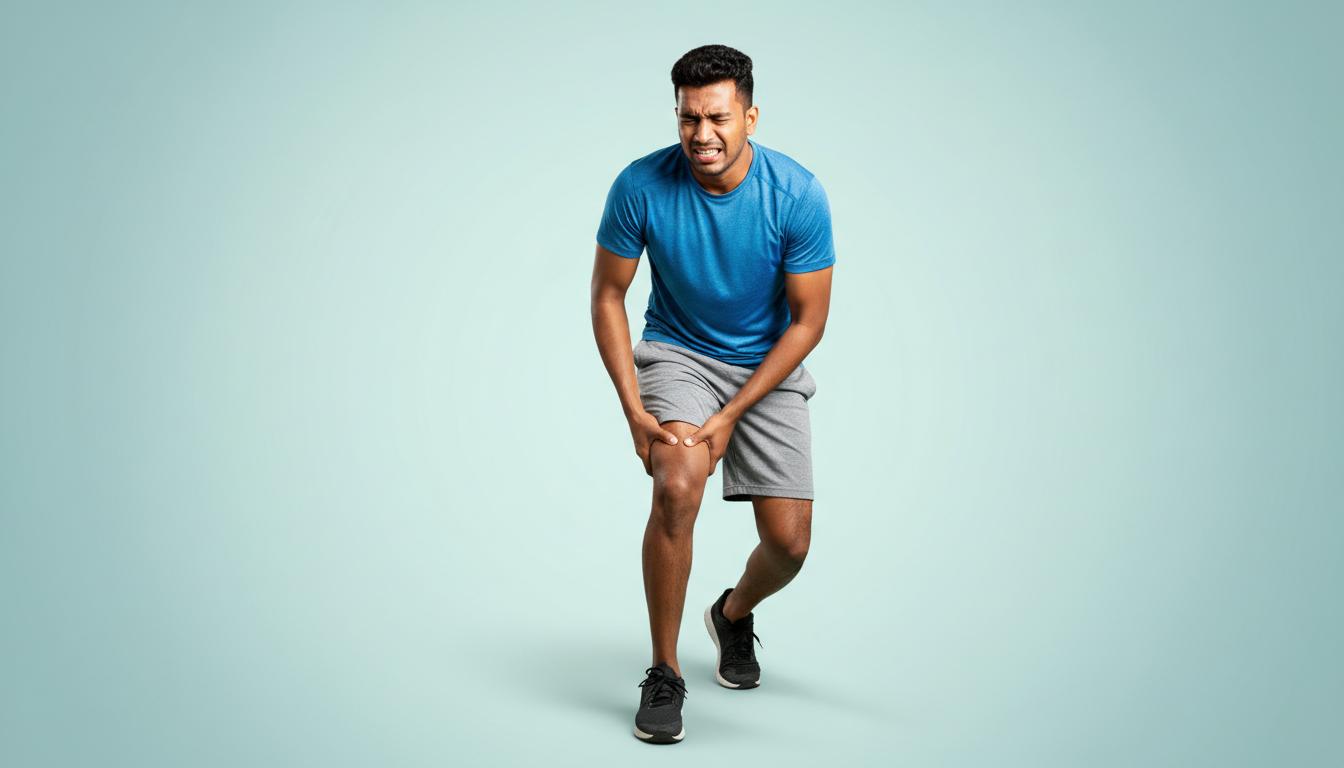
Imagine you're playing cricket with friends or sprinting for the bus. Suddenly, a searing pain shoots up your leg from behind your knee, like being hit by a rock. You turn around – no one's there! This is often how many people experience a 'calf tear' (Calf Muscle Strain). While incredibly painful, it’s a condition that can be effectively managed and recovered from with proper understanding and treatment. Let's dive deep into everything you need to know about this common injury.
What Exactly is a Calf Tear (Torn Calf Muscle)?
Simply put, a calf tear occurs when the muscles in your calf region are stretched beyond their capacity, causing the muscle fibers to tear. Our calf area, the back part of the lower leg below the knee, is primarily composed of two major muscles: the Gastrocnemius and the Soleus. These muscles run from behind the knee down to the heel (Achilles tendon).
Think of a rubber band. It stretches normally without issue. But if you pull it suddenly, forcefully, beyond its limit, what happens? It snaps or tears. Something similar occurs with our calf muscles. During activities involving sudden acceleration, jumping, pivoting, or running, these muscles can be overstretched and tear. This tearing can range from a minor strain (a few fibers) to a complete rupture of the muscle.
Because these muscles span across two joints – the knee and the ankle – they are particularly vulnerable to injury during forceful movements.
Symptoms of a Calf Tear
The symptoms of a calf tear can vary depending on the severity of the injury. However, some common signs include:
- Sudden, Sharp Pain: An immediate, intense pain in the back of the lower leg, often described as feeling like being kicked or hit with an object.
- 'Pop' or 'Crack' Sound/Sensation: Many people hear or feel a distinct popping or snapping sound at the moment of injury.
- Difficulty Using the Leg: Inability to bear weight on the injured leg, push off when walking, or stand on tiptoes. Walking becomes extremely painful.
- Swelling and Bruising: The calf area may swell quickly, and bruising (discoloration) often appears within hours or days as blood leaks into the tissues.
- Visible Indentation: In severe tears (ruptures), a noticeable gap or indentation might be visible or felt along the muscle belly.
What Causes Calf Tears?
The primary cause is an overstretching of the calf muscles beyond their ability to cope, usually due to sudden, forceful contraction or stretching.
- During Sports: Particularly common in sports requiring explosive movements like sprinting, jumping, quick stops, and changes in direction (e.g., basketball, soccer, tennis, track and field).
- Inadequate Warm-up: Starting intense exercise or activity without properly warming up the muscles makes them less pliable and more susceptible to injury.
- Muscle Fatigue: Overexertion or prolonged activity can lead to muscle fatigue, reducing their ability to absorb stress and increasing tear risk.
- Previous Injury: Returning to activity too soon after a previous calf injury before the muscle has fully healed and regained strength increases the likelihood of re-injury.
- Tight Calf Muscles: Chronically tight or inflexible calf muscles are more prone to tearing during sudden movements.
Who is at Higher Risk?
While anyone can experience a calf tear, certain individuals have a higher risk:
- Athletes: Those participating in sports involving sudden bursts of speed or changes in direction.
- Older Adults (Over 40): Muscle flexibility and strength naturally decline with age, increasing vulnerability to strains and tears.
- Individuals with Tight Calf Muscles: People who have chronically tight calf muscles due to posture, lack of stretching, or other factors.
The most crucial thing is to listen to your body. If you feel pain, don't push through it – that’s how minor issues become major problems.
How Doctors Diagnose a Calf Tear
When you see a doctor, they will typically start by asking about how the injury occurred and then perform a physical examination of your leg. This involves checking for tenderness, swelling, range of motion limitations, and muscle strength. They might also assess your ability to stand on tiptoes or push against resistance.
Sometimes, the symptoms of a calf tear can mimic other serious conditions affecting the lower leg, such as:
- Achilles Tendon Rupture: A tear in the large tendon connecting the calf muscles to the heel bone.
- Deep Vein Thrombosis (DVT): A blood clot in a deep vein, usually in the leg.
- Baker's Cyst Rupture: A fluid-filled sac behind the knee that can rupture and cause pain mimicking a calf tear.
If the diagnosis is unclear based on history and physical exam alone, your doctor may recommend further imaging tests:
- Doppler Ultrasound: This uses sound waves to visualize soft tissues and blood flow, helping to identify muscle tears or rule out DVT.
- MRI (Magnetic Resonance Imaging): Provides detailed images of muscles, tendons, ligaments, and other soft tissues, allowing for precise identification and grading of the tear's severity.
Treatment: The RICE Method
For most calf tears, especially mild to moderate ones, immediate treatment focuses on reducing pain, swelling, and preventing further damage. The cornerstone of initial management is the RICE protocol:
- Rest: Stop the activity that caused the injury immediately. Avoid putting weight on the injured leg as much as possible. Crutches may be necessary for more severe tears.
- Ice: Apply an ice pack wrapped in a thin towel to the injured area for 15-20 minutes every 2-3 hours during the first 48-72 hours. This helps reduce pain and swelling. Never apply ice directly to the skin.
- Compression: Wrap the calf with an elastic compression bandage to help control swelling. Ensure it's snug but not so tight that it cuts off circulation (check for numbness, tingling, or increased pain).
- Elevation: Keep your injured leg elevated above the level of your heart whenever possible (e.g., propped up on pillows) to minimize swelling.
During the initial days, it's crucial to avoid activities that could worsen the injury:
- Heat: Avoid hot baths, heating pads, or heat rubs, as these can increase bleeding and swelling in the acute phase.
- Alcohol: Alcohol consumption can impede healing and increase swelling.
- Running/Aggravating Activity: Do not run or engage in any activity that puts stress on the injured calf muscle.
- Massage: Avoid massaging the injured area directly, as this could potentially worsen the tear.
After a few days, and under medical guidance, you may begin gentle range-of-motion exercises and gradually progress to strengthening exercises, often guided by a physical therapist.
When You Absolutely Need to See a Doctor
While mild calf strains might resolve with home care, it's essential to seek medical attention in certain situations:
- You cannot bear any weight on the injured leg.
- There is significant swelling or bruising.
- The pain is severe and doesn't improve after a few days of RICE therapy.
- Your calf feels numb, tingly, or changes color (pale or blue).
- You heard a loud 'pop' at the time of injury, suggesting a possible complete rupture.
Preventing Calf Tears
Prevention is always better than cure. Here are some tips to reduce your risk:
- Warm-up Properly: Always include a dynamic warm-up (e.g., light jogging, leg swings) before engaging in strenuous activity.
- Stretch Regularly: Incorporate regular calf stretches into your routine, especially after exercise, to maintain flexibility.
- Progress Gradually: Increase the intensity and duration of your workouts slowly over time. Avoid sudden jumps in training load.
- Listen to Your Body: Pay attention to signs of fatigue or pain and allow adequate rest and recovery between sessions.
- Wear Appropriate Footwear: Choose shoes that provide good support and are suitable for your activity.
Key Takeaways
- A calf tear is a common injury caused by overstretching the muscles in the back of the lower leg.
- Symptoms include sudden sharp pain, possible popping sound, swelling, bruising, and difficulty walking.
- Immediate treatment involves the RICE protocol (Rest, Ice, Compression, Elevation).
- Severe symptoms or lack of improvement warrant prompt medical evaluation.
- Prevention strategies include proper warm-up, stretching, gradual progression, and listening to your body.
Disclaimer: This article provides general information about this condition and should not replace the advice from your doctor. Always consult a healthcare professional.
💬 අදහස් (0)
තවමත් කිසිදු අදහසක් පළ කර නොමැත. ඔබේ අදහස පළමු වරට මෙහි එක් කරන්න.
ඔබේ අදහස එක් කරන්න