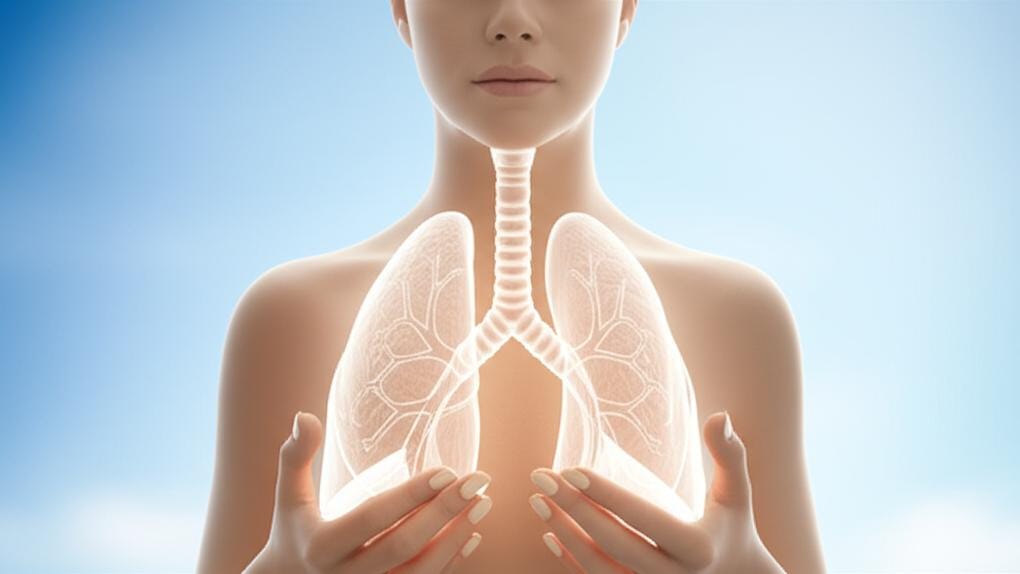
Have you ever paused to think about how incredible the simple act of breathing really is? While it feels second nature, there is a fascinating story happening behind every breath, driven by one of the most vital organs in your body: your lungs. Let’s explore your lungs together here at Nirogi Lanka. We’ll break down how they work, common conditions they face, and how you can take the best care of them in simple, easy-to-understand terms.
What are your lungs?
In simple terms, your lungs are the two primary organs responsible for your breathing. They are the core of your respiratory system—the amazing network that pulls air into your body, absorbs the oxygen you need, and clears out the waste gases you don't.
You have two lungs, located on the left and right sides of your chest. Your chest—the area between your neck and your abdomen—houses these organs, which are protected by a thin, slippery membrane called the pleura. You can think of it like a protective cover for a book.
The Left and Right Lung – A Dynamic Duo
While your lungs look quite similar, they each have unique characteristics.
- Right Lung: This is divided into three sections called the superior lobe, middle lobe, and inferior lobe. It is slightly shorter but broader than your left lung.
- Left Lung:This consists of only two sections: the superior lobe and the inferior lobe. Have you ever wondered why the left lung is smaller? It is to make room for your heart, which is positioned slightly to the left. The left lung features a specialized indentation called the cardiac notch to accommodate it. Additionally, the left lung has a small, tongue-like projection in its upper lobe known as the lingula, a feature not found in the right lung.
What is the primary function of your lungs?
The primary job of your lungs is to provide your body with the oxygen it needs while removing waste carbon dioxide. This process occurs about 12 to 20 times per minute, even when you are at rest. Just think—this vital work never stops, even while you sleep!
The Incredible Journey of a Breath
When you inhale through your nose or mouth, the air first travels to the back of your throat, known as the pharynx. It then passes through the larynx (your voice box) and enters the trachea (your windpipe).
The trachea branches into a Y-shape into tubes called bronchial tubes, with one tube leading to each lung. For your lungs to function optimally, these airways must remain clear and free from inflammation or congestion.
These bronchial tubes branch further into smaller airways called bronchi, which divide into even smaller branches known as bronchioles. These end in tiny, grape-like clusters of air sacs called alveoli.
Oxygen In, Carbon Dioxide Out!
This is where the magic happens: in the alveoli. Oxygen from the air you breathe is transferred through these sacs into your bloodstream. This oxygen-rich blood then travels to the heart, which pumps it throughout your entire body to nourish your cells.
As your cells work, they produce carbon dioxide as a waste product. This carbon dioxide returns to the bloodstream and travels back to your lungs. When you exhale, you effectively clear this waste from your body.
The Protective Guardians of Your Lungs
Your respiratory system is remarkably efficient at keeping harmful elements out of your lungs:
- Nasal Hairs: These act as a natural filter, catching large dust particles and foreign objects before they enter your lungs.
- Mucus in the Airways: This keeps your airways moist and traps dust and bacteria.
- Cilia: These tiny, hair-like structures act like a broom, sweeping trapped particles upward so you can cough or clear them out. One of the dangers of smoking is that it damages these cilia, significantly increasing your risk of lung disease.
Fascinating Facts About Your Lungs!
Here are some surprising facts you might not have known:
- You can survive with only a portion of a lung removed, or in some cases, even one lung alone.
- Lungs are the only organ in the human body capable of floating on water!
- Regular exercise can help increase your lung capacity—the amount of air your lungs can hold.
- An adult's lungs contain between 300 and 500 million alveoli. It is truly hard to fathom!
Where are your lungs located and what do they look like?
Your lungs are housed within your thoracic cavity, resting atop the diaphragm, a large muscle essential for breathing.
Healthy lungs are typically a pinkish-grey color. If you have seen images comparing the lungs of a smoker versus a non-smoker, you might notice that damaged lungs appear dark grey or even have black spots. Their shape is somewhat triangular, often compared to an elephant's ears.
An adult lung weighs approximately one kilogram. When breathing normally, they are about 9 inches long, expanding to nearly 10.5 inches during deep inhalation.
What common conditions affect our lungs?
Unfortunately, our lungs can be susceptible to various conditions. Some are minor and resolve quickly, while others are more serious and may require long-term management. Here are some commonly seen respiratory issues:
- Asbestosis: Scarring of lung and pleural tissue caused by inhaling asbestos fibers.
- Asthma: A condition where your airways narrow, leading to breathing difficulties.
- Bronchiectasis: Inflammation of your airways (bronchi) that often causes a persistent cough with mucus and difficulty breathing.
- Bronchitis: Characterized by a cough; this can be an 'Acute' condition that resolves or a long-term 'Chronic' condition.
- COPD (Chronic Obstructive Pulmonary Disease): A progressive and irreversible lung disease that makes it hard to breathe.
- COVID-19: A viral infection that can cause respiratory illness ranging from mild to severe.
- Croup: A respiratory infection most commonly seen in children under 5 years old.
- Cystic Fibrosis: A hereditary condition where thick, sticky mucus accumulates in the lungs and other organs.
- Influenza: A viral lung infection commonly known as the flu.
- Lung Cancer: Tobacco use is the primary risk factor for this condition.
- Mesothelioma: A specific type of cancer primarily caused by the inhalation of asbestos fibers.
- Pneumonia: A lung infection that may cause fluid buildup in the lungs and often requires hospitalization.
- Pulmonary Fibrosis: Irreversible scarring of the lungs that leads to severe breathing difficulties.
- Pulmonary Nodules: Growths in the lungs; these are often 'Benign' (non-cancerous).
- RSV (Respiratory Syncytial Virus): A respiratory infection that affects both young children and adults.
- Tuberculosis: Primarily affects the lungs but can also impact other parts of your body.
What are the signs of lung disease, and how can you recognize them?
You may notice the following symptoms if you have a lung condition:
- Dyspnea (Shortness of Breath): Feeling like you cannot get enough air, even during minor physical activity.
- Chest Pain: Discomfort in your chest when you breathe or cough.
- Cough: Especially a persistent cough or one that produces blood.
- Fatigue: Feeling unusually tired or weak.
- Wheezing: A high-pitched whistling sound when you breathe.
- Swelling in your ankles and feet.
Important: If you are experiencing these symptoms, please consult a physician immediately. Early diagnosis by the Nirogi Lanka team significantly improves your treatment outcomes.
What tests are used to check if your lungs are healthy?
When you visit a doctor, they will evaluate your condition through a physical exam and other diagnostic tools.
Your physical examination
- Your doctor will listen to your lungs with a stethoscope to detect abnormal sounds like 'Crackles/Rales' (popping sounds), 'Wheezing' (whistling), or 'Stridor' (high-pitched breathing).
- They will count your respirations (how many times you breathe per minute).
- They may listen to your lungs while you speak to check for vocal abnormalities.
- Pulse Oximetry: A small device attached to your finger that measures the oxygen levels in your blood.
In addition to the physical exam, your doctor may order further diagnostics.
Imaging Tests
These tests allow your doctor to visualize the inside of your lungs.
- Chest X-ray
- CT (Computed Tomography) scan
- Ultrasound
- MRI (Magnetic Resonance Imaging) scan
Pulmonary Function Tests
These tests measure how well your lungs are functioning, how much air they can hold, and how effectively you move air in and out.
- Spirometry
- Body Plethysmography
- Diffusion Testing
- Exhaled Nitric Oxide Test
- Lung Volume Test
- Methacholine Inhalation Test
- Six-Minute Walk Test
Advanced Procedures
In some cases, your doctor may recommend a 'Bronchoscopy' to view your airways with a camera, a 'Lung Biopsy' to take a tissue sample, or even a 'Thoracotomy' (surgical opening of the chest). These are typically performed under anesthesia.
What are the treatments for lung diseases?
Treatment plans depend entirely on your specific diagnosis and overall health. Your plan may include medications, lifestyle exercises, specialized medical devices, or surgery.
Medications
These may be administered via inhaler, nebulizer, oral tablets, or injections.
- Steroids: To reduce inflammation in your airways.
- Antibiotics: To treat bacterial infections.
- Bronchodilators: To open your airways; available in 'Short-acting' and 'Long-acting' varieties.
- Mucolytics: To thin mucus and make it easier to clear from your lungs.
- Oxygen Therapy: To improve your oxygen levels.
- Chemotherapy and/or Radiation: To treat lung cancer.
- Vaccines: To protect you against respiratory infections.
Exercises and Devices
- Specialized breathing techniques, such as 'Pursed Lip Breathing' and 'Diaphragmatic Breathing'.
- 'Airway Clearance Devices' such as 'Vest Therapy' to help remove mucus.
Surgery
In some situations, surgery may be necessary.
- Removal of a single lobe of the lung (Lobectomy).
- Removal of two lobes of the lung (Bilobectomy).
- Thoracentesis, a procedure used to remove excess fluid from the space around the lungs.
- Removal of an entire lung (Pneumonectomy).
- Lung Transplant.
How can you keep your lungs healthy? (Take-Home Message)
This is perhaps the most important part. There are many steps you can take to keep your lungs healthy or manage existing respiratory conditions effectively.
- The most vital step is to quit smoking if you smoke. This includes vaping. It is the greatest gift you can give your lungs.
- Maintain a healthy weight. Excess weight can restrict the space your lungs need to expand fully.
- Exercise regularly. However, please consult your doctor before starting any new exercise routine.
- Eat a healthy, balanced diet.
- Stay well-hydrated (unless your doctor has advised you to limit your fluid intake).
- Stay up-to-date with vaccinations as recommended by your doctor, such as the influenza and pneumonia vaccines.
- Wash your hands frequently to prevent infections.
- Avoid close contact with people who are unwell.
Remember, while your respiratory system has built-in defenses, lungs can still become diseased. Some conditions resolve quickly, while others are serious and chronic. If you suffer from a long-term lung condition, your primary care doctor may refer you to a Pulmonologist. The most important thing is to follow your medical team's advice precisely.This will help ensure you can breathe as easily as possible. If you experience sudden, severe breathing difficulties, please call 911 or visit your nearest emergency department immediately.
👩🏽⚕️ Frequently Asked Questions (FAQs)
💬 Why are our lungs so vital to our body?
Your lungs are the primary gas-exchange center of your body. They take the oxygen from the air you breathe and transfer it into your bloodstream while removing carbon dioxide, a waste gas, from your body.
💬 What causes the most rapid decline in lung health?
Smoking is the single most damaging thing you can do to your lungs. Chemicals in tobacco smoke weaken the delicate cells in your lungs, which over time can lead to chronic diseases, including lung cancer.
💬 What are the best ways to keep my lungs healthy?
You can protect your lungs by never smoking, engaging in regular cardiovascular exercise, performing deep breathing exercises, and wearing a mask in environments with poor air quality.
` Nirogi Lanka, lungs, respiratory system, breathing, oxygen, lung disease, healthy lungs