

Embarking on the journey through adolescence brings a myriad of physical and emotional transformations. Among the most significant physiological milestones for a young girl is the onset of her first menstrual period, medically known as menarche. While whispered about in school hallways or discussed quietly among family members, menstruation is a completely natural, healthy, and vital biological process that signifies the body's maturation into reproductive capability. Understanding what is happening inside your body can transform anxiety and uncertainty into confidence and peace of mind.
As a medical editor and healthcare specialist, my goal is to provide an exhaustive, evidence-based guide tailored to international standards (following guidelines from the NHS, Mayo Clinic, and American College of Obstetricians and Gynecologists). This article will demystify the entire menstrual process—explaining the underlying hormones, tracking cycle regularity, exploring sanitary management options like pads, tampons, and menstrual cups, managing premenstrual symptoms (PMS) and cramps, and identifying red flags that warrant a clinical evaluation.
Whether you are a teenager having these changes for the first time or a parent seeking reliable clinical guidance to support your child, this complete resource will answer your most pressing questions with clarity, compassion, and uncompromising medical accuracy.
Key Clinical Takeaways.
- Menarche Timeline: The first period typically occurs around age 12, though anywhere between ages 10 and 15 is considered normal.
- Initial Irregularity is Normal: It is entirely common for cycles to be irregular during the first 1 to 3 years post-menarche as the hypothalamic-pituitary-ovarian axis matures.
- Hormonal Drivers: Estrogen and progesterone regulate the thickening and shedding of the endometrial lining each month.
- Hygiene and Safety: Proper product management (changing pads every 4 to 6 hours or tampons within 8 hours) prevents bacterial proliferation and toxic shock syndrome.
- When to Consult a doctor: Seek medical evaluation for severe pain unresponsive to NSAIDs, exceptionally heavy bleeding soaking a pad hourly, or absence of menarche by age 15.
What Is a Period and Why Does It Happen?
To put it simply, a menstrual period is the regular shedding of the uterine lining (endometrium) through the vagina. It is a normal physiological function, comparable to breathing or digestion, indicating that your body is maturing and developing properly. Medically referred to as menstruation, this process represents a key phase of the female reproductive cycle.
Reaching menarche means you are approaching the later stages of puberty. also, it signifies that once regular ovulation and menstruation are established, pregnancy is biologically possible if engaging in unprotected sexual intercourse. However, during adolescence, the primary focus is understanding your changing body and maintaining optimal reproductive health.
The Mechanism Behind the Magic: What Happens Inside?
Have you ever wondered why bleeding occurs? The entire process is orchestrated by powerful chemical messengers called hormones. The primary hormones involved are estrogen and progesterone, which are produced by the ovaries—two small, almond-sized glands located in the lower abdomen.
Throughout each month, these hormones cause the inner lining of the uterus (womb) to thicken and accumulate a rich supply of blood vessels and nutrients. Think of this as preparing a soft, cushioned mattress in anticipation of a fertilized egg. If an egg (released from an ovary) meets a sperm and fertilization occurs, it implants into this rich lining to grow into a baby.
However, if fertilization does not take place, that thickened uterine lining is no longer needed. The levels of estrogen and progesterone drop sharply, signaling the uterus to shed the lining. This mixture of blood, tissue, and mucus travels down through the cervix and out of the body via the vagina. This is your period. Once the shedding is complete, the cycle resets, and the body begins preparing a new lining for the following month. This entire cyclical process typically takes about a month, which is why periods generally arrive on a monthly basis.
When Does a Period Start? Is It Nearing for You?
For most girls, the first period arrives around age 12. However, every person has a unique biological clock. Some experience menarche earlier at age 10 or 11. This others may experience it later at age 14 or 15. If your friend started her period at age 11, it does not mean yours must arrive at the exact same time.
While there is no fixed age for menarche, several distinct physical signs indicate that your first period is approaching:
- Breast Development: The earliest sign of puberty is usually breast budding (thelarche). Menarche typically occurs about 2 years after breast development begins.
- Hair Growth: The appearance of pubic hair and underarm hair is another milestone driven by adrenal and ovarian androgen production.
- Vaginal Discharge: Clear or whitish cervical secretions often appear several months to a year before the first period, reflecting hormonal activity in the reproductive tract.
Observing these signs means your body is transitioning smoothly through puberty. There is no reason to feel alarmed. Rather, it is time to prepare by keeping a sanitary pad in your school bag.
The Connection Between Ovulation and Your Period.
Ovulation is the biological process where a mature egg is released from one of the ovaries. The same hormones that thicken the uterine lining also trigger this release. Once liberated, the egg travels through a delicate, thin tube called the fallopian tube toward the uterus.
- Clinical Analogy: Imagine the ovaries as specialized storage pods releasing one viable cell each month.
If a sperm cell meets the egg in the fallopian tube, fertilization can occur. If unfertilized, the egg disintegrates, and the hormonal withdrawal causes the uterine lining to shed, resulting in menstruation. Understanding ovulation helps demystify why periods occur with rhythmic predictability in mature reproductive systems.
Does a Period Start Off Regular right away?
Following menarche, it is completely normal for periods to be irregular during the first 1 to 2 years. Hormonal regulation takes time to establish a stable rhythm. You may experience cycles that are shorter one month and longer the next, or periods that sometimes skip a month.
This adolescent irregularity is entirely benign and expected. As the hypothalamic-pituitary-ovarian axis matures, cycles generally stabilize into a predictable pattern—typically occurring every 21 to 35 days—within two to three years following your very first period.
Can You Get Pregnant Right After Your Period Starts?
Yes! This is a common misconception among teens. Pregnancy can occur as soon as periods begin—and in some cases, even before a girl's very first overt menstrual period.
Why does this happen? Hormones can begin fluctuating and triggering ovulation and endometrial thickening prior to the initial external bleeding. If unprotected sexual intercourse occurs during this hormonal window, conception is biologically possible even if you have never had a period before. complete reproductive education is essential for every young person to make informed, healthy choices.
How Long Does a Period Last and How Often Do They Occur?
A typical menstrual period lasts anywhere from 3 to 7 days, with 5 days being the most common duration. The interval between the start of one period and the start of the next (known as the menstrual cycle length) generally ranges from 21 to 35 days.
Menstrual Metrics Summary:
- Duration: Typically 3 to 7 days of bleeding.
- Frequency (Cycle Length): Typically 21 to 35 days between periods.
Remember that mild variations, especially during the teenage years, are completely normal and part of standard physiological development.
Sanitary Products: Pads, Tampons, or Menstrual Cups?
Managing menstrual flow effectively requires choosing the right sanitary product for your body and lifestyle. Many adolescents experiment with different options before finding their personal preference.
- Sanitary Pads: The most common choice for beginners. These absorbent cotton pads adhere securely to underwear via sticky strips and come in various sizes and absorbencies. They should be changed every 4 to 6 hours.
- Pros: Extremely easy to use, highly accessible, and ideal for beginners.
- Cons: Can feel bulky during swimming or intense athletic activities.
- Tampons: Popular among active teens and athletes who enjoy swimming or running. A tampon is a small, compressed cylinder of absorbent material inserted into the vagina, often equipped with an applicator.
- Important Safety Warning: Never leave a single tampon in place for more than 8 hours. Prolonged retention greatly increases the risk of developing Toxic Shock Syndrome (TSS), a rare but serious bacterial infection. Always adhere to recommended wear times.
- Menstrual Cups: Bell-shaped devices typically medical-grade silicone inserted into the vagina to collect rather than absorb menstrual fluid. They can be emptied, washed, and reused.
- Pros: Eco-friendly, highly cost-effective over time, and can be worn for up to 12 hours depending on flow.
- Cons: Requires a learning curve for insertion and removal.
Clinical Advice: Choose what makes you feel comfortable and confident. Many teens use pads for school days and experiment with tampons or cups for sports.
How Much Blood Is Actually Lost? Is It a Lot?
Seeing menstrual blood for the first time can make the volume appear deceptively large. However, the total volume of blood lost during an entire normal menstrual period is surprisingly small—averaging only about 2 to 3 tablespoons (30 to 45 milliliters). Changing your pad, tampon, or emptying your cup 3 to 6 times a day is generally enough for normal flow.
Will I Have Periods for the Rest of My Life?
No. Menstruation is a temporary phase of reproductive life. Between the ages of 45 and 55, women transition through menopause, during which ovarian hormone production declines and menstrual periods stop permanently. also, periods pause temporarily during pregnancy. Outside of these life stages and adolescent maturation, regular monthly cycles continue.
What Is PMS and Is It Normal?
Premenstrual Syndrome (PMS) encompasses a combination of physical and emotional symptoms that occur in the days leading up to menstruation and often subside once bleeding begins. Common signs include:
- Moodiness: Unexplained irritability or tearfulness.
- Emotional Sensitivity: Heightened feelings of sadness or vulnerability.
- Anxiety: Feeling tense, restless, or overwhelmed by minor stressors.
- Abdominal Bloating: Fluid retention and a feeling of abdominal fullness.
- Skin Breakouts: Hormonal fluctuations triggering adolescent acne flare-ups.
PMS is experienced by the vast majority of women and is a normal aspect of hormonal fluctuations.
Managing Menstrual Cramps (Dysmenorrhea).
Many teens experience lower abdominal cramping (dysmenorrhea) during the first few days of menstruation. This occurs because the uterus contracts to help shed its lining. While uncomfortable, safe relief strategies are available:
- Heat Therapy: Applying a heating pad or hot water bottle to the lower abdomen relaxes uterine muscles and reduces pain signaling.
- Over-the-Counter Analgesics: Nonsteroidal anti-inflammatory drugs (NSAIDs) such as ibuprofen or naproxen effectively reduce prostaglandin production, which drives cramping. Always consult a guardian or doctor regarding appropriate dosing.
Staying well-hydrated and engaging in light physical activity in the days leading up to your period can also lessen cramp severity.
When to See a doctor.
While most menstrual experiences are healthy and normal, certain symptoms warrant a professional medical evaluation:
- Absence of menarche by age 15.
- Continued cycle irregularity more than 2 to 3 years after your first period.
- Bleeding occurring unpredictably between periods.
- Severe cramping that does not respond to NSAIDs or hinders daily activities.
- Excessively heavy bleeding (soaking through one or more pads or tampons every hour for several consecutive hours).
- Periods lasting longer than 7 days.
- Debilitating PMS symptoms that severely disrupt school or social functioning.
⚠️ Emergency Red Flags.
Seek immediate medical attention at your nearest Emergency Department (ER / A&E) or call emergency services (911 in the US/Canada, 999 in the UK) if you experience sudden, excruciating pelvic pain, fainting, high fever accompanied by sudden rash and vomiting (signs of toxic shock syndrome), or hemorrhage so severe it causes dizziness or shortness of breath.
What Else Should You Know?
Menstruation is a sign of a healthy, functioning body. It should never prevent you from exercising, studying, swimming, or enjoying life. Open communication with trusted adults, school nurses, and doctors ensures you feel supported every step of the way.
You Are Not Alone!
Remember that every female on earth navigates this exact journey. Support is always available:
- Maintain a balanced, nutritious diet rich in iron.
- Prioritize adequate sleep.
- Stay hydrated throughout your cycle.
- Practice self-compassion and rest when needed.
Doctor's Clinical Note.
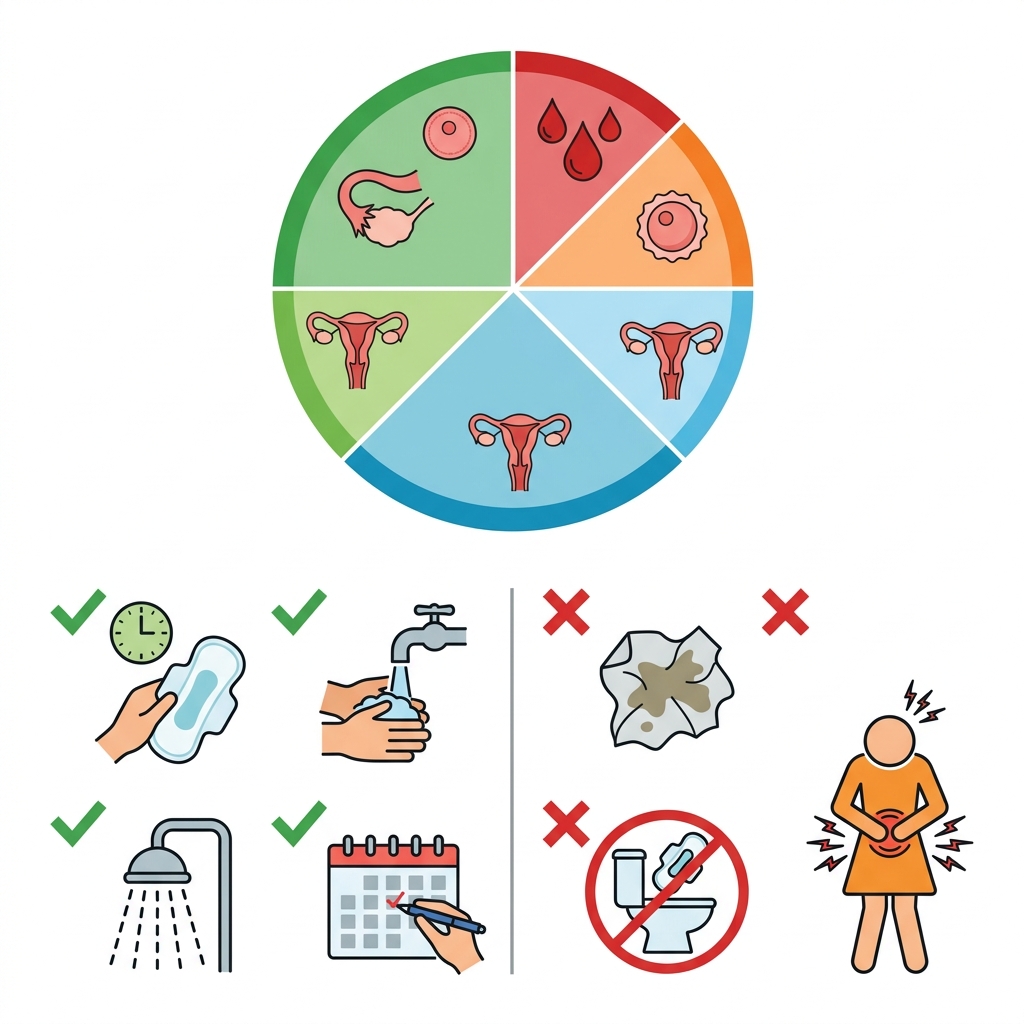
Menstruation is a completely natural biological indicator of adolescent health and development. Maintaining excellent personal hygiene during your period is essential: change your sanitary products every 4 to 6 hours, cleanse gently with clean water, and avoid damp or unwashed materials to prevent bacterial or fungal infections. Keep a calendar tracking your cycle dates. If you ever experience unbearable pain, fever, or exceptionally heavy bleeding, reach out to a doctor right away. You have nothing to fear or be ashamed of—your health is our utmost priority.


💬 Comments (0)
No comments yet. Be the first to share your thoughts here.
Add Your Comment