
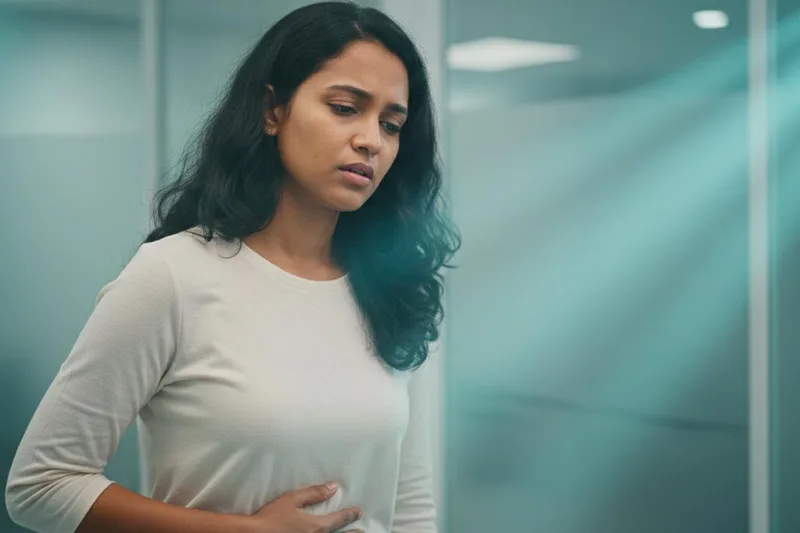
When a girl starts having her monthly period , or "periods" as we all know them, sometimes she can experience some minor discomfort and problems. To be honest, many people feel a little different or uncomfortable during this time. But most of the time, there is nothing to worry about, they are normal. But there are some problems, for which you need to get help from your doctor, and perhaps treatment. So, today we will talk about how you can deal with the many problems that come with menstruation , and what you can do. Let's talk about all this simply, in a way that you can understand, okay?
What is Premenstrual Syndrome (PMS)?
You've probably heard of PMS. Some of your friends might say, "Oh, my period has been really hard for me for a few days, and I'm not in a good mood." That's what PMS is. Simply put, it's a set of changes that a girl experiences in her mind and body, either in the days before or during her period.
Usually, these `(PMS)` symptoms are at their worst about four days before your period starts. But there is good news! Most of the time, these `(PMS)` symptoms gradually subside within two to three days of your period starting. So this is not something that happens all the time.
So, what are the symptoms of PMS?
Okay, now let's look at what symptoms a person with PMS may experience. These symptoms don't come on the same way for everyone, and can vary from person to person. Some people may only experience one or two of these symptoms, while others may experience several.
- Feeling sad, feeling anxious: Sometimes you can just feel sad, or even the smallest things can feel like a big burden on your heart.
- Mood swings: You can feel happy one moment, then angry or sad the next. It's like riding a roller coaster.
- Crankiness: Even the smallest thing can make you angry, and if someone says something, it can really upset you.
- Anxiety : You may feel unwarranted fear and worry about the future or everyday tasks .
- Fatigue : You may feel so tired and sleepy that you can't do anything.
- Food cravings: You may experience a strong desire to eat things, especially sweets, chocolate , and salty foods.
- Acne : Acne is a problem for many people these days.
- Bloating : The stomach may feel bloated and uncomfortable.
- Back pain : You may experience pain in your back.
- Sore breasts: The breasts may feel sore or heavy when touched.
- Headaches : You may have frequent headaches.
- Constipation: Difficulty going to the toilet.
- Diarrhea: Diarrhea can also occur sometimes.
You see, there are many of these symptoms. But remember, not all of them occur in everyone.
What can you do if you have PMS?
Okay, if you're experiencing these PMS symptoms, there are a few things you can do to help relieve them.
- Control your food cravings: It's important to eat a balanced diet. That means including lots of fresh fruits and vegetables in your diet. This can help reduce those food cravings a bit.
- Reduce bloating: Reduce salt intake in your diet. Salt causes water retention in the body, which makes you feel full.
- Reduce irritability and anxiety: Reduce your intake of tea, coffee, and other beverages that contain caffeine . Also, it is very important to exercise regularly . Just taking a short walk or playing a sport you enjoy can provide great relief.
- For backaches, headaches, and breast pain: Apply a hot water bottle (heating pad) to the area of pain. Or, ask your doctor for a pain reliever like `Acetaminophen` (e.g. Tylenol, Panadol), `Ibuprofen` (e.g. Advil, Motrin), or `Naproxen` (e.g. Aleve). But remember, it is not good to use these medications continuously without a doctor's advice.
- Calm your mind: You can calm your mind by doing exercises like yoga or meditation .
- Acne Treatment: For acne problems, it is best to consult a dermatologist .
The most important thing is to listen to your body. Try to understand for yourself what you need and what is uncomfortable.
When should you see a doctor for PMS?
Most of the time, you can control the symptoms of PMS with these simple home remedies. However, sometimes these symptoms can be a bit more severe. If that happens, you should definitely see a doctor.
See a doctor in these cases:
- If you try these home treatments and there is no relief .
- If you feel very sad and hopeless about anything .
- If you are having thoughts of harming yourself or ending your life (this is very important, if you are feeling this way, don't stay alone, tell someone you trust immediately, see a doctor).
- If your PMS symptoms are making it difficult for you to do your daily activities or schoolwork .
- If your PMS symptoms persist for several days after your period starts.
At times like this, a doctor can help you, and maybe even prescribe medication.
What are Period Cramps?
Okay, now let's talk about another problem that many girls face. That is menstrual cramps, or what we call "period cramps." This is pain in the lower abdomen area when your period starts. Most girls experience this pain during the first few days of their period.
Why does this pain occur? This is due to a chemical in our body called `Prostaglandin`. This `(Prostaglandin)` causes the muscles of the uterus to contract. That contraction is what we feel as pain. Imagine, it's like squeezing a small piece of meat and it hurts.
What can be done about this pain?
If you're also struggling with these "cramps," try these things:
- Place a heating pad on your lower abdomen. The heat will help relieve some of the pain.
- Take a pain reliever like ibuprofen (e.g., Advil, Motrin) or naproxen (e.g., Aleve). The key is to take the medicine as soon as the pain starts or when you feel it coming. Taking it later, when the pain is really bad, may reduce your ability to function. (It is best to take these medications under the guidance of a doctor.)
When should I see a doctor?
These methods can usually help control the pain. However, it's a good idea to see a doctor in cases like these:
- If you are unable to go to school or do your daily activities due to severe pain .
- If the pain doesn't subside even after taking ibuprofen or naproxen.
At times like this, a doctor can diagnose the exact cause of the pain and give you the right treatment. Sometimes, severe pain like this can be caused by another health problem.
What are irregular periods?
Now let's talk about another important topic. That is irregular menstruation, which means that periods do not come on time. Usually, a girl or woman menstruates every 4-5 weeks.
But here's the thing. It's normal for a girl's cycle to be irregular for about the first two years after she starts menstruating. That means it may come early some months, and late some months. Don't worry about that. Because during that time, the body's hormonal system is still adjusting to this new process.
However, if your menstrual cycle is still irregular, meaning it doesn't come on time, even after about two years of starting your period, you should be a little concerned. It usually takes about two years for your menstrual cycle to return to a regular pattern.
What can this do?
The best way to know if your periods are regular or not is to track them.
- You can use a calendar, or an app on your phone, or a notebook to record the day your period starts, how many days it lasts, and whether you have any special discomfort (such as pain or heavy bleeding) during that time.
- After a few months of this, you'll understand whether your menstrual cycle is regular or not, and how long it takes for it to occur.
When should I see a doctor?
In cases like this, it is very important to definitely see a doctor and seek advice:
- If it's been two years since you started menstruating, and you still don't have regular periods, like every 4-5 weeks .
- If you have had regular periods before and then haven't had a period for three months .
- If your menstrual cycle has suddenly become irregular , after previously being regular.
- If you have very heavy bleeding during your period (i.e., so much that you have to change a pad or tampon about once an hour).
- If your period lasts more than a week .
If you have these symptoms, it's important to find out what's causing them. Sometimes, hormonal imbalances and other medical conditions can cause this.
What we learned from this (Take-Home Message)
Well, we talked about a lot of things today, didn't we? About PMS, about menstrual cramps, about irregular periods. I hope you learned something from all of this.
The most important thing is to be aware of your body and your menstrual cycle, because only then can you recognize any problems quickly and take the necessary steps.
Most girls eventually get used to a regular menstrual cycle. Also, the minor discomforts that come with this period can be managed with home remedies.
However, if you feel like there is something wrong with your period, no matter how small, never be afraid to talk to a doctor, or delay. Your doctor, whether male or female, is there to help you and listen to your questions. Your health is the most important thing!
Menstruation, PMS, Menstrual Cramps, Irregular Periods, Girls' Health


💬 Comments (0)
No comments yet. Be the first to share your thoughts here.
Add Your Comment