
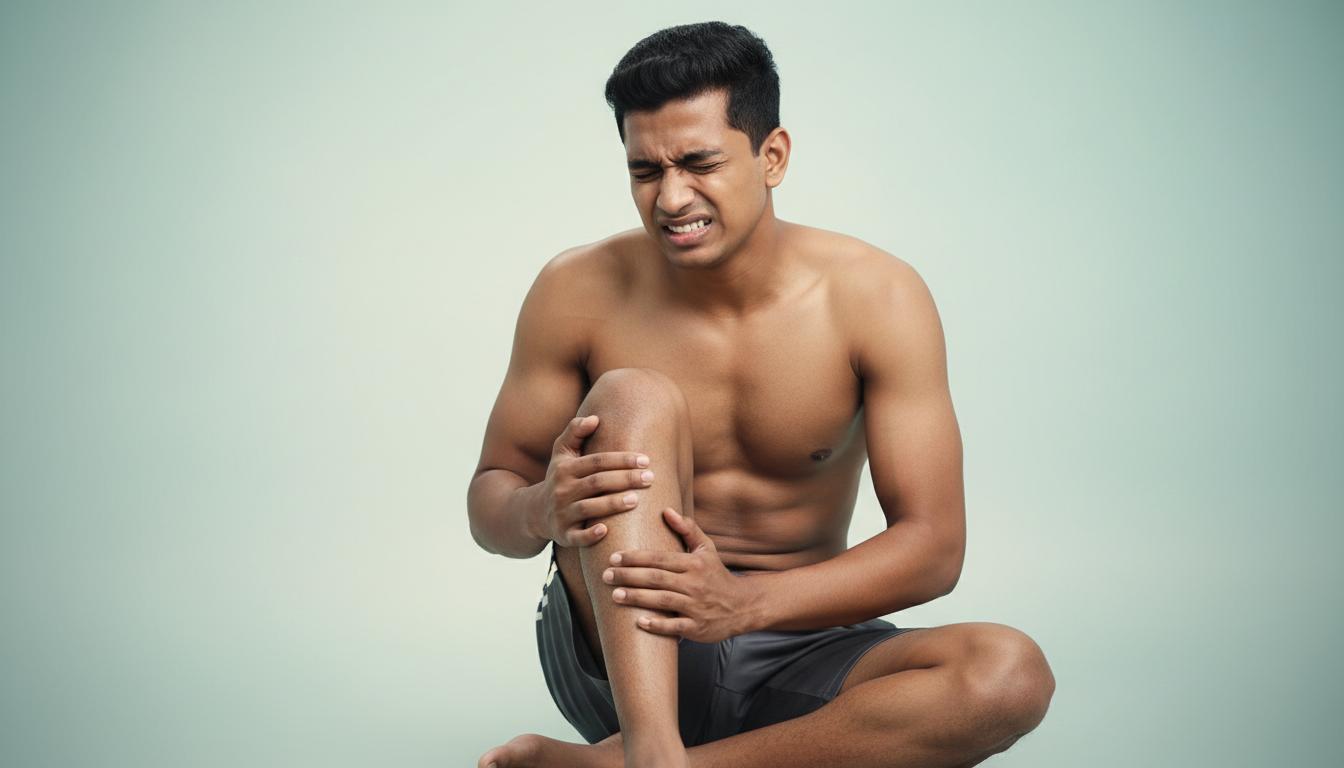
Ever felt that sudden, sharp pain behind your knee when you stumble, run, jump, or even just take a direct hit? Maybe your knee swelled up, felt unstable, and made it difficult to bend or walk? You might have initially thought it was just a sprain, but it could be something more significant – an injury to the vital ligament at the back of your knee. Let's delve into understanding this condition.
What is a Posterior Cruciate Ligament (PCL) Injury?
Your knee joint is an incredibly complex and essential part of your body, allowing for movement while providing stability. It connects your thighbone (femur) to your lower leg bone (tibia) through strong bands called ligaments. These ligaments are crucial for stabilizing the knee and controlling its motion, preventing excessive forward or backward movement.
Among these vital ligaments is the Posterior Cruciate Ligament, often abbreviated as PCL. Located at the back of the knee joint, the PCL is a strong ligament that prevents the tibia from sliding too far backward relative to the femur. A PCL injury occurs when this ligament is damaged – whether it's stretched (sprained), partially torn, or completely ruptured – usually due to trauma.
You might have heard more about Anterior Cruciate Ligament (ACL) injuries, which are common among athletes. While similar in function, the PCL is located at the back of the knee, whereas the ACL is at the front. PCL injuries are less common than ACL tears, accounting for a small percentage (less than 20%) of all major knee ligament injuries.
Understanding the Severity: Grades of PCL Injury
Doctors classify PCL injuries into different grades based on the severity of the damage. Understanding these grades helps determine the appropriate treatment plan:
| Grade | Description |
|---|---|
| Grade I | The ligament is stretched or has microscopic tearing (mild sprain). There's minimal swelling and pain, and the knee remains stable. |
| Grade II | The ligament is partially torn. This results in moderate pain, noticeable swelling, and some instability or looseness in the knee joint. |
| Grade III | The ligament is completely torn (ruptured). This causes significant pain, substantial swelling, and considerable knee instability. The knee may feel like it's 'giving way'. |
| Grade IV | This involves a complete PCL tear combined with damage to another ligament in the knee (e.g., ACL, MCL) or fracture of the bone. This is a severe injury causing significant instability. |
Common Symptoms of a PCL Injury
Symptoms can vary depending on the severity of the injury, but common signs include:
- Pain at the back of the knee, which may worsen over time or with activity.
- Swelling in the knee joint, often developing shortly after the injury.
- A feeling of instability or 'giving way' in the knee.
- Stiffness and difficulty bending or straightening the knee.
- Pain when walking, especially going downstairs or on an incline.
It's important to note that mild (Grade I) injuries might not cause significant symptoms, making diagnosis challenging without a proper medical evaluation. Any persistent knee pain or instability should be investigated.
How Do PCL Injuries Occur?
PCL injuries typically happen due to direct trauma to the knee. Common causes include:
- Dashboard Injury: A direct blow to the front of the knee, such as hitting the dashboard in a car accident while braking.
- Fall onto a Bent Knee: Landing directly on the back of the knee or falling with the knee bent and foot planted.
- Hyperextension: Forcing the knee backward beyond its normal range of motion.
- Sports Injuries: Tackles in football, collisions in soccer, or other high-impact activities can cause PCL tears.
- Knee Dislocation: A severe injury where the bones of the knee joint are forced out of alignment, often damaging multiple ligaments including the PCL.
Diagnosis: How Doctors Identify a PCL Injury
When you visit a doctor with suspected knee pain, they will start by taking a detailed history of how the injury occurred and your symptoms. A physical examination is crucial, involving tests to assess the range of motion, stability, and specific ligament function in your knee.
Specific maneuvers, like the posterior drawer test or sag sign, can help determine if the PCL is injured. To confirm the diagnosis and evaluate the extent of damage to ligaments, cartilage, and bones, imaging tests may be ordered:
- X-rays: Primarily used to check for bone fractures or dislocations associated with the injury.
- MRI (Magnetic Resonance Imaging): This is the gold standard for visualizing soft tissues like ligaments and cartilage, providing detailed images of the PCL tear and any other related damage.
- CT Scan (Computed Tomography): May be used in complex cases to get a clearer view of bone structures.
Treatment Options for PCL Injuries
The appropriate treatment depends heavily on the grade of the PCL injury, your activity level, and whether other knee structures are damaged.
Non-Surgical Treatment
Many Grade I and II PCL injuries can be successfully treated without surgery. This typically involves:
- Rest: Avoiding activities that cause pain or put stress on the knee.
- Ice: Applying ice packs for 15-20 minutes several times a day to reduce swelling and pain.
- Compression: Using an elastic bandage to help control swelling.
- Elevation: Keeping the knee raised above heart level to minimize swelling.
- Crutches: May be needed initially to keep weight off the injured leg.
- Knee Brace: A brace can provide support and stability during healing.
- Physical Therapy: This is a cornerstone of non-surgical treatment. Exercises focus on strengthening the muscles around the knee (especially hamstrings and quadriceps), improving range of motion, and restoring balance and proprioception (your sense of joint position).
- Pain Medication: Over-the-counter or prescription pain relievers may be recommended to manage discomfort.
Surgical Treatment
Surgery is usually considered for:
- Complete (Grade III) PCL tears, especially if associated with significant instability.
- Combined injuries involving multiple ligaments (e.g., PCL and ACL).
- Cases where non-surgical treatment fails to resolve instability.
The most common surgical procedure is PCL reconstruction, often performed arthroscopically (using small incisions and a camera). During this surgery, a graft (tissue taken from another part of your body or a donor) is used to replace the torn PCL.
When to Seek Medical Attention
If you experience knee pain after an injury, especially if accompanied by swelling, instability, or difficulty walking, it's essential to see a doctor promptly. Seek immediate medical care if you have:
- Severe pain and significant swelling.
- Inability to bear weight on the leg.
- Numbness or tingling in the foot or lower leg (potential nerve injury).
- Changes in skin color or temperature below the knee (potential vascular injury).
Key Takeaways
- The PCL is a critical ligament at the back of the knee responsible for stability.
- Injuries often result from direct blows, falls, or hyperextension.
- Symptoms include pain, swelling, and instability.
- Treatment ranges from rest and physical therapy to surgical reconstruction, depending on severity.
- Severe symptoms like numbness or circulation changes require immediate medical attention.
Following your healthcare provider's recommendations, including completing a full course of physical therapy, is crucial for achieving the best possible outcome and returning to your activities safely.
Frequently Asked Questions (FAQs)
How long does it take to recover from a PCL injury?
Recovery time varies greatly depending on the severity of the injury (Grade I, II, or III) and whether surgery was required. Non-surgical treatment might take several weeks to months, while recovery after PCL reconstruction typically takes 6-12 months, including rehabilitation.
Can I walk with a torn PCL?
It depends on the severity. A Grade I sprain might allow walking with minimal discomfort. However, a complete tear (Grade III) often causes significant instability and pain, making walking difficult or impossible without support like crutches or a brace.
Is physical therapy necessary after a PCL injury?
Yes, physical therapy is crucial for recovery, whether treated surgically or non-surgically. It helps restore range of motion, strengthen surrounding muscles to support the knee, improve stability, and prevent re-injury.
Do I always need surgery for a PCL tear?
No, not always. Many partial tears (Grade I and II) can be managed effectively with non-surgical methods like rest, bracing, and physical therapy. Surgery is typically reserved for complete tears causing significant instability or combined ligament injuries.
What activities should I avoid after a PCL injury?
Initially, you should avoid activities that cause pain or put stress on the knee, such as running, jumping, pivoting, and heavy lifting. Your doctor or physical therapist will guide you on gradually returning to activities as your knee heals and strength improves.
💬 අදහස් (0)
තවමත් කිසිදු අදහසක් පළ කර නොමැත. ඔබේ අදහස පළමු වරට මෙහි එක් කරන්න.
ඔබේ අදහස එක් කරන්න