
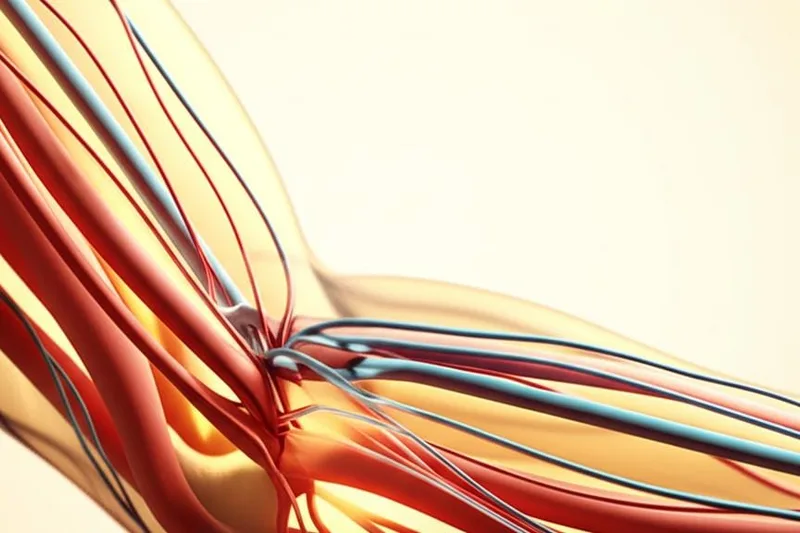
Today we are going to talk about something very amazing and important in our body . Imagine, if the main road you are taking suddenly closes, how valuable it is to have other small side roads to get around. Similarly, in our body, if a main blood vessel (blood vessel) is blocked or damaged, there is an "alternative" or "backup" blood vessel system that can be used instead. This is what is called (Collateral Circulation) in medicine . Simply put, this is like a natural "bypass" system in our own body.
So, what is this alternative blood vessel system (collateral circulation)?
Simply put, collateral circulation is an extra or "backup" blood vessel system in your body. These are the blood vessels that help to divert blood if a main blood vessel, such as an artery or a vein, becomes blocked or damaged for some reason. This is similar to the way that when a main road in a city is closed, cars take side roads. By having blood flow through these alternate routes, vital organs can continue to receive the oxygen and nutrients they need.
This is truly an amazing defense mechanism in our body. Imagine what would happen if a major blood vessel were suddenly blocked without these alternative routes!
How does this collateral circulation work? It's amazing, isn't it?
Yes, it's really amazing. This (Collateral Circulation ) system works in several ways.
- Preexisting small blood vessels : We have a network of very small, thin blood vessels that are connected to our main blood vessels. Under normal circumstances, these are not very active, like unused little roads. However, when the blood flow to a major blood vessel is disrupted, the body recognizes this. Then, these small "dormant" blood vessels gradually enlarge, open up, and begin to carry more blood.
- New blood vessel formation (Angiogenesis): Sometimes, when a major blood vessel becomes gradually, slowly blocked, our body senses this. When it gets a signal that "there's not enough blood flowing here," the body starts to form new, smaller blood vessels. This process is called angiogenesis . These new vessels help to carry blood around the blocked area.
- The effect of exercise: Did you know that regular aerobic exercise , such as running or brisk walking, stimulates the formation of new blood vessels (angiogenesis). This means that exercise can strengthen this "backup" system.
So, this is how our body tries to cope with disruptions in blood circulation .
How common is this alternative blood pathway (collateral circulation)? Does everyone have it?
We are all born with some level of collateral circulation . However, the size, number, and efficiency of these extra blood vessels can vary from person to person. Some people have this system very well developed, while others have it less developed. It varies from person to person.
There are three main types of these alternative blood vessels :
- Arteries: These are the large blood vessels that carry oxygen-rich blood from the heart to the rest of the body .
- Capillaries: These are very fine, tiny blood vessels. They are spread out like a mesh. They deliver oxygen and nutrients to the cells and collect waste products like carbon dioxide.
- Veins: These are the blood vessels that carry oxygen- poor, carbon dioxide-rich blood back to the heart from various parts of the body.
So all three types of blood vessels, arteries, veins, and capillaries, can function as these alternative blood supply routes.
In what health conditions is this collateral circulation particularly important?
This (Collateral Circulation) system can be activated and help in various medical conditions that restrict blood flow, that is, reduce the flow of blood through the blood vessels. Here are a few examples:
- Atherosclerosis : This is when fat and cholesterol build up inside the artery walls, narrowing the artery, blocking the blood flow.
- Coronary Artery Disease: Heart attacks are caused by this blockage of the coronary arteries that supply blood to the heart.
- Ischemic Stroke: This condition occurs when an artery supplying blood to the brain is blocked or a clot forms.
- Peripheral Artery Disease (PAD): This disease is caused by narrowing of the arteries that supply blood, especially to the legs. One symptom of this is pain in the legs when walking.
But here's something very important to remember! This (Collateral Circulation) system cannot always completely prevent the decrease in blood supply (ischemia) caused by these diseases. Because, before the main blood vessel is completely blocked, these alternative channels must grow quickly enough and be able to carry enough blood. Therefore, if you have such diseases, even if you have a good alternative blood supply, you should definitely seek medical treatment. This is only a help, not a complete solution.
How long does this collateral circulation last?
When this (collateral circulation) system is activated, those small blood vessels gradually enlarge and begin to carry more blood. These enlarged alternative vessels may be able to provide a normal blood supply for months, perhaps even years.
However, over time, especially as we age, these alternative blood vessels can gradually narrow, or start to get smaller. This process is called rarefaction . This condition is especially common in people with cardiovascular disease . When these alternative blood vessels narrow, their efficiency decreases. Then, if a major blood vessel becomes blocked again, symptoms are more likely to occur.
In which parts of the body are these alternative blood vessels (collateral circulation) usually located?
These alternative circulatory systems can be located in different parts of our body. For example:
- Abdomen
- Arms
- Brain
- Feet and legs
- In the heart (Heart)
- Lungs
In fact, this (Collateral Circulation) is a strategy that the body uses to overcome an obstacle in the flow of blood. However, as mentioned earlier, this is not a foolproof method that can completely prevent the damage caused by conditions like stroke and diseases like (PAD) . It also cannot completely stop a heart attack or stroke from happening. However, in some cases, it can be very useful, and may even help save a life.
What are the hopes for this in the future?
Medical researchers are continuing to study this (collateral circulation) with great interest. In particular, research is being conducted on whether artificial collateral veins can be created and used. If such a thing is successful, it will be possible to further expand the body's natural ability to cope with various diseases that interfere with blood circulation. That is a great hope.
So, what are the most important things we need to remember from this? (Take-Home Message)
Okay, let's remember some of the most important things we've talked about (Collateral Circulation) :
- Collateral Circulation is a natural "backup" blood vessel system in our bodies. These come to the rescue if a main blood vessel becomes blocked.
- This is a defense mechanism of the body. Sometimes it can be very useful and even life-saving.
- Regular exercise helps these alternative blood vessels grow.
- However, this is not a complete solution to diseases. If you have a condition such as (Atherosclerosis) , (Coronary Artery Disease) , (Stroke Risk), or (PAD) , you should definitely seek medical advice and treatment.
- The effectiveness of these alternative channels may decrease with age or certain medical conditions.
- Maintaining a healthy lifestyle , especially eating a heart-healthy diet and exercising, helps keep this alternative system, as well as the entire circulatory system, healthy.
So, our bodies are truly amazing, aren't they? It's amazing how they have designed such complex systems to protect themselves. But, while helping those natural defense mechanisms, it's also important that we take care of our health.
` Alternative blood vessels, additional blood pathways, Collateral Circulation, blood circulation, heart disease, arterial occlusion, Angiogenesis




💬 Comments (0)
No comments yet. Be the first to share your thoughts here.
Add Your Comment