
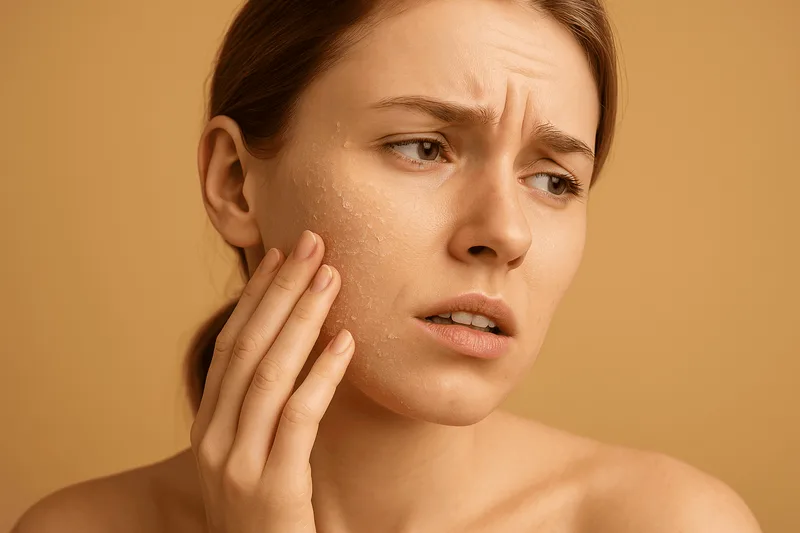
Sometimes our skin feels dry and flaky, doesn't it? Sometimes it just feels like it's pulling or itching. This is what we simply call 'Dry Skin'. This is a condition that affects many people and can affect their daily lives. So, shall we talk about it in more detail today? Don't worry, this is usually not a big problem, but if not managed properly, it can cause minor discomfort.
What is Dry Skin? Let's understand it simply!
Simply put, dry skin is when your skin doesn't get enough moisture. Then the skin starts to become rough and flaky. Medically, this is called `(Xeroderma)` (pronounced as “xeroderma”). Sometimes, when the skin becomes very dry, it is called `(Xerosis)` (pronounced as “xerosis”).
If you have dry skin, it may feel rough to the touch, and may even look scaly or crusty. Dry skin is not always itchy (medically called ``Pruritis''). However, some people may itch a lot. If the skin is extremely dry, it may crack and bleed.
What are the main types of dry skin?
There are many different reasons why skin can become dry, and accordingly, several types can be identified. Let's take a look at the main ones.
1. Contact Dermatitis
This is when your skin comes into contact with something and has an allergic reaction or irritant reaction . The skin can become dry, red, itchy, and may even develop a skin rash. For example, some people can experience this when they wear jewelry containing certain metals (e.g., nickel), use certain cosmetics, use harsh detergents, or use certain medications .
2. Eczema
Eczema is a skin condition that causes red, dry, scaly, and itchy patches of skin. In severe cases, the skin can crack and bleed. This can lead to infections. This is also a common skin condition. It can be aggravated by certain irritants, allergens , and stress .
3. Seborrheic Dermatitis
If your scalp is dry and flaky , it could be due to Seborrheic Dermatitis. In babies, this condition is known as “ cradle cap .” It can appear as dry, scaly patches not only on the scalp, but also on the face, chest, the creases of the arms, the creases of the legs, and the groin. Rarely, it can also appear around the belly button. This is caused by the body’s reaction to a type of yeast that is normally found on our skin.
4. Athlete's Foot
This is actually a fungal infection. However, some people think it is just dry skin because the skin on the soles of their feet can become dry and flaky. When this fungus grows elsewhere on the body, we also call it “ ringworm .”
Who is more at risk of dry skin?
Dry skin is a very common problem. Almost everyone experiences it at some point in their lives. However, some people are more prone to it. See if you fall into this category:
- If you live in areas with a dry or cold climate: Even in our country, this can affect some seasons, especially those in dry zones.
- If you work outdoors frequently: Exposure to sun and wind can cause skin moisture to decrease.
- If you wash your hands frequently: Especially during this time, we wash our hands frequently. While that is a good thing, it can sometimes cause dry skin.
- If you have other health conditions (e.g. allergies ).
- If you are over 65 years old: As you age, the skin tends to become drier because the oil-producing glands in your skin become less active.
How does dry skin affect your body?
When your skin becomes dry, the texture of your skin changes from smooth to rough. This can cause your skin to itch or appear a different color than your normal skin tone (perhaps pale, or red/purple). Dry skin can appear in small patches or over a large area.
The best part is, dry skin is usually not harmful. This discomfort goes away when you apply a moisturizer to moisturize your skin.
However, if the skin becomes extremely dry, it can become very fragile. It can easily peel, crack, and become a painful sore. If such a sore occurs, it should be treated like a wound to prevent infection.
What are the symptoms of dry skin?
If you have dry skin, you may notice symptoms like:
- The skin looks like it's cracked .
- The skin is rough .
- It feels like the skin is just stretching .
- The bark is peeling.
- It looks like coral .
- Scratching.
- Your skin may become lighter or darker than your normal skin color, or it may turn red/purple.
Sometimes, if the skin becomes extremely dry, a skin rash can develop. This rash may appear as small pimple-like bumps, be itchy, swollen, or have a different color than the surrounding skin (usually red or purple). In medical terms, this rash is also called `(Dermatitis)`. It means swelling and inflammation of the skin.
Where on the body is the skin dries the most?
Dry skin can actually occur anywhere on the body, but the most common areas are:
- Hands
- Legs (especially the soles of the feet)
- Face
- Elbows
- Around the mouth
- Genital areas
- Thigh, buttocks
How do I know if I have dry skin?
You can do a quick test at home to see if your skin is dry. Gently draw a line across the surface of your skin with your fingernail. But don't press hard or scratch the skin. This is easiest to do on a large area of skin, such as your arms or legs. As you do this, look for any flakes of skin that come off. If you see flakes of skin that look like small flakes of snow or dust, that's a sign of dry skin. You may even see a light line where you drew your fingernail, like a chalk line.
What are the causes of dry skin?
The main reason for dry skin is a lack of moisture in the skin. There are several factors that contribute to this:
- Age: As we age, the oil glands in our skin that produce moisture begin to dry out. Along with this, the amount of fat and ``Collagen`` (a protein that gives skin its elasticity) in the skin also decreases, making the skin thinner. This is a natural process of aging in the body.
- Climate: The temperature of the environment you live in affects the moisture content of your skin. Climates with low humidity (e.g. deserts) or cold climates with strong winds can dry out your skin. Dry skin is more common in winter, but it can happen all year round. Even in our country, sometimes it feels very dry, right? Also, staying in rooms that are constantly air-conditioned (`AC`) can also dry out your skin.
- Health conditions and genetics: Some people may be born with a higher tendency to have dry skin due to genetics. Or, dry skin can also be a symptom of certain diseases (e.g. allergies, eczema, diabetes , kidney disease).
- Occupation: People in certain occupations are at higher risk of dry skin, especially those who work outdoors, work with chemicals, or wash their hands frequently (e.g., healthcare workers, hairdressers, farmers).
How is dry skin diagnosed?
Dry skin is usually easy to tell by looking at it. Your doctor will confirm this by taking a complete medical history, performing a physical exam, and listening to your symptoms.
However, if your symptoms are severe, your doctor may order tests to check for other health conditions that may be causing your dry skin. For example:
- Allergy Test: Find out what triggers your allergies.
- Blood Tests : Check for problems like diabetes and kidney disease.
- Skin Biopsy: A small tissue sample is taken from the skin to check for other skin conditions , such as eczema.
How to treat dry skin?
When treating dry skin, the main focus is on rehydrating the skin. This can include things like:
- Using moisturizers: This is often the main treatment for dry skin. Moisturizers work by smoothing and softening dry skin, preventing it from cracking, and helping to rebuild your skin's natural protective layer. They come in a variety of forms – ointments, creams, lotions, and oils. They may contain emollients that soothe and moisturize the skin, as well as ingredients like hyaluronic acid that helps to retain moisture in the skin .
- Taking medications: If your skin is very dry, itchy, or cracked, your doctor may prescribe a topical steroid . This helps reduce swelling (inflammation) and reduces the rash and itching. In some severe cases, oral medications or injections may be given.
What is the best moisturizer for dry skin?
If you have dry skin, there are many types of moisturizers to choose from. Consider these factors when choosing one:
- They should be fragrance-free.
- It should not contain things like `(Isopropyl Alcohol)`, `(Benzyl Alcohol)`, or `(Sulfates)`, which further dry out the skin.
- It should contain ingredients like `(Petroleum Jelly)`, `(Hyaluronic Acid)`, `(Lanolin)` or `(Mineral Oils)` (also called `(Emollients)`) that help retain moisture in the skin.
- It should contain things like `(Glycerin)` that help the skin retain moisture.
- They may contain anti-itching ingredients (e.g., Hydrocortisone Steroid) (but it is best to use these under medical advice).
- It is best to use sunscreen with an SPF value (especially during the day).
- It should be appropriate for the area of your skin that is affected (e.g., one for your face, one for your body). You may need different types of moisturizer for different parts of your body.
Remember, your skin is unique. What works for one person may not work for another. Your doctor or dermatologist can help you choose products that are right for you.
Who treats dry skin?
If you have dry skin, or if you have a medical condition that causes dry skin, your family doctor may refer you to a dermatologist . A dermatologist is a doctor who specializes in skin health.
What should you eat/drink if you have dry skin, and what is harmful?
There are some foods and drinks that can draw water from the body and cause dehydration. Therefore, stay away from foods and drinks that contain these things as much as possible:
- Alcohol
- Caffeine (e.g. coffee, tea – but in moderation is fine)
- Sugar (especially in excess)
- Salt (especially too much)
The most important thing is to drink plenty of water. Try to drink at least 8 glasses of water a day.
Are there any side effects of dry skin?
If left untreated, or if the skin becomes extremely dry, it can crack and bleed. These cracks can allow germs to enter the body and cause infections. Rarely, dry, itchy skin can be a sign of a more serious health problem, such as diabetes or kidney disease.
How to manage the symptoms of dry skin?
The best way to control the symptoms of dry skin is to keep your skin moisturized. The best times to apply a moisturizer are:
- Upon waking up in the morning.
- Before going to bed at night.
- As soon as you finish bathing, your skin is still damp.
How to prevent dry skin?
Here are some things you can do at home to prevent dry skin:
- Cleanse the skin with a gentle, fragrance-free, moisturizing soap-free cleanser.
- Bathe in warm water (not hot at all). Hot water strips the skin of its natural oils.
- Manage stress. Stress can make dry skin conditions like eczema worse.
- Reduce sun exposure. Sunlight evaporates oils and moisture from the skin. If you do go outside, use sunscreen.
- Apply moisturizer immediately after showering, while your skin is still damp.
- Pat the skin dry with a soft towel (do not rub vigorously).
- Drink plenty of water to prevent dehydration.
- If you smoke, stop. Nicotine dries out the skin.
- Use a humidifier to add moisture to the air in your home (especially if the weather is dry or if you use the AC frequently).
What should I expect if my skin is dry?
Many people can successfully manage dry skin by using a daily moisturizer and reducing exposure to extreme temperatures and other irritants. Keeping your skin free from dryness is also good for your overall health. Rough, dry skin is uncomfortable, and if it gets too dry, it can crack, crack, and become infected.
When should I see a doctor?
If your skin looks like this, see a doctor:
- If you scratch frequently, it interferes with your sleep or daily activities.
- If it looks infected (red, warm, swollen).
- If you feel pain when you touch it.
- If a rash appears.
What questions should I ask the doctor?
If you're concerned about dry skin, talk to your doctor. You can ask questions like these:
- Why is my skin so dry?
- Should I get tested for allergies?
- What are the best treatments for dry skin?
- How can I prevent dry skin?
- What are the best treatments for itching?
- What over-the-counter cleansers and moisturizers do you recommend for people with dry skin?
- What are the signs I should be concerned about complications?
Why does my skin get dry even though I apply moisturizer?
If your skin is dry even after using a moisturizer, there could be many reasons for this. For example:
- The moisturizer you use may contain ingredients that are not good for your skin (e.g., `(Isopropyl Alcohol)`, `(Benzyl Alcohol)`, `(Sulfates)`) .
- You may be washing your skin too often, or using very hot water . This can also dry out your skin.
- You may not be applying enough moisturizer throughout the day.
- You are not using the right type of moisturizer for your skin type (e.g., it is better to use a thicker moisturizer at night and a lighter moisturizer during the day).
- The moisturizer you are using may be expired .
- Your dry skin could be a sign of another chronic condition , or it could be a condition that requires treatment or management.
If you are having trouble treating dry skin, talk to your doctor or a dermatologist.
Finally, remember (Take-Home Message)
Dry skin can be rough, flaky, itchy, and uncomfortable. Fortunately, dry skin rarely causes major long-term problems. Although it is usually a chronic condition, it can be managed well. Talk to your doctor about how to prevent and relieve your dry skin. If your dry skin is caused by another condition, such as eczema, your doctor can prescribe medication and give you advice to treat the condition. Take care of your skin, because healthy skin is part of a healthy life!




💬 Comments (0)
No comments yet. Be the first to share your thoughts here.
Add Your Comment