
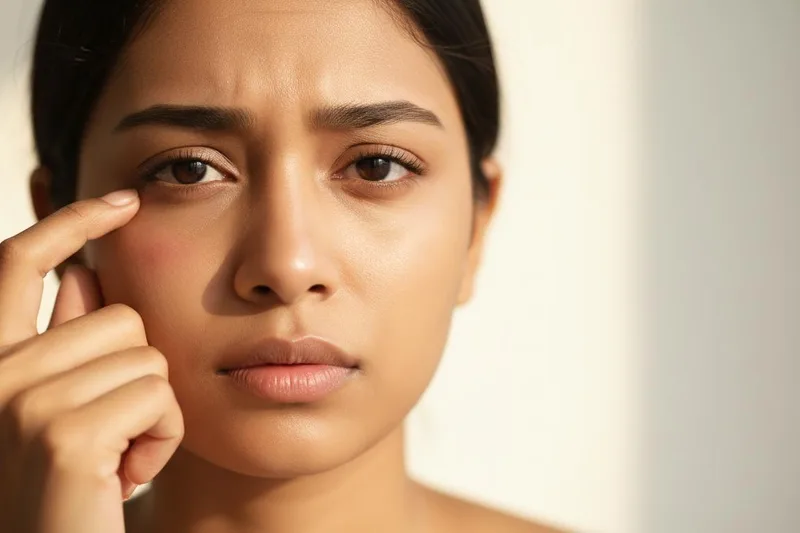
Oh, have you ever woken up in the morning and noticed something painful, like a small lump, growing inside your eyelid? Maybe your eye is red and watery. It's a really annoying and uncomfortable experience, isn't it? Don't worry, this happens to a lot of people. Today, we're going to talk about a lump that grows inside your eyelid, or what doctors call an ``Internal Stye ''.
What exactly is an internal stye?
Simply put, an ``Internal Stye`` or ``Hordeolum`` is an inflammation and infection of an oil-producing gland on the inside of your eyelid, not on the eyebrow side, but on the eye side. The main cause of this is a bacterial infection.
Imagine, when an oil gland in your eyelid becomes inflamed, it forms a small lump filled with pus, called an ``abscess''. This is what causes the symptoms like pain and redness. Sometimes this lump can go away on its own. But for some people, a doctor may need to perform a small procedure to drain the pus.
Usually, your family doctor (GP) can diagnose these types of eye cysts. However, if the cyst doesn't get better or seems to be getting bigger, he or she will refer you to an eye specialist (Ophthalmologist) or an optometrist (Optometrist).
What is the difference between the inner fruit and the outer fruit?
You've probably heard of two types of " eye styes." One is the one we're talking about, an internal stye. The other is the one that comes from outside, an external stye.
The main difference between the two is where they are formed.
- External Stye: This forms on the outer edge of your eyelid. It looks like a small pimple.
- Internal Stye: This forms on the inside of the eyelid, facing your eyeball. It looks like a small bump , and may be yellow or white in color.
Internal cysts are usually more painful than external cysts , and they also take longer to heal.
Who is most likely to develop these types of eye cysts? How common is it?
In fact, these eye cysts can develop in children, young people, adults, anyone. There is no age difference. However, they are more common in school-age children and adults between the ages of 30 and 50.
In general, styes are a very common eye condition. However, internal styes are not as common as external styes.
What are the symptoms of this?
When a tumor appears in the eyeball from withinIt hurts a lot. You may feel things like:
- Pain in one spot on your eyelid, unbearable pain and swelling .
- Redness of the eyelids.
- Tears flowing from the eyes.
- A feeling like there is something in the eye (foreign body sensation).
Often these symptoms appear suddenly. You may only realize you have it when you wake up in the morning.
Why do cysts form on the inner eyelid?
A stye develops when one of the special oil glands called Meibomian glands , located at the edges of your eyelids, becomes infected. These glands secrete an oil that helps protect and keep your eyes moist.
However, like other glands in the eye , these ``Meibomian glands`` can also become infected. Most often , a type of bacteria called ``Staphylococcus aureus`` is responsible for this. The following factors can contribute to the infection of these bacteria:
- Touching your eyes without washing your hands.
- If you wear contact lenses, you may not be cleaning them properly or putting them in without washing your hands.
- Using old or dirty makeup.
- If you have another eye condition, you may be more susceptible to infections.
The most important thing is to keep your hands clean. If you have a habit of touching your eyes frequently, there is a high chance that germs will enter your eyes.
What are the risk factors that contribute to these developing?
If you've had a stye before, you're more likely to get it again. Some people keep getting them.
Also, if you have the following medical conditions, you are at higher risk of developing cataracts:
- Blepharitis ( inflammation of the eyelids - a condition in which the edges of the eyelids become swollen and red)
- `(Diabetes)` (Diabetes)
- `( Hyperlipidemia )` (excess fat in the blood)
- `( Rosacea ) ` (A skin disease in which the skin on the face becomes red and small red spots appear)
- Seborrheic dermatitis (a condition where oily flakes of skin fall off like scaly patches)
Is this eyelash follicle contagious?
An eye abscess is usually not contagious . However, because the pus that comes out of the abscess may contain a small amount of bacteria, there is a small chance that it can spread to others. So, after touching your eye,Be sure to wash your hands thoroughly. Also, it's a good idea to wash the pillowcases and towels you use daily to keep them clean.
Unless a doctor advises otherwise, you can go to work and school as normal.
How does a doctor recognize this?
A doctor will diagnose an intraocular tumor by examining your eye and asking you about your symptoms. Usually, no special tests are needed. It can be diagnosed with a simple examination.
However, very rarely, if a doctor has any doubts, they may recommend a biopsy to take a small piece of tissue and examine it to make sure it is not a serious condition like sebaceous carcinoma. However, this is very rare.
How is this treated?
Most often, treatment begins with things that can be done at home. The same home treatments for external eye styes are recommended first.
- Warm compresses: Soak a clean, soft washcloth in warm water (boiled water is fine, distilled water is better), and place it on the eyelids for 10-15 minutes, about three times a day. However, do not let the cloth get too hot. The eyelids are very delicate and can burn.
- Gentle massage: Gently massage the eyelids with your fingertips.
These treatments can help reduce your symptoms. They can also help soften the cyst and drain the pus. Always check with your doctor before using over-the-counter eye drops, eyelid scrubs, or ointments.
But keep in mind that while these home remedies may help with external eye styes, they may not always help with internal styes . Therefore, you may need other treatments. For example:
- A minor surgery is performed to cut the cyst and remove the pus. This is done by an ophthalmologist.
- If the infection spreads to the skin around the eye (this is called periorbital cellulitis), oral antibiotics may be given.
Be sure to avoid these things when you have an eye cyst:
- Do not squeeze, press, or pop the boil. Doing so can spread the infection.
- Don't wear eye makeup.
- Do not wear contact lenses.
How do you prevent these types of eye pimples from forming?
Whether from the inside or outside, these things can help prevent the formation of eye bags:
- Keep your eyes and the area around them clean. You can use a mild soapy solution made from baby shampoo diluted with water and gently wash your eyelids and eyelashes with it.
- Avoid making eye contact frequently.If you must touch it, wash your hands thoroughly before doing so.
- Wash your hands thoroughly before putting in and taking out contact lenses. Also, disinfect them with a cleaning solution provided with them.
- Remove eye makeup like mascara and eyeliner with a good makeup remover every night before going to bed.
- When you start using things like mascara and eyeliner, get rid of them after two or three months and buy new ones.
- Never share your eye makeup with others.
Will these eye drops be good for you?
Yes, absolutely. With treatment, your cyst will usually clear up within a week or two . Most people recover completely. So there's nothing to worry about.
How do I take care of myself?
Follow the home care instructions your doctor gives you. In general, you can take care of your eyes and speed up the healing process by doing these things:
- Keep the area around the eyes clean .
- Use hot compresses .
- Avoid using things that are harmful to the eyes (like makeup, contact lenses).
- Do not touch or squeeze the fruit.
When should you definitely see a doctor?
If you have any of these symptoms, seek medical advice immediately :
- If you have a fever or feel like you have a cold .
- If there is a change in your vision .
- If the swelling of the eyelid is getting worse, or if the eyelid is swollen to the point where it is impossible to open the eye .
- If home treatments make the pain worse .
- If you feel a burning sensation when you touch your eyelids.
- If the boil is oozing thick pus or blood .
- If your eyelids appear like blisters filled with water .
A stye that comes from inside the eye is painful and annoying. But most of the time, it's nothing to worry about. But if you keep getting styes, you may be wondering, "Why is this happening to me?" If so, see an eye doctor and talk to them about what you can do to stop them from coming back. Sometimes, simple changes like wearing glasses instead of contact lenses and keeping the area around your eyes clean can help control the condition.
So, what are the things we should remember from this story?
An internal stye is a swelling of an oil gland inside the eyelid that has become infected with bacteria. Although it is painful, it is usually not dangerous.
- Cleanliness is very important: wash your hands often, especially before touching your eyes. Don't use old makeup.
- Home treatment:Warm compresses and gentle massage may help in the early stages.
- Do not squeeze the boil: doing so can spread the infection.
- See a doctor: If the tumor gets bigger, the pain is severe, your vision changes, or you develop a fever, you should definitely see a doctor.
- If it recurs: If it continues to recur, consult an ophthalmologist to find the cause and prevent it.
I hope you find this information useful. Stay healthy!
👩🏽⚕️ Additional questions (FAQs)
💬 What is an internal stye?
Although a normal eye stye comes out of the eyelid, in this case, an oil gland (Meibomian gland) inside the eyelid becomes infected and a large red tumor grows inside the eyelid.
💬 Is this different from a normal eye tumor?
Yes, this is more painful than a normal eye tumor because it develops from the inside. You can see that the inside of the eyeball is swollen and red.
💬 What is the treatment for this?
At home, apply a cloth soaked in warm water to the affected area. If the cyst is large and painful, the doctor will insert a small needle to drain the pus and give you medication.
` Internal Stye, Eyelid Stye, Eye Diseases, Eye Infections, Eye Swelling, Eye Pain


💬 Comments (0)
No comments yet. Be the first to share your thoughts here.
Add Your Comment