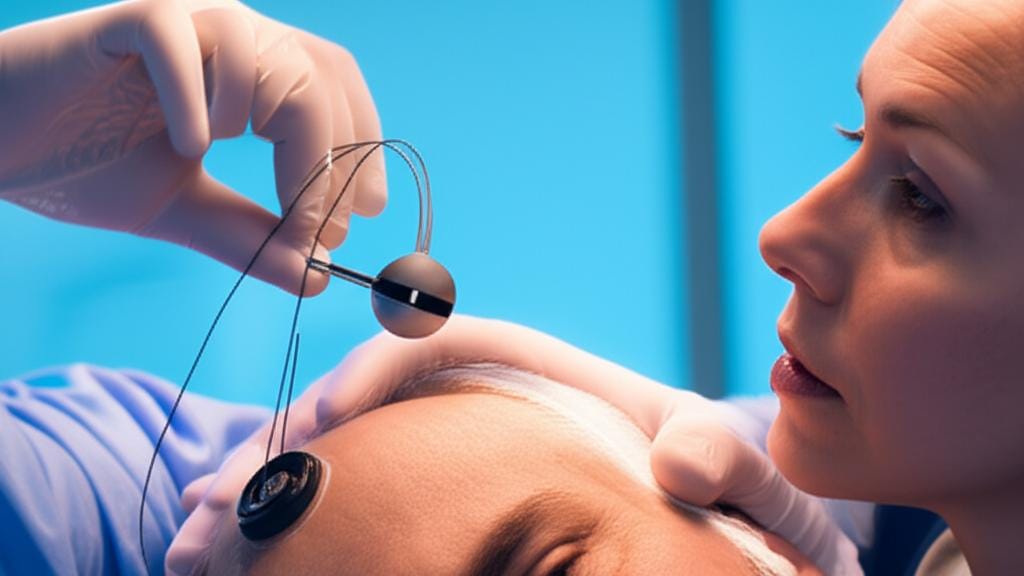
Do you or a loved one suffer from Parkinson’s disease or uncontrollable tremors (Tremor)? It is truly heartbreaking when, despite consistent medication, you find your condition worsening day by day. However, medical science has reached a point where we can offer a new ray of hope. This treatment is called Deep Brain Stimulation, or DBS for short.
What is Deep Brain Stimulation (DBS)?
Simply put, DBS is a medical procedure that delivers precise, mild electrical currents to specific areas of your brain. Think of it like a 'Pacemaker' for your brain. During the procedure, a small device is implanted under the skin near your collarbone. Thin wires connected to this device deliver electrical signals directly to the areas of the brain that need them. These signals help stimulate underactive brain cells, which can effectively manage the symptoms of various neurological conditions.
Who needs this treatment, and why?
The nerve cells in our brain, known as neurons, communicate with each other through electrical and chemical signals. In certain medical conditions, the activity of these neurons decreases in specific areas of the brain, causing those regions to function incorrectly. For example, if the neurons controlling movement are impaired, you may experience difficulty walking or controlling your limbs.
DBS uses artificial electrical currents to "reawaken" these inactive neurons. While researchers are still studying the exact mechanisms, the clinical results have been life-changing for many.
| Conditions Currently Approved for DBS Treatment | |
|---|---|
| Dystonia | A condition causing involuntary muscle contractions, twisting, and abnormal postures. |
| Essential Tremor | Uncontrollable shaking of specific body parts, most commonly the hands. |
| Medication-resistant Epilepsy | Seizures that cannot be adequately controlled through medication. |
| Parkinson’s Disease | When the disease progresses and medication effectiveness begins to wane. |
| Medication-resistant OCD | Intrusive thoughts and repetitive behaviors unresponsive to medication. |
Important: Research is ongoing for many other conditions, including addictions, Alzheimer’s disease, anxiety, severe depression, and Tourette syndrome. However, DBS is not yet considered a standard treatment for these conditions.
How is the surgery performed?
This is not a single operation but a process typically completed in two or three surgical stages.
Preparation
Before surgery, your medical team will thoroughly explain the benefits, risks, and expectations. You will undergo tests like an MRI or CT scan to determine if you are a candidate for the procedure. Additionally:
- Medication Review: You may be asked to pause certain medications, especially blood thinners. Never stop taking any prescribed medication without direct instruction from your doctor.
- Hygiene: You may be required to use a specific antiseptic shampoo or soap to prepare your scalp.
- Fasting: Because the surgery involves anesthesia, you will need to stop eating 8 hours before and drinking liquids 2 hours before the procedure.
During Surgery
Phase 1: Lead Placement
This is the primary surgical step. Your head will be stabilized in a special frame. The surgeon will make a small opening in your skull to insert thin wires with electrodes into the precise location in your brain.
Surprisingly, you may be kept awake during parts of this surgery. Because the brain itself does not feel pain, this allows your medical team to ask you to perform simple tasks (like moving your limbs or speaking) to ensure the electrodes are placed in the exact right spot.
Following this, you will be observed in the hospital for a day before being discharged.
Phase 2: Pulse Generator Placement
This is performed as a separate procedure under general anesthesia. A small pocket is created under the skin near your collarbone to house the pulse generator (the battery pack). The wires from your brain are tunneled under the skin and connected to the device, and the incisions are closed. You can usually go home the same day.
What happens after the surgery?
A few weeks post-surgery, you will visit your doctor to have the pulse generator programmed. During this time, the electrical patterns are adjusted to match your specific needs. It may take a few follow-up appointments to find the optimal settings for your symptoms.
Batteries typically last 3 to 5 years, though newer rechargeable models can last up to 9 years. Replacing the battery is a straightforward, minor surgical procedure.
| Advantages | Risks & Complications |
|---|---|
| A highly effective alternative when medications no longer provide sufficient relief. | Standard surgical risks, such as bleeding or potential infection. |
| A life-changing treatment designed to significantly improve your quality of life. | Device-related issues, such as lead displacement or battery malfunction. |
| Settings can be non-invasively adjusted at any time to suit your changing needs. | Potential side effects during calibration, such as imbalance or confusion. |
| The procedure is reversible; the device can be surgically removed if necessary. | Temporary discomforts such as headaches or mild numbness. |
When to Seek Medical Attention
Because DBS is a neurosurgical procedure, it is vital to stay vigilant regarding your recovery. If you experience any of the following, contact your medical team immediately or go to the nearest emergency department.
- A sudden or persistent, severe headache.
- Bleeding from the surgical incision sites.
- Redness, swelling, or unusual warmth around your incisions (potential signs of infection).
- Sudden vision changes, such as double vision or blurred vision.
- A fever of 38.3°C (101°F) or higher.
Living with your DBS device
Can I use electronic devices?
Generally, common household items like microwaves, computers, and smartphones do not interfere with your device. However, high-security systems like airport metal detectors may pose a risk. You will be provided with a patient ID card to present in these situations.
Can I have an MRI scan?
No. This is critical: In most cases, patients with a DBS implant cannot safely undergo an MRI scan. The powerful magnetic fields used in MRI machines can damage your device. Always inform your healthcare providers that you have a DBS system before undergoing any medical diagnostic procedure.
Does DBS cure the underlying condition?
No. It is important to understand that DBS is a management tool, not a cure. Its primary purpose is to help control your symptoms and improve your overall daily function.
Take-Home Message (Nirogi Lanka)
- Deep Brain Stimulation (DBS) is a sophisticated, evidence-based treatment offering renewed hope for conditions like Parkinson's disease and epilepsy when medications are no longer effective.
- While it is a brain surgery that carries inherent risks, a successful procedure can profoundly improve your independence and quality of life.
- DBS does not cure the disease, but it is highly effective at stabilizing symptoms.
- This is a significant medical decision. We encourage you to have an open, detailed discussion with your specialist to ensure this is the right path for your health journey.
deep brain stimulation, DBS, neurosurgery, Parkinson's disease, epilepsy, tremor, dystonia